Peržiūrėti realaus dydžio版 Peržiūrėti AR realybėje Pirkti rankų darbo tapybą Perejti prie skaitmeninių vaizdų Pasidalinti
Išsamiau Vadovas Pridėti į mėgstamiausius Atsisiųsti Panašūs eksponatai Rentgeno spindulių nuotrauka Automatinė diorama Q&A Statistika

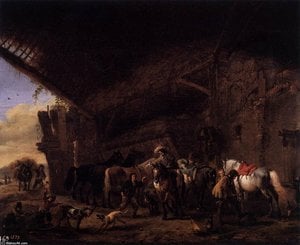
Huntsmen Setting Out

Philips Wouwerman's 'Huntsmen Setting Out' captures a vibrant Dutch Golden Age scene of aristocratic hunters preparing for their pursuit, showcasing masterful detail and dramatic light.

Atraskite Philips Wouwermano (1619-1668) dinamišką pasaulį! Olandijos aukso amžiaus meistro žavingi medžioklės, kraštovaizdžio ir mūšio paveikslai, garsėjantys puikiu arklių vaizdavimu.

Giclée / Meno spausdinimas

Muziejų lygio „giclée“ arba drobos spausdinimas: greita gamyba ir lankstios apdailos parinktys. ( Pirkti rankų darbo tapybą Perejti prie skaitmeninių vaizdų)

Corner sample of the P118B picture frame: lieto polistirolo detalės, 5 cm wide and 3 cm thick
P118B €10
Corner sample of the P118H picture frame: lieto polistirolo detalės, 5 cm wide and 3 cm thick
P118H €10
Corner sample of the P118W picture frame: lieto polistirolo detalės, 5 cm wide and 3 cm thick
P118W €10
Corner sample of the P438Z picture frame: lieto polistirolo detalės, 5.5 cm wide and 3.5 cm thick
P438Z €10
Corner sample of the P508JH picture frame: lieto polistirolo detalės, 7 cm wide and 3.5 cm thick
P508JH €12
Corner sample of the P508YH picture frame: lieto polistirolo detalės, 7 cm wide and 3.5 cm thick
P508YH €12
Corner sample of the P805H picture frame: lieto polistirolo detalės, 5 cm wide and 3.5 cm thick
P805H €10
Corner sample of the P805Z picture frame: lieto polistirolo detalės, 5 cm wide and 3.5 cm thick
P805Z €10
Corner sample of the P919BZ picture frame: lieto polistirolo detalės, 7 cm wide and 3.5 cm thick
P919BZ €10
Corner sample of the P919G picture frame: lieto polistirolo detalės, 7 cm wide and 3.5 cm thick
P919G €10
Corner sample of the P919XJ picture frame: lieto polistirolo detalės, 7 cm wide and 3.5 cm thick
P919XJ €10
Corner sample of the P959ZH picture frame: lieto polistirolo detalės, 5 cm wide and 3 cm thick
P959ZH €10
Corner sample of the P968JZ picture frame: lieto polistirolo detalės, 6 cm wide and 4 cm thick
P968JZ €12
Corner sample of the W106C picture frame: solidus medžio

**Improved version:**
solidus medis, 5 cm wide and 3 cm thick
W106C €8
Corner sample of the W218G picture frame: solidus medžio

**Improved version:**
solidus medis, 5 cm wide and 3 cm thick
W218G €10
Corner sample of the W218JH picture frame: solidus medžio

**Improved version:**
solidus medis, 5 cm wide and 3 cm thick
W218JH €8
Corner sample of the W218Y picture frame: solidus medžio

**Improved version:**
solidus medis, 5 cm wide and 3 cm thick
W218Y €10
Corner sample of the W307PJ picture frame: solidus medžio

**Improved version:**
solidus medis, 6 cm wide and 3 cm thick
W307PJ €10
Corner sample of the W316G picture frame: solidus medžio

**Improved version:**
solidus medis, 6 cm wide and 3 cm thick
W316G €10
Corner sample of the W316PJ picture frame: solidus medžio

**Improved version:**
solidus medis, 6 cm wide and 3 cm thick
W316PJ €8
Corner sample of the W316Y picture frame: solidus medžio

**Improved version:**
solidus medis, 6 cm wide and 3 cm thick
W316Y €10
Corner sample of the W398PJ picture frame: solidus medžio

**Improved version:**
solidus medis, 5 cm wide and 3 cm thick
W398PJ €8
Corner sample of the W4111J picture frame: solidus medžio

**Improved version:**
solidus medis, 6.5 cm wide and 3.5 cm thick
W4111J €10
Corner sample of the W500HY picture frame: solidus medžio

**Improved version:**
solidus medis, 7 cm wide and 5 cm thick
W500HY €15
Corner sample of the W500JH picture frame: solidus medžio

**Improved version:**
solidus medis, 7 cm wide and 5 cm thick
W500JH €15
Corner sample of the W692G picture frame: solidus medžio

**Improved version:**
solidus medis, 8 cm wide and 4 cm thick
W692G €12
Corner sample of the W849H picture frame: solidus medžio

**Improved version:**
solidus medis, 5 cm wide and 3 cm thick
W849H €8
Corner sample of the W940BG picture frame: solidus medžio

**Improved version:**
solidus medis, 7.5 cm wide and 4.5 cm thick
W940BG €15
Corner sample of the W953PJ picture frame: solidus medžio

**Improved version:**
solidus medis, 6 cm wide and 3.5 cm thick
W953PJ €8

Standartinis dydis
pagal užsakymą
CM
INCH

Pasirinkite iš mūsų nustatytų dydžių, atitinkančių originalaus meno kūrinio proporcijas.

plotis
aukštis

Įveskite jums reikiamą plotį ir aukštį, kad atvaizdas derėtų prie jūsų rėmo ar sienos. Spausdiną galima tik sumažinti, bet nepadidinti virš originalaus paveikslėlio dydžio, todėl keičiant proporcijas, dalis vaizdo prarandama. Prieš spausdinimą atsiųsime jums skaitmeninį maketą patvirtinimui. Šioje puslapio nuotraukoje matomas pjūvis nėra tikslus – jį rodo tik maketas.

Pristatymas visame pasaulyje () per 2 weeks, o ne įprastas 4/5 savaičių laikotarpis. (31 spalis)

Nemokamas greitasis pristatymas visame pasaulyje
Aukštos kokybės lininis drobė
Pilnas siuntimo draudimas
Muitinės mokesčių grąžinimo garantija
Tikro spalvų atitikimo garantija
100 dienų grąžinimo politika (tik esant įtaigoms)
100% pinigų grąžinimo garantija
Nuolaida dideliems užsakymams

Visos kainos suma

€ 60

Huntsmen Setting Out

Giclée / Meno spausdinimas

Reprodukcijos matmenys

-

Bendroji kaina

€ 60

Trumpa informacija

  • Notable elements: Dramatic light, detail
  • Dimensions: 55 x 80 cm
  • Subject or theme: Hunting scene
  • Movement: Dutch Golden Age
  • Location: Hermitage Museum, St. Petersburg

Karo viktorina

Kiekviename klausime yra tik vienas teisingas atsakymas.

Klausimas 1:
What is the primary subject matter of Philips Wouwerman’s ‘Huntsmen Setting Out’?
Klausimas 2:
The painting ‘Huntsmen Setting Out’ is primarily associated with which artistic movement?
Klausimas 3:
Where is ‘Huntsmen Setting Out’ currently housed?
Klausimas 4:
What is a key characteristic of Philips Wouwerman’s technique as demonstrated in ‘Huntsmen Setting Out’?
Klausimas 5:
Which of the following best describes the historical context of this painting?

Philips Wouwerman’s “Huntsmen Setting Out”: A Dutch Golden Age Masterpiece

“Huntsmen Setting Out,” painted by Philips Wouwerman around 1665, is more than just a hunting scene; it's a meticulously crafted tableau of aristocratic leisure and the vibrant energy of the Dutch Golden Age. This oil on canvas, currently residing in the Hermitage Museum in St. Petersburg, Russia – a testament to its enduring appeal – offers a captivating glimpse into the lives of the wealthy elite and their elaborate pursuits. Wouwerman, a prolific artist known for his dynamic depictions of hunting, landscapes, and battle scenes, masterfully captures a fleeting moment of preparation before the chase, imbuing it with a sense of movement, drama, and subtle social commentary.

A Symphony of Light and Movement

Wouwerman’s technique is immediately striking. The painting pulsates with life through his masterful use of light and shadow – a hallmark of Baroque art that he expertly employs to create depth and drama. Notice how the sunlight, seemingly originating from an unseen source, illuminates the hunters' attire, highlighting the rich textures of their coats and the gleam of their weapons. Conversely, areas in shadow suggest the cool air and impending darkness of the forest. The composition itself is a carefully orchestrated dance of movement; horses gallop forward with powerful strides, hounds strain at their leashes, and riders gesture excitedly, all contributing to an overwhelming sense of kinetic energy. The artist’s attention to detail is remarkable – from the individual strands of hair on the hunters' heads to the intricate patterns on their clothing, every element feels deliberately placed.

Symbolism and Social Commentary

Beyond its technical brilliance, “Huntsmen Setting Out” carries layers of symbolic meaning. The scene depicts a hunt, a pastime deeply intertwined with aristocratic status in 17th-century Holland. The lavish attire of the hunters – their elaborate coats, feathered hats, and finely crafted weapons – clearly signal their wealth and privilege. However, Wouwerman subtly introduces an element of social critique through the inclusion of a beggar at the bottom left corner of the painting. This figure, starkly contrasting with the opulent setting, serves as a poignant reminder of the vast disparity between the wealthy elite and the less fortunate. The hermit on the hillside further emphasizes this contrast, representing a moral counterpoint to the aristocratic pursuit of pleasure.

Historical Context: The Dutch Golden Age

To fully appreciate “Huntsmen Setting Out,” it’s crucial to understand the historical context in which it was created – the Dutch Golden Age. This period, spanning roughly from the mid-16th to the early 18th centuries, witnessed an unprecedented flourishing of art, science, and commerce in the Netherlands. Philips Wouwerman thrived during this era, becoming one of its most celebrated artists. His works reflect the values and sensibilities of the time – a fascination with realism, a celebration of human activity, and a keen awareness of social dynamics. The painting’s presence in the Hermitage Museum underscores its significance as a key example of Dutch Golden Age art, offering a window into the lives and aspirations of a remarkable era.

Bringing Wouwerman Home: High-Quality Reproductions

Experience the timeless beauty of “Huntsmen Setting Out” in stunning detail with our meticulously crafted oil painting reproductions. Each reproduction is hand-painted by skilled artists using archival-quality materials, ensuring that every brushstroke and color nuance faithfully captures the original’s artistry. Available in a range of sizes to suit your space and budget, these reproductions are an exquisite addition to any home or office – a vibrant reminder of the artistic brilliance of Philips Wouwerman and the captivating spirit of the Dutch Golden Age. Explore our collection at WahooArt.com and discover how you can bring this masterpiece into your life.

Klausimai ir atsakymai

Kokią nuotaiką ir emociją sujungia „Huntsmen Setting Out“?

„Huntsmen Setting Out“ kūryboje Dramatic nuotaika lydi Nostalgic emociją.

Ar „Huntsmen Setting Out“ bendroje apimatyje yra labiau šviesus ar tamsus kūrinys?

„Huntsmen Setting Out“ – Filipas Vouvermanas užfiksuotas kaip balanced, pasižymintis Soft Shadow šviesos intensyvumu.

Kokią emociją sukelia „Huntsmen Setting Out“?

„Huntsmen Setting Out“ – Filipas Vouvermanas perteikia Nostalgic emocinę nuotaiką.


Autoriaus biografija

Filipso Vouwermano gyvenimas Aukso amžiuje

Filipas Vouwermanas (krikštytas 1619 m. gegužės 24 d. – mirė 1668 m. gegužės 19 d.) buvo itin produktyvus ir įvairiapusis olandų tapytojas, garsėjantis medžioklės scenomis, kraštovaizdžiais bei mūšio atvaizdais. Jis yra reikšminga figūra Nyderlandų Aukso amžiaus meno pasaulyje. Gimęs ir kūręs turtingoje kultūrinėje aplinkoje, Vouwermanas sugebėjo įamžinti savo epochos dvasią drobėse, kuriose dera detalumas, dinamika ir subtilus humoro jausmas.

Ankstyvieji metai ir mokymasis

Filipas Vouwermanas gimė Harleme, Nyderlanduose, Pouvelo Joostso Vouwermano sūnus. Tėvas taip pat buvo tapytojas, nors ir mažiau žinomas nei jo palikuonis. Detalių apie ankstyvąjį meninį mokymąsi yra nedaug. Tačiau manoma, kad jis studijavo pas Frans Halsą (1581/85–1666), žymų Harlemo portretininką. Nors Halso savitas stilius neturėjo didelės įtakos Vouwermano brandžiam darbui, pagrindinis mokymas greičiausiai buvo labai vertingas. Ankstyvoje karjeros stadijoje Vouwermanas patyrė *bamboccianti* tradicijos įtaką, ypač Pieterio van Laero (1592/99–po 1642 m.) kūrinius, perimdami jo dėmesį kasdieniam gyvenimui ir žanriniams scenoms.

Meno plėtra ir stilius

Pradžioje sekdamas *bamboccianti* tapytojų pavyzdžiu, Vouwermano ankstyvieji darbai vaizdavo kasdienio gyvenimo epizodus. Viduryje 1640-ųjų metų atsirado būdingas kompozicinis elementas – įstrižas reljefo šlaitas, dažnai lydimas medžio, veikiančio kaip *repoussoir* (priemonė gilumui kurti). Šiose scenose dažnai figūruodavo personažai, dažniausiai kartu su arkliais. Brandžiame laikotarpyje (apie 1650–1660 m.) Vouwermanas sukūrė savitą stilių, gerokai išplėtęs tematiką. Jis tapė žanrines scenas, kraštovaizdžius su keliautojais, kavalerijos mūšius, karinius lagerius ir linksmas valstiečių susibūrimus.

Arklių meistras

Vouwermanas ypač garsėja išskirtiniu arklių vaizdavimo įgūdžiu – įvairiausių veislių žirgai buvo atvaizduojami dinamiškame judėjime. Meno istorikas Frederik J. Duparc yra pavadinęs jį „abejotinai talentingiausiu ir sėkmingiausiu XVII amžiaus olandų arklių tapytoju“. Jo darbuose galima pamatyti ne tik anatomijos tikslumą, bet ir arklio charakterio bei energijos perteikimą. Subtilios spalvos, šaltas atmosferos tonas ir kruopštus dėmesys detalėms sukuria įtaikius ir anekdotinius pasakojimus jo paveiksluose. Dažnai jis derino įsivaizduojamus pietų kraštovaizdžius su aiškiai olandiška atmosfera.

Pagrindiniai laimėjimai ir palikimas

Vouwermano darbai buvo labai paklausūs jo gyvenimo metais ir išlaikė populiarumą XVIII amžiuje. Jo paveikslai pateko į žymias kolekcijas visoje Europoje, įskaitant princų rūmus Dresdene ir Sankt Peterburge, rodydami plačiai paplitusią pagarbą jo menui. Jis buvo itin produktyvus – ankstyvuose kataloguose buvo užregistruoti apie 800 jam priskirtų darbų, vėliau šis skaičius viršijo 1200. Naujausias katalogas raisonné (Schumacher, 2006) identifikuoja maždaug 570 autentiškų kūrinių, pripažindamas daugybę pasekėjų ir imitatorių, sukūrusių darbus jo stiliumi.

Istorinė reikšmė

Filipas Vouwermanas Nyderlandų Aukso amžiuje paliko ryškų pėdsaką sugebėdamas įamžinti platų scenų spektrą – nuo ​​judrių turgaviečių ir medžioklės ekspedicijų iki dramatiškų mūšio laukų ir ramios kraštovaizdžio gamtos. Jo meistriškumas vaizduojant arklius, kartu su aštriu anekdotinių pasakojimų akis, įtvirtino jo vietą kaip vieną žymiausių ir įtakingiausių savo laikmečio tapytojų. Retrospektyvinė paroda Kaselyje ir Hagoje (2009/2010 m.) dar labiau pabrėžė jo ilgalaikį palikimą.

  • Artistic movement or style: Dutch Golden Age
  • Artists or movements influenced by this artist: Jan van Huchtenburgh, Joseph van Bredael, Carel van Falens
  • Artists who influenced this artist: Pieter van Laer, Frans Hals, Jan Wijnants
  • Date of birth: May 24, 1619
  • Date of death: May 19, 1668
  • Full name: Philips Wouwerman
  • Nationality: Dutch
  • Notable artworks: Two Horses, Two Horsemen at a Gipsy Encampment, Dune Landscape with a Signal Post, A Horse Fair near an Army Camp, Horsepond near a Boundary Stone
  • Place of birth: Haarlem, Netherlands
Filipas Vouvermanas

Filipas Vouvermanas

1619 - 1668 , Nyderlandai

Trumpa informacija

  • Gimimo Data: 1619 gegužės 24 d.
  • Gimimo Vieta: Haarlem, Nyderlandai
  • Meninis Stilius: Olandijos aukso amžius
  • Mirties Data: 1668 gegužės 19 d.
  • Pilietybė: Olandas
  • Pilnas Vardas: Philips Wouwerman
  • Turėjo Įtakos:
    • Pieter van Laer
    • Frans Hals
    • Jan Wijnants
  • Įtakojo:
    • Jan van Huchtenburgh
    • Joseph van Bredael
    • Carel van Falens
  • Žymiausi Darbai:
    • Du arkliai
    • Du raiteliai čigonų stovykloje
    • Kopų peizažas su signalo bokštu
    • Arklio turgus netoli armijos stovyklos
    • Tvenkinys prie ribakmenės