
Gaukite spausdinimui paruoštą failą, kurio kokybė gerokai viršija internetinę peržiūrą. Kiekvienas mūsų parduodamas skaitmeninis vaizdas yra ištrauktas iš aukštos raiškos pagrindinio failo mūsų duomenų bazėje — paprastai jis siekia nuo 5 000 iki 15 000 pikselių plotio — todėl galite drąsiai spausdinti didelius formatus, apkirpti vaizdą ar reprodukcija užtikrins visas smulkias detales.
Mūsų studijoje nė viena kopija nelieka neapdorota. Skaitmeninio vaizdo ekspertas, lygiu su originaliu paveikslu, patikrina spalvas ir, jei reikia, jas koreguoja, o tada profesionaliais retušavimo įrankiais padidina aiškumą bei detales — visada išlaikydamas ištikimybę autoriaus teptuko traukoms ir stiliui. Rezultatas – vaizdas, kuris atrodo kaip tikras paveikslas, o ne kaip su filtrais apdorotas skenavimas.
Patvirtinate prieš užsakymo pabaigą: mūsų ekspertas per 72 valandas el. laišku atsiųsta vaizdą jūsų peržiūrai. Nepasitenkinate rezultatu? Paprašykite patobulinimų ar pataisymų arba prašykite pinigų grąžinimo, jei kokybė neatitinka jūsų lūkesčių.
Ši kokybė yra patikima leidybos įstaigoms, dizaino studijoms, galerijoms ir spaudos įmonėms.
Atsisiųskite didelės raiškos failą asmeniniam naudojimui, spausdinimui ir kūrybiniams projektams. ( Perjungti į spausdinamus版作品 Pirkti rankų darbo tapybą)
Pasirinkę WahooArt.com, jūs ne tik gaunate paveikslėlį – jūs gaunate profesionaliai patobudintą skaitmeninį kūrinį, sukurtą itin tikniai ir užtikrinantį pasitenkinimą. Štai viską, kas automatiškai pritékia jūsų užsakymui:
Jūsų aukštos raiškos skaitmeninis vaizdo failas bus išsiųstas el. paštu per 72 valandas nuo užsakymo – jis bus paruoštas naudoti be jokių papildomų veiksmų.
Jūsų meno kūrinys profesionaliai optimizuojamas naudojant pažangius dirbtinio intelekto įrankius ir rankinį redagavimą, užtikrinant maksimalią detalę, aiškumą ir spalvų tikslumą.
Atsitiktinai ištrytikote ar praradote savo failą? Nebijokite – bet kuriuo metu atsiųsime jį jums vėl nemokamai.
Mėgaukitės savo meno kūrynu be jokių muitinės mokesčių, įkainų ar pristatymo išlaidų – skaitiniai failai visada yra neapmokestinami.
Naudodami profesionalią įrangą ir spalvų valdymo sistemas, užtikriname, kad jūsų skaitmeninis vaizdas kuo tiksliau atspindėtų originalias spalvas.
Jei nebuvosite patenkinti įsigyto skaitmeninio vaizdo, mes jį tališkai koreguosime arba grąžinsime 100% sumą per 100 dienų – be jokių klausimų.
Nesitenkinate? Gaukite visą sumokėtą sumą per 100 dienų nuo skaitmeninio failo gavimo – be jokių papildomų klausimų.
Pirkti 3 nuotraukas – 10% nuolaida – Pirkti 5 – 15% nuolaida – Pirkti 10 ir daugiau – 20% nuolaida. Puikiai tinka kūrybiniams projektams, galerijoms bei agentūroms.

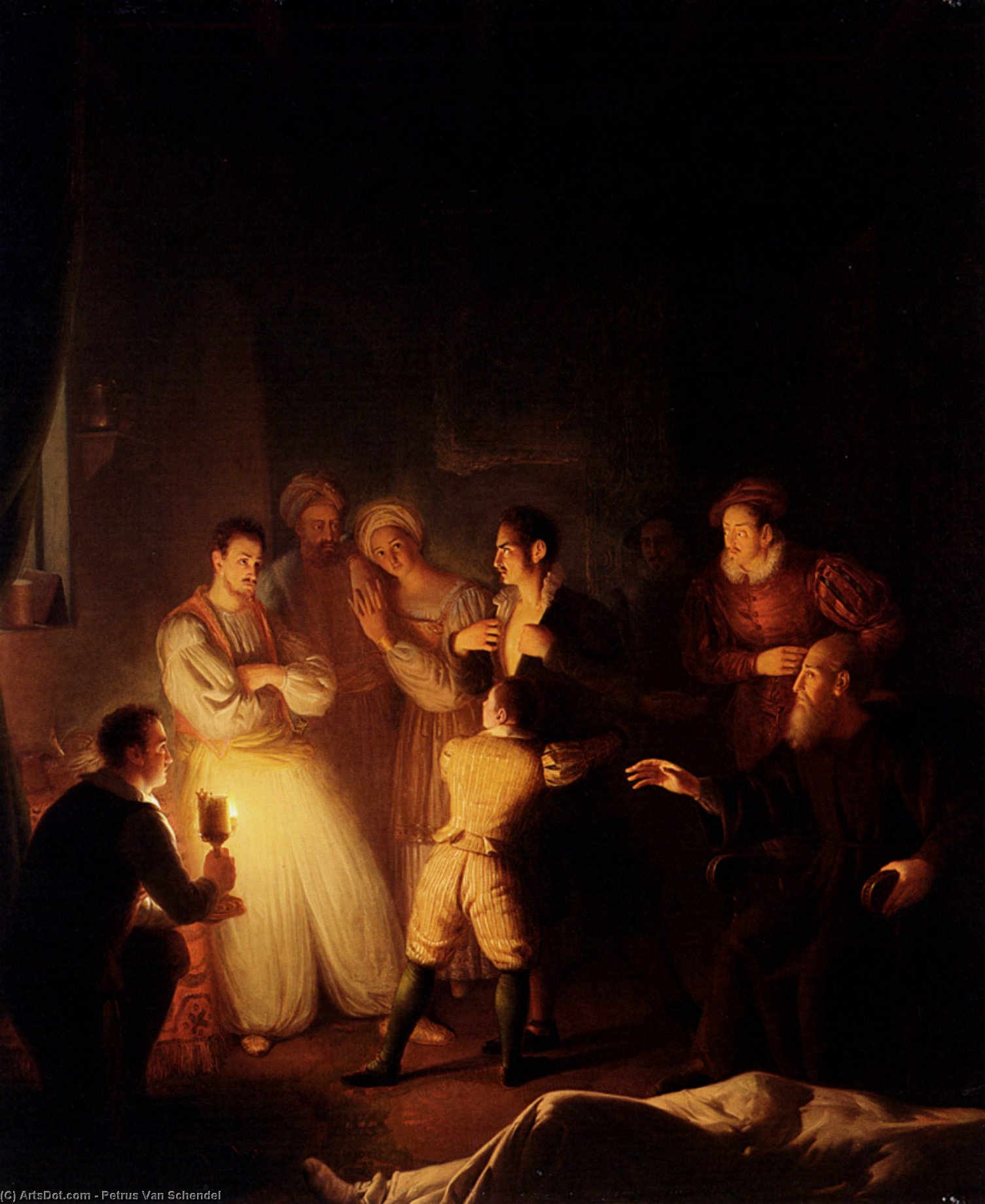
In the annals of the Dutch Romantic School, few names evoke as much atmospheric mystery as Petrus van Schendel. A painter of profound technical skill, he earned the evocative moniker "Monsieur Chandelle" due to his unparalleled ability to capture the flickering, intimate glow of candlelight and the soft, silvered radiance of the moon. Born in Terheijden, near Breda, his journey into the heart of light began with formal training at the Royal Academy of Fine Arts in Antwerp. Under the guidance of the history painter Mattheus Ignatius van Bree, Van Schendel honed a mastery of perspective that would later allow him to construct deeply immersive nocturnal worlds.
His early career was marked by a nomadic spirit, as he moved through the vibrant art centers of the Low Countries, including Amsterdam, Rotterdam, and The Hague. While he initially gained recognition as a skilled portrait painter, it was his devotion to the genre of nighttime scenes that secured his lasting legacy. He possessed a rare gift for chiaroscuro, the dramatic interplay between light and dark, which allowed him to transform simple street markets and quiet interiors into captivating, emotive stages. Whether depicting the bustling energy of a night market or the serene stillness of a moonlit landscape, his work resonated with a romantic fascination for the mysterious forces of nature and the warmth of human presence amidst the darkness.
The evolution of Van Schendel’s technique reveals an artist who was never content to remain tethered to a single light source. While his fame was built upon the soft, amber hues of candles and oil lamps—reminiscent of the seventeenth-century traditions of masters like Godfried Schalcken—he continually expanded his visual vocabulary. As technology progressed, so did his curiosity; he began to experiment with the more modern, sharper glows of gas burners, fireworks, and even the nascent, electric arc lamps. This willingness to embrace the changing light of his era ensured that his paintings remained both a tribute to classical beauty and a reflection of contemporary life.
Beyond the canvas, Van Schendel was a man of diverse intellectual pursuits, demonstrating a keen interest in the mechanics of the industrial age. His mind, much like his brush, sought to understand the underlying structures of the world, leading him to patent a device for improving steamship blades and to offer innovations for railroad stability. This blend of artistic sensitivity and scientific inquiry characterizes the true breadth of his contribution to nineteenth-century culture.
Today, the significance of his work is preserved in prestigious collections across the globe, from the Rijksmuseum in Amsterdam to the National Gallery in Brussels. His ability to evoke a sense of nostalgia and wonder through the simple act of illuminating the dark ensures that his "colors of night" continue to enchant viewers, inviting them to step into the luminous, quiet magic of his painted worlds.

1806 - 1870 , Netherlands
 Peržiūrėti realaus dydžio版
 Pasidalinti
 Dalintis
 Išsamiau
 Vadovas

 Atsisiųsti
 Panašūs eksponatai
 Rentgeno spindulių nuotrauka
 Automatinė diorama
 问答
问答
 Statistika
 Skaityti daugiau


