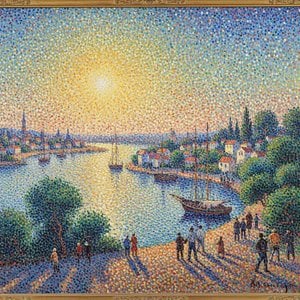
Harmoninė Paulio Signaco vizija
1863 metais Paryzuje gimęs Paulis Viktoras Jules Signacas tapo lemiama figūra moderniosios dailės evoliucijoje, neatsiejama nuo neoimpresionizmo gimimo ir plėtros. Pradinai trauktas architektūros, jaunystėje sutikęs Claude Moneto parodą, savyje užkindino neblėstančią sureikšmingą meilę tapybai, nukreipdama jį į kelią, kuris vėliau peržengė spalvų teorijos ir meninės išraiškos ribas. Signacas nebuvo tik paprastas paveikslautojas; jis buvo skruplius šviesos, spalvos ir pačios vizualinio suvokimo mokslo tyrinėtojas. Jo ankstyvieji darbai, nors ir rodė impresionistinius polinkius, greitai evoliucionavo po gilaus Georges Seurat poveikio, suformuojant partnerystę, iš kurios gimė taškinė tapyba – technika, pasižyminti itin tikimais, atskirais gryros spalvos tašukais, intended to blend optically in the viewer’as akims. Tai nebuvo tik estetinio siekio; tai buvo bandymas sistemizuoti tapybą, įtvirtinti ją moksliniuose principuose ir iššūkti tradicines meno normas.
Dialogas su Seurat ir neoimpresionizmo gimimas
1884 metais susitikimas tarp Signaco ir Seurat atros lėmė transformaciją abiem menininkams. Juos vienijavo fascinacija Eugène Delacroix rašais apie spalvų teoriją, ypač jo tyrimais apie papildomus kontrastus ir spalvos poveikį emocijoms. Kartu jie pradėjo griežtą šių principų tyrimą, paversdami juos revolucione tapybos technika. Signacas visiškai priėmė Seurat viziją, atsisakydamas trumpalaikių impresionistinių traukų dėl tikslaus, apskaičiuoto spalvos taškelių pritaikymo.
Boulevard de Clly (1886) stovi kaip ankstyvas šio naujo požiūrio įrodymas, rodantis Signaco kruopštumą ir siekį per mokslinį prizmę įamžinti miesto gyvenimo trapumą ir vibraciją. Tačiau jų bendradarbiavimas nebuvo tik techninis; jis buvo intelektualus, skatintas bendru noru tapybą pakelti į griežtos mokslo lygmenį. Signacas tapo ištikimu Seurat idėjų šalininku, nenuobliaudamas neoimpresionizmo ir gindamas jo principus prieš kritikus. Tragiška 1891 metais Seurat mirtis paliko Signacą kaip pagrindinį jų bendros meninės vizijos gynėją – vaidmenį, kurį jis priėmė su nekliudoma atsidavimu.
Pajūrio sapnai ir meninė nepriklausomybė
Po Seurat mirties Signaco meninė kelionė įgavo naują dimensiją, giliai įkvėptą jo meilės burėjimui ir Viduržemio jūros pakrantės žavesio. 1892 metais jis atrado Saint-Tropez, įsikūrė ten, kur atsirado namai, tapę menininkų于 refugium ir nesibaigiančios įkvėpimo šaltiniu. Mirgantys vandens paviršiai, saulės apšauktos uostai ir vaizdingi pakario miesteliai suteikė idealią aplinką tyrinėti šviesos ir spalvos sąveiką.
The Red Buoy, Saint-aupez (1895) yra šio laikotarpio pavyzdys, demonruojantis jo taškinės tapybos meistriškumę įamžinant gyvą spalvų gama ir dinamišką jūros energiją. Jo technika evoliucionavo, tapdama skystesne ir išraišmingesne, tačiau išlaikė savo mokslinį pagrindą. Jis pradėjo eksperimentuoti su didesniais traukais ir plačiau naudojama paleta, žengdamas toli už Seurat tikslaus taškavimo metodo ribų. Signaco kelionės išsiplėtė už Prancūzijos ribų, apimdami Italiją, Olandiją ir net Konstantinopolį, kur kiekviena kelionė praturtino jo meninę kalbą ir išplėtė horizontus.
Avangardas globėjas ir ilgalaikis palikimas
Be savo asmeninių meninių siekių, Signacas vaidino kritinę vaidmenį skatinant moderniosios dailės plėtrą savo vadovaujant Société des Artistes Indépendants bendrijai. Kaip prezidentas nuo 1908 metų iki mirties 1935 metais, jis gynė meninę laisvę ir suteikė platformą kylančiam talentams, įskaitant Henri Matisse, André Derain ir kitus fauvizmo bei kubizmo pionierius. Jis buvo vienas iš pirmųjų, atpažinęs ir palaikęs jų revoliucinius darbus, rodydamas kontroversiškus paveikslus, kurie iššūkė konvencines estetinės normos. Signaco siekis įtrauktį ir gebėjimas priimti naujoves padėjo suformuoti 20-osios amžiaus meno kryptį. Jo teorinės darbinės knygos, ypač
From Eugène Delacroix to Neo-Impressionism (1899), dar tvirtai įtvirtino jo poziciją kaip lygiavertės intelektualinės figūros pasaulyje. Paulio Signaco palikimas išsiekia daug toli už jo užburiančius paveikslus; jis buvo vizionierius, skrupilus teorininkas ir ištikimas globėjas, kuris giliai paveikė moderniosios dailės kelią, palikdamas neištriniamą žymą būsimiesiems menininkų kartoms.
Svarbios datos ir pasiekimai
- 1863 m.: Gimė Paryzuje, Prancūzijoje.
- 1884 m.: Kartu su Georges Seurat įkūrė Société des Artistes Indépendants bendriją.
- 1886 m.:
Įamžino paveikslą *Boulevard de Clichy*, esantį kaip vienas svarbiausių ankstyvojo taškinio stiliaus pavyzdžių.
- 1895 m.: Sukūrė paveikslą *The Red Buoy, Saint-Tropez*, demonruojantį jo meistriškumą pajūrio vaizduose.
- 1899 m.: Išleido knygą *From Eugène Delacroix to Neo-Impressionism*, esančią esminiu spalvų teorijos veikaliniu.
- 1908 – 1935 m.: Dirbo kaip Société des Artistes Indépendants prezidentas, gindamas avangardinius menininkus.
- 1935 m.: Mirė Paryzuje, pasiekęs 72 metus, palikdamas sau turtingą meninę paveldą.



 Peržiūrėti realybėje
 Perejti prie spausdinimo
 Pasidalinti
 Dalintis
 Išsamiau

 Atsisiųsti
 Panašūs eksponatai
 Rentgeno nuotrauka
 Automatinė diorama
 Statistika


 Skaityti daugiau






































 Stiklo variantas prieinamas tik pasirinkus dydį iki 110 cm