Autoriaus biografija
Sapnų Audėjas: Pauliaus Delvaux Gyvenimas ir Kūryba
Gimęs 1897 metais nedideliame Belgijos kaimelyje Wanze, Paulius Delvaux patyrė kelionę, kuri pavertė jį vienu iš ryškiausių Surrealizmo balsų, nors pats dažnai atsisakydavo griežtos kategorizacijos. Ankstyvasis jo gyvenimas buvo įkvėptas kontrastų – griežta klasikinio ugdymo disciplina graikų ir lotynų kalbomis greta fantastiškų pasaulių, sukurtų Žiulio Verno ir Homero *Odisėjos*. Šis dualumas tarp tvarkos ir vaizduotės turėjo apibrėžti jo artistinę viziją. Pradžioje tėvai stebėjo jį link praktiškos architektūros karjeros, tačiau Delvaux neišvengiamai patraukė tapyba, galiausiai įstojęs į Karališkąją meno akademiją Briuselyje. Nors jis sunkiai susidorojo su architektūros matematiniais reikalavimais, šis mokymas suteikė jam perspektyvos ir formos meistriškumą, kuris vėliau tarnavo kaip pagrindas jo sapniškų kraštovaizdžių neramiam realizmui. Ankstyvieji darbai atspindėjo akademinį pagrindą – daugiausia peizažai, nutapyti postimpresionistiniu stiliumi, tačiau net tada ėmė rastis keisto atmosferos užuominų, kurios turėjo apibrėžti jo brandų darbą.
Surrealistinės Vizijos Gimimas
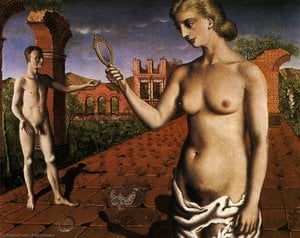
Pagrindinis momentas Delvaux artistinėje plėtroje įvyko susipažinus su Giorgio de Chirico kūryba. De Chirico metafiziniai paveikslai – griežtos, paslaptingos scenos, apgyvendintos šešėlų ir klasikinės architektūros – giliai rezonavo su Delvaux, atrakindami naują galimybių erdvę. Jis ėmė užpildyti savo drobeles nuogomis figūromis, dažnai kontrastuojančiomis su įspūdinga architektūra arba didžiuliais, apleistais kraštovaizdžiais. Tai nebuvo tik žmogaus formos atvaizdai; tai buvo troškimo, atskirties ir sąmonės tyrimai. Šiuo laikotarpiu matomas Flandrijos ekspresionistų, tokių kaip Constant Permeke ir Gustave De Smet, įtaka, suteikianti tam tikrą niūrumą jo paletei ir potėpiams. Tačiau Delvaux greitai peržengė šias įtakas, sukūręs stilių, kuris yra visiškai unikalus – klasikinio tikslumo ir sapniškos netikros kombinacija. Jo paveikslai ėmė skleisti nerimo jausmą, pojūtį, kad realybės paviršiuje slepiasi kažkas paslėpto. Pasikartojantys motyvai atsirado: traukiniai, skeletinės figūros ir uždangos veidus dengiančios moterys, visos prisidedančios prie neramios atmosferos, kuri apibrėžia jo darbą.
Pasikartojantys Motyvai ir Simbolinė Kalba
Delvaux artistinė kalba yra turtinga simbolizmu, nors jis nuolat atsisakydavo tiesiogų psichoanalizės interpretacijų bandymų. Moteriška nuogė, centrinė figūra daugelyje jo paveikslų, dažnai atrodo pasyvi arba melancholiška, įkūnijanti tiek troškimą, tiek pažeidžiamumą. Traukiniai ir geležinkelio stotys dažnai pasirodo kaip perėjimo simboliai, perkėlimas ir modernumo nerimas. Skeletai, toli gražu nesusiję su morbidiniu mirties emblemu, reprezentuoja gaudantį buvimą, mirtingumo priminimą, kuris prasiskverbia net į idiliškiausius scenarius. Klasikinė architektūra suteikia tvarkos ir nuolankumo foną, tačiau dažnai yra keistai iškraipyta arba nebaigta, rodanti trapumą paviršiuje. Šie elementai nėra tik dekoratyviniai; jie yra integralios dalys jo darbo emocinio ir psichologinio poveikio. Pavyzdžiui, *Naktinis traukinys* apima daugelį šių temų – anonimiškos figūros, įspūdinga architektūra ir artėjančios katastrofos jausmas sukuria stiprų ir nepamirštamą vaizdą. Pats menininkas paaiškino, kad jo vaizdai kyla iš gilių asmeninių atminimų ir įspūdžių, ypač iš jaunystės, o ne sąmoningo bandymo iššifruoti sąmonę.
Palikimas ir Tvarus Poveikis
Visą savo ilgą karjerą Paulius Delvaux liko unikalus personažas meno pasaulyje. Nors trumpai susijęs su Surrealistų judėjimu, jis išlaikė tam tikrą nepriklausomybę, atsisakydamas griežtai laikytis jo principų. Jo paveikslai ir toliau žavi publiką savo gaudingu grožiu ir paslaptinga atmosfera. Pagrindiniai darbai, tokie kaip Vasara, Pilkas miestas ir keli Mieganti Venera variantai, laikomi svarbiausiuose muziejuose visame pasaulyje, įskaitant Tate galeriją Londone ir Toyamos muziejų Japonijoje. Delvaux įtaka matoma daugelio šiuolaikinių menininkų darbuose, kurie tiria atminties, troškimo ir sąmonės temas. Jis parodė, kad Surrealizmas gali egzistuoti už automatinio rašymo ir sapnų analizės ribų, priimdamas kruopštą techniką ir gilią asmeninę viziją. Jo palikimas išlieka ne tik per jo paveikslus, bet ir per unikalias artistinės kalbos galios – kalbos, kuri ir toliau kreipiasi į mūsų gilviausias baimes ir troškimus. Pauliaus Delvaux muziejus Saint-Idesbalde, Belgijoje, yra liudijimas jo tvariam poveikiui, apgyvendindamas didžiausią jo darbų kolekciją pasaulyje ir siūlydamas lankytojams žvilgsnį į jo vaizduotės užburiantį karalystę.



 Peržiūrėti realybėje
 Perejti prie spausdinimo
 Pasidalinti
 Dalintis
 Išsamiau

 Atsisiųsti
 Panašūs eksponatai
 Rentgeno nuotrauka
 Automatinė diorama
 Statistika


 Skaityti daugiau






































 Stiklo variantas prieinamas tik pasirinkus dydį iki 110 cm