

Muziejų lygio „giclée“ arba drobos spausdinimas: greita gamyba ir lankstios apdailos parinktys. ( Pirkti rankų darbo tapybą Perejti prie skaitmeninių vaizdų)





























Pasirinkite iš mūsų nustatytų dydžių, atitinkančių originalaus meno kūrinio proporcijas.

Įveskite jums reikiamą plotį ir aukštį, kad atvaizdas derėtų prie jūsų rėmo ar sienos. Spausdiną galima tik sumažinti, bet nepadidinti virš originalaus paveikslėlio dydžio, todėl keičiant proporcijas, dalis vaizdo prarandama. Prieš spausdinimą atsiųsime jums skaitmeninį maketą patvirtinimui. Šioje puslapio nuotraukoje matomas pjūvis nėra tikslus – jį rodo tik maketas.
Pristatymas visame pasaulyje () per 2 weeks, o ne įprastas 4/5 savaičių laikotarpis. (9 lapkritis)
Self-portrait (Hermitage)
Reprodukcijos matmenys
Paul Cézanne, born on January 19, 1839, in Aix-en-Provence, France, was a pivotal figure in the transition from late 19th-century Impressionism to early 20th-century Cubism. His father was a successful hatmaker who later became a banker, providing Cézanne with financial security that allowed him to pursue his artistic passions without immediate economic pressure. Initially intended to follow in his father’s footsteps and enter the legal profession, Cézanne eventually abandoned these plans to dedicate himself fully to art.
Early influences included Romanticism and the Barbizon school of landscape painting. He studied briefly at the Académie Suisse in Paris but largely developed his style independently. The works of Paul Gauguin and Georges Seurat, particularly their explorations of color and form, also played a significant role in shaping Cézanne’s artistic direction.
Self-Portrait (Hermitage) is characterized by repetitive, exploratory brushstrokes and an emphasis on geometric forms. The painting features bold and vibrant colors, which were a hallmark of Cézanne's Post-Impressionist style. The artist’s use of thick and heavy brushstrokes adds a sense of texture and depth to the painting.
The image is a painting of a man with a beard and mustache, wearing glasses. He has a bald head and appears to be looking at the viewer. The man’s attire includes a suit and tie, giving him a formal appearance. The painting is in black and white, which adds an artistic touch to the image. The background of the painting features a yellow color that contrasts with the man’s outfit, creating a visually appealing composition.
Overall, the painting captures the essence of the man’s personality and style through its details and colors.
Self-Portrait (Hermitage) is an important work in the history of portrait painting, as it showcases Cézanne’s ability to capture the essence of his subjects while also experimenting with new techniques and approaches. The painting is housed in the State Hermitage Museum in Russia, where it remains one of the most popular attractions.
Discover the beauty of Cézanne’s works and the significance of Self-Portrait (Hermitage) in the world of art. Visit https://WahooArt.com to explore a wide range of hand-made oil paintings reproductions, including works by Cézanne and other renowned artists.
Experience the magic of Post-Impressionism and the innovative style of Cézanne through his remarkable painting, Self-Portrait (Hermitage).
„Self-portrait (Hermitage)“ – Polis Sezanas pasižymi Statement šviesių ir tamsių sričių kontrastu.
Darbai, panašūs į „Self-portrait (Hermitage)“, pateikiami kūrinio Panašūs kūriniai puslapyje.
Rekomenduojamas spausdinimo dydis kūriniui „Self-portrait (Hermitage)“ – Polis Sezanas yra Large.


1839 - 1906 , Prancūzija

Atraskite impresionizmo ir postimpresionizmo šviesos bei emocijų magiją. WahooArt siūlo aukščiausios kokybės rankų darbo aliejinius šedevrus, atkurdančius didžiųjų meistrų stilių. Profesionalus meno konsultavimas ir prabangi tapyba jūsų išskirtiniam interjerui.

Unveil the profound revolution of Post-Impressionism. Explore how masters like Van Gogh and Cézanne utilized bold colors and emotional depth to transcend mere representation, laying the foundation for modern art. A sophisticated journey through history's most emotive brushstrokes.

Explore the structural genius of Paul Cézanne. Discover how his mastery of geometric form and color bridged Impressionism and Cubism in this definitive guide for art enthusiasts and collectors.

Explore the transformative era of Post-Impressionism. Discover how masters like Cézanne and Matisse revolutionized color and form, moving beyond Impressionism to shape modern art history through structural innovation and expressive emotion.
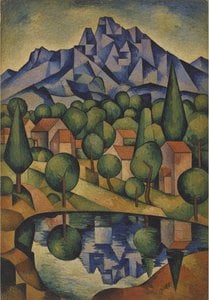
Explore the profound legacy of Paul Cézanne. Discover how his mastery of geometric forms and vibrant color bridged Impressionism and Cubism, offering timeless inspiration for fine art collectors and enthusiasts seeking to understand the foundations of modern art.
 Peržiūrėti realaus dydžio版
 Pasidalinti
 Dalintis
 Išsamiau
 Vadovas

 Atsisiųsti
 Panašūs eksponatai
 Rentgeno spindulių nuotrauka
 Automatinė diorama
 问答
问答
 Statistika
 Skaityti daugiau









 Stiklo variantas prieinamas tik pasirinkus dydį iki 110 cm


