


 Oil On CanvasWallArtPost-Impressionism
 187819th Century
 33.0 x 24.0 cm
Rankiniu būdu tapytas aliejus ant droblio jūsų pageidaujamame dydį ir rėmuose – mūsų menininkų darbas pagal užsakymą. ( Pirkti spaudinį Pirkti vaizdą)





























Pasirinkite iš mūsų nustatytų dydžių, atitinkančių originalaus meno kūrinio proporcijas.

Galite įvesti savo matmenis, kad jie atitiktų konkretų rėmą ar erdvę. Jei pasirinktas dydis neatitinka originalaus paveikslėlio proporcijų, mes arba apkropsime meno kūrinį, arba papildysime tapybą rankomis dažytい elementais. Prieš pradėdami gamybą, jūsų patvirtinimui atsiųsime skaitmeninį maketą.
Atkreipkite dėmesį, kad ekrane rodomas vaizdas neatspindi tikrojo apkarpymo ar papildymo. Tik maketas tiksliai parodys galutinę kompoziciją.
Nors galima rinktis ir individualius dydžius, rekomenduojame pasirinkti matmenis iš nustatytos sąrašo, kad būtų išlaikytos originalios proporcijos.
Pristatymas visame pasaulyje () per 3–4 savaites, o ne įprastai – per 5 savaites. (6 rugsėjis). Kokybė lieka nepakeičiama.


Man Standing, Arms Extended
Reprodukcijos matmenys
In the quiet, windswept expanse of Paul Cézanne’s "Man Standing, Arms Extended," we encounter more than a mere portrait; we witness a profound psychological threshold. Painted around 1878, this evocative work captures a solitary figure poised on a desolate beach, his arms outstretched toward an unseen horizon. There is a haunting duality in this gesture—it is at once a vulnerable surrender to the elements and a bold, assertive claim of existence against the vastness of nature. As the viewer gazues upon the man’s upward gaze, one cannot help but feel the weight of human contemplation, a silent dialogue between the individual and the infinite that resonates deeply within the modern soul.
The composition serves as a masterclass in emotional atmosphere. The presence of a distant boat drifting on the water and a faint, secondary figure in the background adds layers of narrative mystery, suggesting a world that continues to move even as our protagonist remains suspended in his moment of intense introspection. For the collector or interior designer, this piece offers a unique focal point—a window into a contemplative state that brings a sense of stillness and intellectual depth to any curated space.
While the painting retains the atmospheric sensitivity of the Impressionist movement, it signals the powerful emergence of Post-Impressionism. Cézanne, ever the seeker of structure, began to move away from the fleeting, shimmering light of his contemporaries like Monet, opting instead for a more permanent, sculptural reality. In "Man Standing, Arms Extended," we see the early stages of his revolutionary technique: the use of deliberate, angular marks and fractured planes of color to build volume and texture.
The palette is masterfully restrained, dominated by earthy ochres, deep browns, and muted tones that ground the scene in a sense of enduring solidity. Rather than capturing a passing glance of light, Cézanne reconstructs the landscape through geometric precision. This technique does not merely replicate the beach; it distills the visual experience into its fundamental components. The way the colors are layered creates a tactile quality, where the sand and sky feel as though they possess weight and substance, inviting the eye to linger on the rugged beauty of the brushwork.
To possess a reproduction of this masterpiece is to hold a piece of the bridge between two eras. Cézanne’s work stands as the vital link between the delicate observations of the 19th century and the fragmented, revolutionary energy of Cubism. His ability to find the eternal architecture within the ephemeral makes this painting an enduring icon of art history.
For those looking to inspire a room with character and historical significance, this artwork provides an unparalleled opportunity. It is a piece that demands attention not through loud colors, but through its quiet, commanding presence. Whether placed in a contemporary gallery-style living room or a classic study, "Man Standing, Arms Extended" brings with it the spirit of a revolutionary who taught the world how to see the structure beneath the surface, making it an essential acquisition for any serious lover of fine art.


1839 - 1906 , Prancūzija

Explore the structural genius of Paul Cézanne. Discover how his mastery of geometric form and color bridged Impressionism and Cubism in this definitive guide for art enthusiasts and collectors.
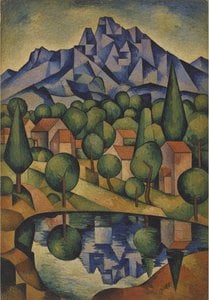
Explore the profound legacy of Paul Cézanne. Discover how his mastery of geometric forms and vibrant color bridged Impressionism and Cubism, offering timeless inspiration for fine art collectors and enthusiasts seeking to understand the foundations of modern art.

Explore the transformative era of Post-Impressionism. Discover how masters like Cézanne and Matisse revolutionized color and form, moving beyond Impressionism to shape modern art history through structural innovation and expressive emotion.

 Peržiūrėti realybėje
 Pasidalinti
 Dalintis
 Išsamiau

 Atsisiųsti
 Panašūs eksponatai
 Rentgeno nuotrauka
 Automatinė diorama
 Skaityti daugiau







 Stiklo variantas prieinamas tik pasirinkus dydį iki 110 cm


