


 Acrylic On CanvasWallArtEarly Renaissance
 1460
1460 45.0 x 67.0 cm
 Museo Thyssen-Bornemisza
Rankiniu būdu tapytas aliejus ant droblio jūsų pageidaujamame dydį ir rėmuose – mūsų menininkų darbas pagal užsakymą. ( Pirkti spaudinį Pirkti vaizdą)





























Pasirinkite iš mūsų nustatytų dydžių, atitinkančių originalaus meno kūrinio proporcijas.

Galite įvesti savo matmenis, kad jie atitiktų konkretų rėmą ar erdvę. Jei pasirinktas dydis neatitinka originalaus paveikslėlio proporcijų, mes arba apkropsime meno kūrinį, arba papildysime tapybą rankomis dažytい elementais. Prieš pradėdami gamybą, jūsų patvirtinimui atsiųsime skaitmeninį maketą.
Atkreipkite dėmesį, kad ekrane rodomas vaizdas neatspindi tikrojo apkarpymo ar papildymo. Tik maketas tiksliai parodys galutinę kompoziciją.
Nors galima rinktis ir individualius dydžius, rekomenduojame pasirinkti matmenis iš nustatytos sąrašo, kad būtų išlaikytos originalios proporcijos.
Pristatymas visame pasaulyje () per 3–4 savaites, o ne įprastai – per 5 savaites. (7 rugsėjis). Kokybė lieka nepakeičiama.


Crucifixion
Reprodukcijos matmenys
Paolo Uccello’s “Crucifixion,” painted in 1460, is not merely a depiction of a pivotal religious event; it’s a profound exploration of perspective, space, and the emotional weight of suffering. Born in Pratovecchio, Italy, in 1397, Uccello was a restless innovator, driven by an almost obsessive desire to master the illusion of depth on canvas – a pursuit that set him apart from many of his contemporaries. This particular work, housed within a relatively modest size of 45 x 67 cm, belies the complex intellectual and artistic forces at play. It’s a testament to Uccello's ambition to elevate painting beyond simple representation, striving instead for a dynamic, almost theatrical portrayal of Christ’s agony.
Uccello’s approach to perspective is immediately striking. He employs a technique that anticipates later developments in Renaissance art, though his execution is uniquely characterized by a deliberate, almost engineered quality. Rather than relying on subtle gradations of tone or atmospheric haze – methods favored by many of his peers – Uccello utilizes sharply defined lines and geometric forms to create the illusion of receding space. The cross itself is constructed with meticulous detail, its beams rendered as precise rectangles, contributing to an overall sense of architectural rigor. Notice how he uses converging lines, drawing the viewer’s eye towards a vanishing point that isn't immediately obvious, demanding active engagement from the observer. This wasn’t simply about creating a realistic image; it was about demonstrating the mathematical principles underlying visual perception – a characteristic deeply rooted in his background as a student of Lorenzo Ghiberti.
The composition is rich with symbolic elements that elevate the scene beyond a simple historical record. Mary Magdalene, positioned close to Christ’s feet, embodies compassion and sorrow—a common motif in depictions of the crucifixion. John the Baptist, standing on the right, represents repentance and faith, his posture conveying both solemnity and a sense of prophetic witness. The two angels flanking the cross are not merely decorative; they symbolize divine judgment and mercy, acting as silent observers to this pivotal moment. The inclusion of these figures underscores the universality of Christ’s sacrifice – it is an event witnessed by humanity itself.
Despite the calculated geometry, “Crucifixion” powerfully conveys the emotional impact of Christ's suffering. Uccello masterfully uses color to heighten the drama – the stark contrast between the pale flesh of Christ and the dark background emphasizes his vulnerability. The folds of his garments are rendered with a dynamic sense of movement, suggesting the physical agony he endures. The overall effect is one of profound sorrow and contemplation, inviting viewers to engage with the weight of this sacred event. It’s important to remember that Uccello was working during a period of intense religious fervor, and his painting reflects both the intellectual and spiritual concerns of the time. This isn't just an illustration; it’s an attempt to capture the essence of Christ’s sacrifice through a carefully constructed visual language.
WahooArt offers exquisite hand-painted reproductions of Paolo Uccello’s “Crucifixion,” allowing you to bring this remarkable work into your home or office. Each reproduction is created by skilled artists using traditional techniques, ensuring the highest level of detail and authenticity. Explore our collection today and experience the enduring power of Uccello's vision.


1397 - 1475 , Italija
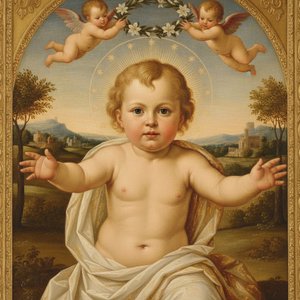
Explore the profound beauty of Baby Jesus in fine art history. From Raphael's Renaissance masterpieces to symbolic light, discover how classical painters captured divine innocence through masterful technique and sacred iconography.

 Peržiūrėti realybėje
 Pasidalinti
 Dalintis
 Išsamiau

 Atsisiųsti
 Panašūs eksponatai
 Rentgeno nuotrauka
 Automatinė diorama
 Skaityti daugiau







 Stiklo variantas prieinamas tik pasirinkus dydį iki 110 cm


