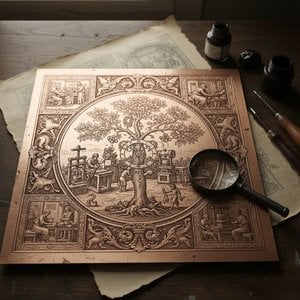
A Descent into Shadow: Unpacking the Dramatic Power of Picasso’s “Untitled”
Pablo Picasso's "Untitled," a monochromatic etching or engraving from 1970, isn’t merely a depiction of the Nativity; it’s a visceral exploration of faith, vulnerability, and the unsettling potential lurking beneath the surface of tradition. This work, often categorized as leaning towards Expressionism, immediately commands attention with its stark contrasts – deep shadows that swallow figures whole against a sparse, cavernous space. It's a scene stripped bare of conventional iconography, replaced by a raw psychological drama that speaks volumes about the anxieties and uncertainties inherent in any profound event.
The composition is dominated by forceful diagonal lines, creating an immediate sense of unease and movement. These aren’t the gentle curves of a serene landscape; they are sharp, angular intrusions, pulling the viewer into the tightly clustered figures – Mary, Joseph, and three imposing, almost regal, figures who could be interpreted as shepherds or kings. Picasso masterfully utilizes hatching and cross-hatching to build volume and texture, simulating the rough surface of stone or weathered wood, grounding the ethereal subject matter in a tangible reality. The lighting, seemingly emanating from an unseen source, is deliberately dramatic, intensifying the shadows and amplifying the figures’ emotional weight.
The Language of Line: Technique and Craftsmanship
What truly distinguishes this piece is Picasso's extraordinary command of line. It’s not simply a means of outlining forms; it’s an expressive tool in itself. The lines are incredibly detailed, yet simultaneously loose and gestural, conveying both precision and a sense of urgency. This meticulous execution, achieved through the painstaking process of etching or engraving – utilizing metal plates and acid to create the intricate lines – speaks volumes about Picasso's dedication to his craft. The varying density of the lines creates a remarkable textural effect, adding depth and richness to the image while simultaneously reinforcing its inherent tension.
Notice how the flattened perspective contributes to the overall feeling of unease. Picasso deliberately eschews realistic depth, prioritizing emotional impact over spatial accuracy. This stylistic choice forces us to confront the scene directly, amplifying its psychological intensity. The monochromatic palette further enhances this effect, stripping away any potential distractions and focusing our attention on the figures’ expressions and their interaction.
Symbolism of Doubt and Vulnerability
Beyond its immediate visual impact, “Untitled” is rich in symbolic meaning. The Nativity scene, a cornerstone of Christian faith, is presented not as a celebration of joyous birth, but as a moment fraught with vulnerability and uncertainty. The figures’ expressions are ambiguous – not overtly joyful or sorrowful, but imbued with a quiet intensity that suggests apprehension and perhaps even foreboding. These aren't idealized representations; they are deeply human, grappling with the weight of an extraordinary event.
The imposing figures flanking Mary and Joseph could be interpreted as representing the forces of fate or the challenges inherent in accepting divine will. The cavernous space itself suggests a sense of isolation and vulnerability, mirroring the precariousness of the situation. Picasso’s deliberate distortion of forms and his masterful use of line serve to heighten these symbolic resonances, transforming a familiar biblical narrative into a powerful meditation on human experience.
A Legacy of Innovation: Picasso's Enduring Influence
Created in 1970, towards the end of Picasso’s illustrious career, this work exemplifies his lifelong commitment to experimentation and pushing the boundaries of artistic expression. His exploration of themes like doubt, mortality, and the human condition resonates powerfully even today. Picasso's influence on 20th-century art is undeniable, having co-founded Cubism and pioneered techniques such as collage and constructed sculpture. Reproductions of “Untitled” offer a unique opportunity to experience firsthand the genius of one of history’s most transformative artists.
问答 (or more naturally for a website heading): Klausimai ir atsakymai
Ar „Untitled“, autorius – Pablo Pikaso spalvos yra ryškios ar išblukusios?
„Untitled“ paletės spalvų nasyginimas yra Muted.
Iš kokio laikotarpio yra „Untitled“?
Istorinis laikotarpis kūriniam „Untitled“, autorius – Pablo Pikaso yra Late Medieval. Ši klasifikacija priskiria šį kūrinį konkrečiam meno istorijos etapui.
Kokia spalva dominuoja „Untitled“, autorius – Pablo Pikaso kompozicijoje?
Dominuojanti „Untitled“, autorius – Pablo Pikaso spalva yra Rosy Brown (#a6a6a6).
Kaip „Untitled“ tema susiję su įprastomis Pablo Pikaso tematikos temos?
Dažniausios Pablo Pikaso temas apima expressionism, biblical imagery, line & shadow, late period exploration, psychological drama, intense emotion, religious narrative, vulnerability; kūrinys „Untitled“ susitelkia į biblical scene, nativity, religious art, expressionism, dramatic lighting, angular forms, monochromatic, tension.
Kokie kiti Pablo Pikaso vardai yra žinomi?
Kiti Pablo Pikaso, „Untitled“ kūrybos autoriaus, vardai apima Pablo Ruiz Y Picasso, Pablo Diego José Ruiz Picasso.
Kokią nuotaiką ir emociją sujungia „Untitled“?
Įtvirtinta „Untitled“, autorius – Pablo Pikaso nuotaika yra Dramatic, o emocinis tonas – Melancholic.
Kas sukūrė „Untitled“ ir kokia metais?
„Untitled“ kūrybinį darbinį sukūrė Pablo Pikaso 1970 metais.
Iš kur renkasi „Untitled“, autorius – Pablo Pikaso lankytojai?
Eksistuoja Statistika puslapis kūriniui „Untitled“. Jame pateikiama mėnesio apžiūrų diagrama, apimanti šį kūrinį bei kitus šio kūrybinio veikėjo darbus, su skirstymu pagal šalis ir kalbas.



 Peržiūrėti realaus dydžio版
 Perjungti į spausdinimą
 Siųsti
 Dalintis
 Išsamiau
 Vadovas

 Atsisiųsti
 Panašūs eksponatai
 Rentgeno spindulių nuotrauka
 Diaporama
 Statistika

 Rodyti daugiau






































 Stiklo variantas prieinamas tik pasirinkus dydį iki 110 cm