x
Įsigykite aukštos skiriamosios raiškos, patobulintą skaitmeninį vaizdą, gerokai pranašesnį už internetinę peržiūrą.
Kiekvieną failą mūsų specialistai kruopščiai paruošia naudojant pažangias technologijas ir profesionalų rankinį retušavimą. Užtikriname, kad kiekvienas vaizdas pasižymėtų išskirtiniu aiškumu, tikslia spalvų atspalviu ir smulkiomis detalėmis.
Baigiamas failas el. paštu pristatomas per 72 valandas; jis optimizuotas nedelsiant naudojimui profesionalioje, redakcinėje ir spausdinimo aplinkoje. Tai ta pati kokybė, kuria pasitiki aukščiausios klasės dizaino studijos, leidyklos ir galerijos.
Atsisiųskite didelės raiškos failą asmeniniam naudojimui, spausdinimui ir kūrybiniams projektams.
Pasirinkę WahooArt.com, jūs ne tik gaunate paveikslėlį – jūs gaunate profesionaliai patobudintą skaitmeninį kūrinį, sukurtą itin tikniai ir užtikrinantį pasitenkinimą. Štai viską, kas automatiškai pritékia jūsų užsakymui:
Jūsų aukštos raiškos skaitmeninis vaizdo failas bus išsiųstas jums el. paštu per 72 valaudas nuo užsakymo – paruoštas naudojimui be jokių papildomų veiksmų.
Jūsų meno kūrinys profesionaliai optimizuojamas naudojant pažangius dirbtinio intelekto įrankius ir rankinį redagavimą, užtikrinant maksimalią detalę, aiškumą ir spalvų tikslumą.
Atsitiktinai ištrytikote ar praradote savo failą? Nebijokite – bet kuriuo metu atsiųsime jį jums vėl nemokamai.
Mėgaukitės savo meno kūriniu akimirka – skaitiniai failai visada yra neapmokestinami, todėl nereikės mokėti muitinės, mokesčių ar pristatymo mokesčių.
Naudodami profesionalią įrangą ir spalvų valdymo sistemas, užtikriname, kad jūsų skaitmeninis vaizdas kuo tiksliau atspindėtų originalias spalvas.
Jei nebuvate patenkinti savo skaitinio vaizdo, per 60 dienų jį pertaisysime arba grąkinsime 100% sumą – be jokių klausimų.
Nepat 만족inti? Gaukite visą sumokėtą sumą per 60 dienų nuo skaitmeninio failo gavimo – be jokių papildomų klausimų.
Pirkti 3 nuotraukas – pasiūla 10% - Pirkti 5 – pasiūla 15% - Pirkti 10 ir daugiau – pasiūla 20%. Puikiai tinka kūrybiniams projektams, galerijoms bei agentūroms.
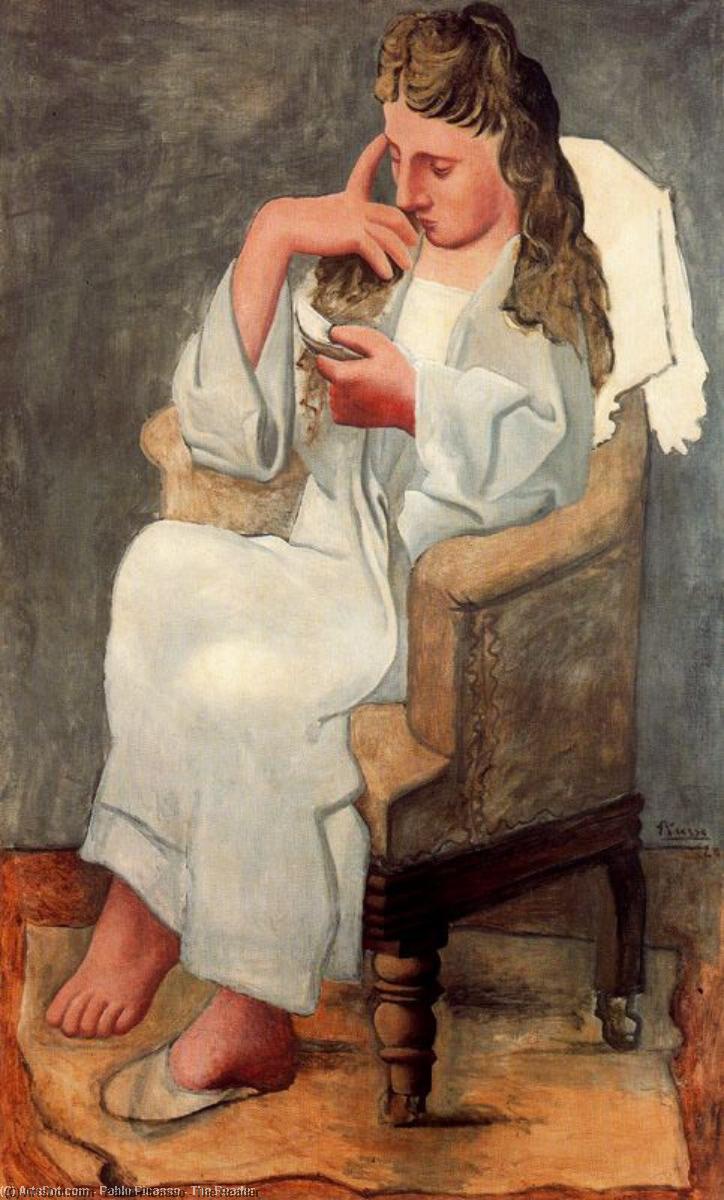
Pablo Picasso's "The Reader," painted in 1932, is more than just a portrait; it’s a carefully constructed tableau of quiet contemplation and burgeoning desire. Captured during a pivotal period of his artistic evolution – bridging the intensely expressive Blue and Rose periods with the nascent explorations of Cubism – the work offers a glimpse into Picasso's evolving understanding of form, emotion, and the complexities of human relationships. The painting depicts a young girl, Marie-Thérèse Walter, seated in an ornate armchair, lost in the act of reading. Her posture is subtly defiant yet undeniably vulnerable; her gaze fixed on the page, suggesting both absorption and a hint of melancholy. It’s a scene imbued with a palpable sense of intimacy, despite the lack of direct physical contact.
Picasso's masterful technique here demonstrates a remarkable shift from his earlier, more rigidly representational style. While retaining elements of realism – particularly in the rendering of Walter’s face and the details of the chair – he employs loose brushstrokes and flattened planes reminiscent of Synthetic Cubism. The background is deliberately ambiguous, dissolving into a hazy abstraction that draws attention to the central figure. Notice how Picasso utilizes overlapping shapes and fragmented forms to create a sense of depth and movement within the relatively confined space. This deliberate distortion isn’t merely stylistic; it reflects the fractured nature of memory and experience, mirroring the girl's internal world.
The painting is bathed in a diffused light that casts soft shadows across Walter’s face and clothing. This subtle illumination emphasizes the contours of her body and creates a sense of intimacy, as if we are privy to a private moment. The choice of muted tones – primarily browns, grays, and ochres – contributes to the overall mood of quiet introspection. However, strategically placed highlights—particularly on Walter’s hands and the pages of the book—draw our eye and create focal points within the composition. The inclusion of a small table lamp further reinforces this sense of intimacy and suggests a space dedicated to solitary reflection.
Symbolism subtly permeates "The Reader." The act of reading itself is laden with meaning, representing knowledge, escape, and introspection. Walter’s posture – leaning forward slightly, her hand resting on the book – conveys a sense of engagement and absorption. The ornate armchair, with its rich velvet upholstery and intricate carvings, speaks to a certain level of comfort and privilege, hinting at the girl's social standing. The book itself is deliberately unidentifiable, allowing viewers to project their own interpretations onto it. It’s not simply a prop; it’s a catalyst for contemplation.
“The Reader” offers a fascinating insight into Picasso's evolving relationship with women during this period of his life. Following the intense, often turbulent, affairs of his youth, he began to explore more nuanced and complex portrayals of female figures. Walter, in particular, became a recurring subject throughout the 1930s, appearing in numerous paintings and drawings. She represented a shift away from the overtly eroticized depictions of his earlier work towards a more intimate and psychologically charged representation.
The painting’s emotional impact is profound. It evokes feelings of loneliness, vulnerability, and quiet longing. There's an undeniable sense of melancholy that permeates the scene, suggesting a deeper narrative beyond the surface depiction. Picasso masterfully captures the essence of human experience – the moments of solitude, reflection, and unspoken desires that shape our lives. “The Reader” is not merely a portrait; it’s a meditation on the complexities of being human, rendered with remarkable sensitivity and artistic skill.
Painted in 1932, "The Reader" reflects the broader cultural anxieties of the time – the aftermath of World War I, the rise of fascism, and the growing sense of uncertainty about the future. Picasso’s work during this period was deeply influenced by Surrealism and the political turmoil of Europe. He sought to capture the psychological realities of a world grappling with profound change.
Today, "The Reader" stands as a testament to Picasso's genius and his enduring influence on modern art. It’s a powerful example of how he used form, color, and symbolism to explore complex emotional themes. Reproductions of this iconic work continue to resonate with audiences worldwide, offering a timeless reflection on the human condition.
1881 - 1973 , Ispanija
Pasakokite mums apie savo projektą, o mūsų meno ekspertai parengs jums 3 asmeniškus meno pasiūlymus.
Leiskite mums parinkti 3 variantus būtent jums – nemokamai!