A Portrait of Quiet Strength: Unveiling Picasso’s ‘Jacqueline’s Portrait (Profile) 3’
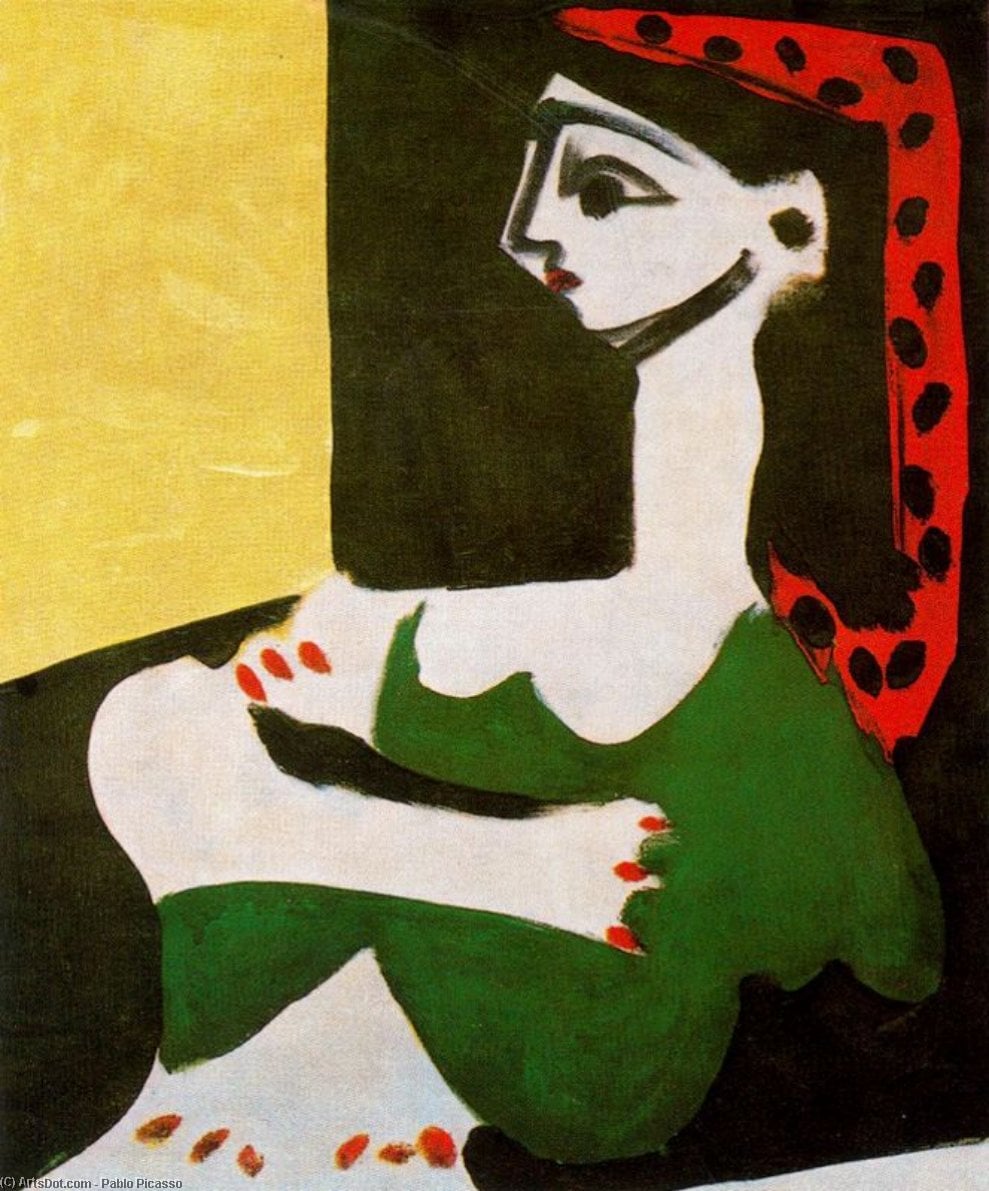
Pablo Ruiz Picasso's “Jacqueline’s Portrait (Profile) 3,” painted in 1962, isn’t merely a likeness; it’s a distilled essence of a woman—a study in understated elegance and the profound connection between artist and subject. This oil painting, housed within the Museum Quartier Des Héronnières in Fontainebleau, France, offers a glimpse into Picasso's later years, a period marked by both artistic refinement and an intimate exploration of his beloved muse, Jacqueline Roque. The work transcends simple portraiture, becoming a meditation on form, color, and the quiet power of observation.
Picasso’s masterful manipulation of Cubist principles is immediately apparent. While rooted in the fragmented forms and multiple perspectives that defined his earlier revolutionary period, here he employs them with a newfound control and restraint. The subject's features—her profile, her hands delicately crossed—are not dissolved into geometric shards but are rendered with a remarkable clarity and solidity. This shift reflects Picasso’s evolving style, moving away from the chaotic energy of his Cubist experiments towards a more considered and emotionally resonant approach. The painting is a testament to his ability to synthesize past innovations with a mature artistic vision.
The Woman Behind the Canvas: Jacqueline Roque
Jacqueline Roque, Picasso’s second wife, played a pivotal role in shaping this portrait. Meeting her at a pottery studio in 1961, she became an enduring source of inspiration for the artist throughout their marriage. “Jacqueline’s Portrait (Profile) 3” captures her with a remarkable sense of dignity and composure. She is depicted seated, her gaze direct yet subtly enigmatic—a silent invitation to connection. The painting isn't about capturing a fleeting moment but rather conveying a deeper understanding of Jacqueline’s character: her strength, her intelligence, and the quiet grace that defined her presence.
The choice of Jacqueline herself is significant. Picasso frequently depicted women he admired – from Dora Maar to Marie-Thérèse Walter – often imbuing them with symbolic weight. In this portrait, however, there’s a sense of equality, a mutual respect between artist and subject that transcends the traditional power dynamics of the art world. The painting feels less like a conquest of beauty and more like an honest portrayal of a woman he deeply cherished.
A Symphony of Color and Form
The palette of “Jacqueline’s Portrait (Profile) 3” is both restrained and powerfully evocative. Picasso utilizes a harmonious blend of blues, greens, and yellows—shades that create a sense of depth and luminosity. The bold use of color isn't merely decorative; it serves to emphasize the subject’s features and imbue the painting with an emotional intensity. Notice how the cool blues and greens contribute to a feeling of serenity, while the warmer yellows add a touch of warmth and intimacy.
Furthermore, Picasso masterfully employs simplification and stylization. The subject's features are subtly abstracted, reducing them to their essential forms—a testament to his Cubist training. Yet, these simplifications don’t diminish the portrait’s impact; rather, they heighten its emotional resonance. The careful arrangement of shapes and lines creates a dynamic composition that draws the viewer’s eye and invites contemplation.
Symbolism and Legacy
Beyond its technical brilliance, “Jacqueline’s Portrait (Profile) 3” is rich in symbolism. The seated posture itself suggests stability and introspection—a reflection of Jacqueline's character. The crossed hands convey a sense of quiet confidence and self-possession. The painting can be interpreted as an exploration of the female form, a celebration of beauty, and a testament to the enduring power of human connection.
Picasso’s legacy is inextricably linked to this portrait. It stands as a poignant example of his artistic evolution—a culmination of decades of experimentation and innovation. Reproductions of “Jacqueline’s Portrait (Profile) 3” offer art lovers a chance to experience the depth and complexity of Picasso's vision, bringing a touch of timeless elegance to any space.


 Peržiūrėti realaus dydžio版
 Perjungti į spausdinimą
 Siųsti
 Dalintis
 Išsamiau
 Vadovas

 Atsisiųsti
 Panašūs eksponatai
 Rentgeno spindulių nuotrauka
 Diaporama
 Statistika

 Rodyti daugiau


