Autoriaus biografija
Pablo Picasso: Revoliucijos ir Inovacijų Simfonija
Pablo Ruiz y Picasso, vardas sinonimiškas meninės revoliucijos, gimė 1881 m. spalio 25 d. Malagoje, Ispanijoje. Legenda byloja, kad jo pirmieji ištarti žodžiai buvo „piz, piz“ – bandymas pasakyti „pieštukas“. Šis ankstyvas polinkis buvo puoselėjamas tėvo, José Ruiz y Blasco, dailininko ir meno mokytojo, kuris suteikė jaunajam Pabalui pagrindinį lavinimą. Tačiau mokinys netrukus pralenkė mokytoją, demonstruodamas nepaprastą gebėjimą natūraliai atvaizduoti, kas bylojo apie didelį talentą. Šeimos vėlesnis persikėlimas – pirmiausia į A Coruña, paskui į Barseloną – buvo pažymėti asmeninėmis tragedijomis, ypač sesers mirtimi, patirtys, kurios subtiliai paveiks jo vėlesnius darbus melancholiškais ir mirties temų motyvais. Net studijuodamas dailės mokykloje Barselonoje ir trumpai viešėdamas Karališkosios San Fernando akademijos Madride, Picasso nepritarė griežtiems akademinio lavinimo apribojimams, priešingai – jis norėjo pasinerti į tokių meistrų kaip Velázquez ir Goya kūrybą, formuodamas savo kelią link meninės naujovės.
Nuo Liūdnų Mėlynių iki Rožinių Atspalvių
XX amžiaus pradžioje Pablo Picasso kūriniuose atsirado du išskirtiniai laikotarpiai: Mėlynasis periodas (apie 1901–1904 m.) ir Rožinis periodas (1904–1906 m.). Gimęs asmeninio vargo ir socialinių kančių supratimo, Mėlynasis periodas pasižymi paveikslais, kuriuose vyrauja niūrūs mėlyni ir mėlynai-žalios spalvos. Šiems kūriniams būdingos atstumtų figūrų – vargdienių, aklųjų, prostitutečių – atvaizdai, perteikti su giliu užuojauta, kalbančia apie vienatvės ir bejėgiškumo temas. „La Vie“ (1903 m.) ir „Senasis Gitaraistas“ (1903–1904 m.) yra skaudžiai paveikslai, atspindintys šį emocingą laikotarpį. Asmeninio gyvenimo pokyčiai, kartu su persikėlimu į Paryžių, paskatino Rožinio periodo atėjimo pradžią. Paletė ženkliai pašviesėjo, priimdama rožinius, oranžinius ir raudonus atspalvius, atspindėdami optimistiškesnį požiūrį. Šis periodas parodė susidomėjimą cirkų artistas – harlekinai, akrobatai ir šeimų trupės – figūromis, įkūnijančiomis tiek pažeidžiamumą, tiek atsparumą. „Saltimbančių Šeima“ (1905 m.) puikiai apibūdina šį perėjimą, numenantį būsimas stilių eksperimentus.
Perspektyvos Sulaužymas: Kubizmas ir Tolesnės Evoliucijos
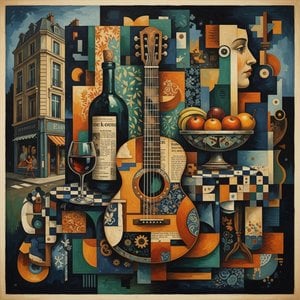
1907 metai pažymėjo svarų momentą meno istorijoje su „Les Demoiselles d'Avignon“ sukūrimu. Įkvėptas Iberijos skulptūrų ir Afrikos kaukių, šis inovatorius paveikslas sugriovė tradicinius perspektyvos ir atvaizdo principus. Tai buvo radikalus pasikeitimas, sąmoningas atmetimas šimtmečių senumo konvencijų, kuris atidarė kelią Kubismui. Bendradarbiaudamas su Georges Braque, Picasso įkūrė šį revoliucinį judėjimą, fundamentaliai pakeisdamas tai, kaip menininkai suvokia ir vaizduoja realybę. Analitinis Kubizmas (1909–1912 m.) apėmė objektų fragmentavimą į geometrines formas, atliktas niūrūs spalvas, tarsi išardant pačią formą. Vėliau tai pasidarė Sintetiniu Kubizmu (1912–1919 m.), kuriame buvo integruojami koliažo elementai – laikraščio iškarpos, audinio gabalai – pridėdami tekstūrą ir naujus vizualinius sudėtingumo sluoksnius. Picasso nesiekė tiesiog atvaizduoti pasaulį; jis norėjo jį dekonstruoti ir rekonstruoti savo sąlygomis.
Neramus Eksperimentatorius: Neoklasicizmas, Surrealizmas ir Karas
1920-ieji metai parodė Pablo Picasso trumpą neoklasikinio stiliaus pažiūros laikotarpį, sukuriant monumentalų figūrų, atspindinčių klasikines formas, tačiau išlaikančius aiškiai modernią jautiklą. Tuo pat metu jis susidūrė su besivystančiu Surrealistų judėjimu, nors ir niekada visiškai neprisijungė prie jo principų. Šio laikotarpio darbai derino ankstesnius stilių įtakas su surrealistinėmis temomis ir iškreiptomis perspektyvomis, demonstruodamas jo nepailstingą eksperimentavimą. Ispanijos pilietinio karo siaubai giliai paveikė Picasso, sukeldami „Guernica“ (1937 m.) kūrinius – visceralų ir emocingą atsakymą į Guernikos bombardavimą. Šis monumentalus darbas tapo patvaria karo baisumų simboliu, stiprindamas Pablo Picasso vaidmenį ne tik kaip menininko, bet ir kaip galingos taikos ir socialinės teisingumo balso. 1950-ųjų ir 60-ųjų dešimtmečiais jis toliau stūmė ribas, tyrinėdama keramiką, skulptūrą ir grafikos technologijas su nepaprastu smalsumu ir įgūdžiu. Santuoka su Jacqueline Roque 1961 m. atnešė naują dimensiją jo asmeniniam gyvenimui ir meninei ekspresijai.
Neprieinamas Poveikis
Pablo Picasso mirė 1973 m. balandžio 8 d. Mougins, Prancūzijoje, palikdamas neįtikėtiną kūrinių rinkinį – daugiau kaip 50 000 darbų – kurie ir toliau žavi ir įkvepia. Jo meninė raida buvo formavusi įvairių įtakų, nuo ispanų meistrų kaip Velázquez ir Goya iki Iberijos skulptūrų, Afrikos meno ir Henri Matisse ryškių spalvų paletės. Jo poveikis XX amžiaus menui yra neįvertinamas. Jis įkūrė Kubizmą, pionierius koliažo ir konstruojamosios skulptūros, ir nuolat išbandydavo meno konvencijas. Pablo Picasso nepailstantis eksperimentavimas perėjo modernųjį meną, palikdamas nepagingusį įspūdį visoms kartoms menininkų ir patvirtindamas savo padėtį kaip vieną svarbiausių ir įtakingiausių figūrų istorijoje. Jo palikimas tęsiasi už drobės ribų, atsiliepiantis daugybėje šiuolaikinės kultūros aspektų ir primenantis meno vizijos transformuojančią galią.



 Peržiūrėti realaus dydžio版
 Perjungti į spausdinimą
 Siųsti
 Dalintis
 Išsamiau
 Gidas
Gidas

 Atsisiųsti
 Panašūs eksponatai
 Rentgeno spindulių nuotrauka
 Diaporama
 Statistika


 Rodyti daugiau






































 Stiklo variantas prieinamas tik pasirinkus dydį iki 110 cm