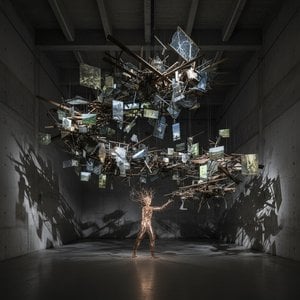
The Anti-Clock Project (2015), autoriaus Nidhal Chamekh, meistro rankomis sumalatyta aliejų technika reprodukcija
Peržiūrėti realaus dydžio版 Peržiūrėti AR realybėje Perjungti į spausdinamus版作品 Perejti prie skaitmeninių vaizdų Pasidalinti
Išsamiau Vadovas Pridėti į mėgstamiausius Atsisiųsti Panašūs eksponatai Rentgeno spindulių nuotrauka Automatinė diorama 问答 Prezentacija Statistika

The Anti-Clock Project Rankiniu būdu dažyta aliejaus reprodukcija

Explore Nidhal Chamekh’s ‘The Anti-Clock Project’ (2015). A haunting installation questioning monuments & political history. Somatic forms, resin figures & powerful symbolism. Acquire this unique artwork.

Tunisian visual artist nidhal chamekh explores power & identity through evocative drawings & installations. Exhibited globally, his work examines history & memory.

Šiame puslapyje rodomas meno kūrinys yra saugomas autorių teisių įstatymais, todėl neturime teisės legaliai kurti ar parduoti jo identiškos reprodukcijos. Ši apsauga užtikrinama remiantis tokiais tarptautiniais susitarimais kaip Bernės konvencija ir pagal nacionalines įstatymų nuostatas, įskaitant tas, kurias nurodo JAV autoriškos teisės įstatymas – 17-asis skyrius.

Kaip pagarbią ir teisėtą alternatyvą, mes siūlome pagal užsakymą rankomis dažytus paveikslus, įkvėptus originalo. Mūsų įgudę ir profesionalūs menininkai kruopščiai tiria originalo stilių, nuotaiką ir meninę esmę, kad sukurtų naują, unikalią kūrinį, kuris sukelia tą paties jausmą – išlikdamas tuo tarciau originaliu, savarankišku kūrybiniu darbu.

Šis metodas visiškai atitinka autorių teises, nes jame nėra saugomo kūrinio kopijavimo ar dubliavimo. Tai yra kūrybinė reinterpretacija – naujas paveikslas, kurį įkvėpė originalas, tačiau kuris nėra jo identiškas.

Rankų darbo aliejinės reprodukcijos

Rankiniu būdu tapytas aliejus ant droblio jūsų pageidaujamame dydį ir rėmuose – tai mūsų menininkų pagal užsakymą sukurtas darbas. ( Perjungti į spausdinamus版作品 Perejti prie skaitmeninių vaizdų)

Corner sample of the P118B picture frame: lieto polistirolo detalės, 5 cm wide and 3 cm thick
P118B €10
Corner sample of the P118H picture frame: lieto polistirolo detalės, 5 cm wide and 3 cm thick
P118H €10
Corner sample of the P118W picture frame: lieto polistirolo detalės, 5 cm wide and 3 cm thick
P118W €10
Corner sample of the P438Z picture frame: lieto polistirolo detalės, 5.5 cm wide and 3.5 cm thick
P438Z €10
Corner sample of the P508JH picture frame: lieto polistirolo detalės, 7 cm wide and 3.5 cm thick
P508JH €12
Corner sample of the P508YH picture frame: lieto polistirolo detalės, 7 cm wide and 3.5 cm thick
P508YH €12
Corner sample of the P805H picture frame: lieto polistirolo detalės, 5 cm wide and 3.5 cm thick
P805H €10
Corner sample of the P805Z picture frame: lieto polistirolo detalės, 5 cm wide and 3.5 cm thick
P805Z €10
Corner sample of the P919BZ picture frame: lieto polistirolo detalės, 7 cm wide and 3.5 cm thick
P919BZ €10
Corner sample of the P919G picture frame: lieto polistirolo detalės, 7 cm wide and 3.5 cm thick
P919G €10
Corner sample of the P919XJ picture frame: lieto polistirolo detalės, 7 cm wide and 3.5 cm thick
P919XJ €10
Corner sample of the P959ZH picture frame: lieto polistirolo detalės, 5 cm wide and 3 cm thick
P959ZH €10
Corner sample of the P968JZ picture frame: lieto polistirolo detalės, 6 cm wide and 4 cm thick
P968JZ €12
Corner sample of the W106C picture frame: solidus medžio

**Improved version:**
solidus medis, 5 cm wide and 3 cm thick
W106C €8
Corner sample of the W218G picture frame: solidus medžio

**Improved version:**
solidus medis, 5 cm wide and 3 cm thick
W218G €10
Corner sample of the W218JH picture frame: solidus medžio

**Improved version:**
solidus medis, 5 cm wide and 3 cm thick
W218JH €8
Corner sample of the W218Y picture frame: solidus medžio

**Improved version:**
solidus medis, 5 cm wide and 3 cm thick
W218Y €10
Corner sample of the W307PJ picture frame: solidus medžio

**Improved version:**
solidus medis, 6 cm wide and 3 cm thick
W307PJ €10
Corner sample of the W316G picture frame: solidus medžio

**Improved version:**
solidus medis, 6 cm wide and 3 cm thick
W316G €10
Corner sample of the W316PJ picture frame: solidus medžio

**Improved version:**
solidus medis, 6 cm wide and 3 cm thick
W316PJ €8
Corner sample of the W316Y picture frame: solidus medžio

**Improved version:**
solidus medis, 6 cm wide and 3 cm thick
W316Y €10
Corner sample of the W398PJ picture frame: solidus medžio

**Improved version:**
solidus medis, 5 cm wide and 3 cm thick
W398PJ €8
Corner sample of the W4111J picture frame: solidus medžio

**Improved version:**
solidus medis, 6.5 cm wide and 3.5 cm thick
W4111J €10
Corner sample of the W500HY picture frame: solidus medžio

**Improved version:**
solidus medis, 7 cm wide and 5 cm thick
W500HY €15
Corner sample of the W500JH picture frame: solidus medžio

**Improved version:**
solidus medis, 7 cm wide and 5 cm thick
W500JH €15
Corner sample of the W692G picture frame: solidus medžio

**Improved version:**
solidus medis, 8 cm wide and 4 cm thick
W692G €12
Corner sample of the W849H picture frame: solidus medžio

**Improved version:**
solidus medis, 5 cm wide and 3 cm thick
W849H €8
Corner sample of the W940BG picture frame: solidus medžio

**Improved version:**
solidus medis, 7.5 cm wide and 4.5 cm thick
W940BG €15
Corner sample of the W953PJ picture frame: solidus medžio

**Improved version:**
solidus medis, 6 cm wide and 3.5 cm thick
W953PJ €8

Standartinis dydis
pagal užsakymą
CM
INCH

Pasirinkite iš mūsų nustatytų dydžių, atitinkančių originalaus meno kūrinio proporcijas.

plotis
aukštis

Įveskite jums reikiamą plotį ir aukštį, kad paveikslas atitiktų jūsų rėmą ar sieną. Kadangi šis darbas yra rankinio darbo, siekiant išgauti kitokios formos dydį, paveikslas gali būti šiek tiek didesnis (nuo kraštų bus palikta daugiau erdvės) arba mažesnis – pasirinkite jums patogiausią variantą. Prieš pradedant tapyti, atsiųsime jums skaitmeninį maketą patvirtinimui. Šioje puslapio nuotraukoje matomas vaizdas nėra galutinis rezultatas – jį parodys tik sukurtas maketas.

Ką galima pakeisti (pavyzdžiai): Pakeisti veidą į kliento nuotrauką; Pridėti augintinį (pvz., pakeisti katę šunimi); Įtraukti paslėptą žinutę fone; Pakeisti fono kraštovaizdį ar elementus.
Gavus užsakymą, WahooArt.com komanda susisieks su klientu el. paštu dėl instrukcijų ir pateiks maketo pavyzdį

Pristatymas visame pasaulyje () per 3–4 savaites, o ne įprastai – per 5 savaites. (10 lapkritis). Kokybė lieka nepakeičiama.

Nemokamas greitasis pristatymas visame pasaulyje
Aukštos kokybės lininis drobė
Pilnas siuntimo draudimas
Muitinės mokesčių grąžinimo garantija
Tikro spalvų atitikimo garantija
100 dienų grąžinimo politika (tik esant įtaigoms)
100% pinigų grąžinimo garantija
Nuolaida dideliems užsakymams

Visos kainos suma

€ 243

The Anti-Clock Project

Reprodukcijos technika

Reprodukcijos matmenys

-

Bendroji kaina

€ 243

Trumpa informacija

  • Influences: Activism
  • Medium: Painting/Installation
  • Year: 2015
  • Title: The Anti-Clock Project
  • Movement: Contemporary Art

Karo viktorina

Kiekviename klausime yra tik vienas teisingas atsakymas.

Klausimas 1:
What is the primary subject matter explored in Nidhal Chamekh’s ‘The Anti-Clock Project’?
Klausimas 2:
The painting features resin figures with what characteristic element?
Klausimas 3:
Nidhal Chamekh’s artistic background includes studies at which institutions?
Klausimas 4:
What historical event is referenced through the imagery of anatomical sketches and Arabic script within ‘The Anti-Clock Project’?
Klausimas 5:
According to the provided text, what is a key theme explored through Chamekh’s use of ‘somatic forms’?

The Weight of Monuments: Nidhal Chamekh’s “The Anti-Clock Project”

Nidhal Chamekh's "The Anti-Clock Project," created in 2015, isn’t merely a painting; it’s an unsettling meditation on memory, resistance, and the enduring scars of political upheaval. Emerging from a lineage deeply rooted in Tunisian activism – his family’s history intertwined with prominent figures challenging established power structures – Chamekh channels this legacy into a powerfully evocative visual language. The work immediately commands attention, not through overt grandeur, but through a carefully constructed tension between scale and detail, between the monumental and the intimately rendered.

At its core, “The Anti-Clock Project” presents a stark tableau: a pristine white table dominates the composition, bearing a meticulously detailed map or blueprint. This isn’t a conventional cartographic representation; rather, it feels like a schematic of urban decay, a fragmented landscape hinting at forgotten histories and unresolved conflicts. Surrounding this central element are carefully positioned resin figures – unsettlingly lifelike, almost anatomical in their precision – each carrying a weighty symbol: a gold-plated 9mm bullet affixed to the tip of a severed human finger. These aren’t idealized representations; they possess a raw, visceral quality, conveying both vulnerability and defiant strength.

Somatic Forms and Resin's Silent Testimony

Chamekh’s artistic signature lies in his masterful use of somatic forms – figures that seem to emerge from the body itself. He employs resin extensively, lending an almost fossilized quality to these sculpted elements. This technique isn’t simply about creating three-dimensional objects; it's a deliberate choice to imbue the figures with a sense of permanence and resilience, mirroring the enduring nature of memory and trauma. The cool, smooth surface of the resin contrasts sharply with the implied fragility of the human forms, amplifying the work’s emotional impact.

The meticulous detail evident in each figure – from the subtle curve of a finger to the precise rendering of a facial expression – speaks volumes about Chamekh's dedication to his craft. He doesn’t shy away from depicting difficult subjects; instead, he confronts them head-on with an unflinching honesty that is both unsettling and profoundly moving.

Echoes of Revolution: Symbolism and Historical Context

“The Anti-Clock Project” directly references the 2011 Arab Spring uprisings in Tunisia and across the Middle East. The title itself – “Anti-Clock Project” – subtly suggests a disruption of linear time, a rejection of established narratives, and an insistence on confronting the past. The inclusion of Arabic script alongside the anatomical sketches further anchors the work within its historical context, referencing the voices silenced by political repression.

The imagery—the severed fingers, the bullets, the maps—evokes the brutal realities of revolution: loss, violence, and the long-lasting consequences of conflict. It’s a poignant reminder that revolutions don't simply erase the past; they often leave behind a legacy of trauma and uncertainty. The reference to the fruit vendor who self-immolated in December 2010 – an act of desperation that ignited the Tunisian revolution – is particularly resonant, highlighting the personal sacrifices made in the pursuit of freedom.

A Haunting Resonance: Emotional Impact and Artistic Legacy

“The Anti-Clock Project” transcends mere representation; it’s a deeply felt exploration of human experience. The work possesses a haunting resonance that lingers long after viewing, prompting reflection on themes of memory, identity, and the enduring struggle for justice. Chamekh's ability to combine technical mastery with profound emotional depth establishes him as a significant voice within contemporary art.

Reproductions of this powerful piece offer an opportunity to bring its evocative imagery into any space, serving as a constant reminder of history’s complexities and the importance of bearing witness to difficult truths. It's a work that demands attention, invites dialogue, and ultimately compels us to confront our own understanding of the world.

Klausimai ir atsakymai

Kokia technika buvo panaudota kūriniam darbui „The Anti-Clock Project“ – Nidhal Chamekh?

„The Anti-Clock Project“ technika – Acrylic On Canvas.

Kokią emociją perteikia Contemporary Conceptual Art stiliaus kūrinys „The Anti-Clock Project“?

„The Anti-Clock Project“ Melancholic emocija akompaniuoja jo Contemporary Conceptual Art stiliui.

Kur šiandien galima pamatyti kūrinį „The Anti-Clock Project“ – Nidhal Chamekh?

Originalus „The Anti-Clock Project“ – Nidhal Chamekh saugomas La Biennale di Venezia, Venice, Italy. Kopija leidžia šį kūrinį eksponuoti namuose.


Autoriaus biografija

The Somatic Resonance of Nidhal Chamekh

Born in Menzel Bouarab, Tunisia, in 1985, Nidhal Chamekh has emerged as a profound voice in contemporary visual art, weaving together the visceral realities of the human body with the heavy, often scarred, landscapes of political history. His artistic journey is one marked by intellectual rigor and a deep-seated engagement with the legacies of power and resistance. From his formative training at the Institut Supérieur des Beaux-Arts Tunis to his advanced doctoral research at Sorbonne Université in Paris, Chamekh has cultivated a practice that transcends mere representation, seeking instead to uncover the subcutaneous layers of memory and identity.

Chamekh’s work is deeply rooted in a lineage of activism; born into a family whose history is intertwined with prominent Tunisian figures who challenged established power structures, he channels this inherited spirit into a visual language that is both haunting and transformative. His practice is not confined to a single medium but flows through drawing, sculpture, video, and complex mixed-media installations. This versatility allows him to navigate the delicate boundary between the anatomical and the political, using the somatic—the lived experience of the body—as a primary site for exploring how historical traumas are etched into our very flesh.

Symbolism and the Weight of Memory

At the heart of Chamekh’s aesthetic is a preoccupation with forms that evoke vulnerability and resilience. He is masterfully skilled in utilizing resin to create ultrarealistic, almost fossilized, anatomical elements. These figures often appear as if they are emerging from or being reclaimed by the earth, serving as silent witnesses to the passage of time and the persistence of struggle. In his most striking works, one might encounter severed human fingers rendered in resin, tipped with gold-plated 9mm bullets—a jarring juxtaposition of the biological and the ballistic that forces a confrontation with the material reality of violence.

His installations frequently utilize symbolic imagery to provoke contemplation on the legacies of colonialism and oppression. By referencing ancient monuments and architectural structures, Chamekh interrogates how these permanent markers shape our collective memory. His work often presents a tension between the monumental and the intimate, where large-scale landscapes or blueprints are interrupted by the fragile, visceral presence of human remains or anatomical sketches. This creates an unsettling atmosphere, much like a dreamscape where the political becomes deeply personal.

Major Achievements and Global Dialogue

Chamekh’s contribution to the contemporary art canon has been recognized on the world's most prestigious stages. His participation in the Venice Biennale stands as a landmark achievement, particularly through his groundbreaking series, De quoi rêvent les martyrs? (What do martyrs dream of?). This collection of twelve drawings, produced during the height and aftermath of the Arab Spring, utilizes scientific sketches, Arabic script, and dystopian imagery to articulate the steep human cost of revolution. The work serves as a poignant meditation on the dream of martyrdom and the enduring scars left by social upheaval.

Beyond the Biennale, his exhibitions at the Musée d'Art Moderne de Paris and the musée national de Carthage underscore his role in fostering critical global dialogues. One of his most ambitious undertakings, “The Anti-Clock Project” (2015), serves as an unsettling meditation on resistance. Through a meticulously constructed tableau involving maps of urban decay and lifelike resin figures, Chamekh challenges the viewer to look beyond the surface of history and confront the unresolved conflicts that continue to haunt our modern landscape.

Through his evocative use of medium and theme, Nidhal Chamekh continues to push the boundaries of contemporary art, ensuring that the voices of the past and the struggles of the present are never truly silenced. His work remains a vital, breathing testament to the power of art to act as both a mirror to our trauma and a conduit for our collective remembrance.

Nidhal Chamekh

Nidhal Chamekh

1985 - , Tunisia

Trumpa informacija

  • Full Name: nidhal chamekh
  • Nationality: Tunisian
  • Date Of Birth: 1985
  • Place Of Birth: Menzel Bouarab, Tunisia
  • Notable Artworks: ['The Anti-Clock Project']
  • Artistic Movement Or Style: Contemporary drawing & installations