Nicolas Poussin: A Titan of Classical Baroque
Nicolas Poussin (1594 – 1665) stands as one of the most influential figures in French Baroque painting, yet his artistic vision remained deeply rooted in the traditions of Renaissance Italy. Born in Le Havre, Normandy, his early life remains shrouded in mystery, but it undeniably laid the foundation for a career that would reshape the landscape of European art history.
His formative years were marked by an intense fascination with classical antiquity—a passion fueled by encounters with Raphael’s masterpieces during his travels to Rome. Around 1624, he embarked on this pilgrimage, immersing himself in the artistic fervor of the papal court and establishing connections with fellow artists who championed a refined aesthetic sensibility.
The Poet's Inspiration: Decoding Mythological Narrative
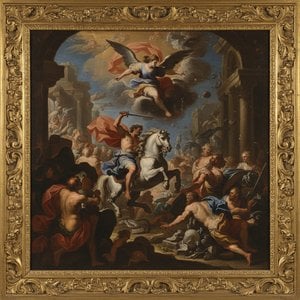
“The Poet’s Inspiration,” painted circa 1630, exemplifies Poussin’s signature style—a harmonious blend of classical restraint and Baroque grandeur. This monumental canvas depicts Apollo presiding over a gathering of Muses and poets, tasked with immortalizing the beauty of the natural world through verse.
Poussin meticulously crafted this scene using techniques honed during his Roman apprenticeship, prioritizing clarity and order above flamboyant ornamentation. Notice how the figures are arranged in a triangular composition—a deliberate device that draws the viewer’s gaze towards Apollo and reinforces the painting's intellectual rigor. The masterful use of chiaroscuro—the dramatic interplay of light and shadow—amplifies the emotional impact of the artwork, highlighting key characters and creating an atmosphere of sublime contemplation.
Color Palette & Artistic Technique: Echoes of Venetian Masters
Inspired by Titian’s luminous palette, Poussin employed a rich yet restrained color scheme dominated by warm earthy tones—deep reds, golden ochres, soft whites, and muted browns. These hues evoke the grandeur of Renaissance Italy and contribute to the painting's overall sense of serenity.
Furthermore, Poussin’s meticulous brushwork demonstrates unparalleled mastery of oil paint layering and blending—a technique that achieves remarkable realism in portraying skin tones and textures. His dedication to capturing subtle nuances of light and color elevates “The Poet’s Inspiration” beyond mere visual representation, transforming it into a profound meditation on beauty and artistic creation.
Historical Context & Symbolic Significance
Poussin's work emerged during the turbulent years of Louis XIII’s reign—a period marked by religious upheaval and political intrigue. Yet, amidst this turmoil, he steadfastly upheld classical ideals—clarity, harmony, and intellectual contemplation—establishing himself as a champion of humanist values.
"The Poet’s Inspiration" serves as a testament to Poussin's enduring legacy—a masterpiece that continues to inspire artists and captivate audiences worldwide. Its timeless beauty resides not only in its exquisite craftsmanship but also in its profound exploration of human experience and the transformative power of art.



 Peržiūrėti realaus dydžio版
 Pirkti rankomis tapytą reprodukciją
 Siųsti
 Dalintis
 Išsamiau
 Gidas
Gidas

 Atsisiųsti
 Panašūs eksponatai
 Rentgeno spindulių nuotrauka
 Diaporama
 Statistika


 Rodyti daugiau






































 Stiklo variantas prieinamas tik pasirinkus dydį iki 110 cm