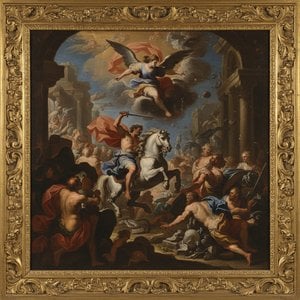
Nikolajaus Pusano: Klasikinio Grožio Simfonija
Nikolajus Pusas – prancūzų baroko tapytojas, kurio pavardė sinonimiškai susijusi su klasikinės tradicijos įtvirtinimu Prancūzijoje. Nors didžiąją savo kūrybos gyvenimo dalį jis praleido Romoje, jo darbai atspindi gilią meilę senovės kultūrai ir filosofiniam požiuriui į pasaulį. Gimė 1594 metais Le Andelye, Normandijoje, Pusas nuo jaunų metų rodė polinkį piešti, o jo ankstyvieji metai apipinti paslaptimis. Tačiau būtent kelionė į Romą 1624 metais tapo lemiančiu momentu, atvėręiu jam duris į senovės pasaulio lobius ir įkvėpusį kurti kūrinius, kurių grožis ir intelektualinis gilumas išlieka nesenstantys iki šių dienų. Ankstyvieji jo darbai atsispindėjo venecijietiškojo renesanso įtaka – spalvotoj ir jausmingojo stiliaus paveikslai, tačiau jau tada galima pastebėti tvarkos ir intelektualinio aiškumo užuomazgas, numatantį jo būsimąjį meistriškumą.
Romos Metų: Klasikinio Idealo Formavimas
Roma nebuvo tik tapybės studija; tai buvo Pusano dvasios lydytojas. Jame susiformavo intelektualiųjų ir archeologų ratas, kur Cassiano dal Pozzo vaidino itin svarbų vaidmenį. Pozzo aistringai dokumentuodamas senovės civilizacijas įskiepijo Pusanui gilią pagarbą istorinei tikrumiui ir norą įkvėpti savo paveikslams amžinybės jausmą. Šis laikotarpis paskatino Pusaną atsiriboti nuo kai kurių jo tolynųjų kolegų ekstravagancijos, priimant stilių, pasižymintį aiškumu, pusiausvyre ir ryškiu dėmesiu linijai. Jis kruopščiai studijavo Rafaelio darbus, įsisavindamas jų harmoningas kompozicijas ir elegantiškas formas, kartu semdamasis įkvėpimo iš senovės skulptūrų ir literatūros, pavyzdžiui, Ovidžio *Metamorfozes*. Jo paveikslai ėmėsi atvaizduoti veikėjų iš klasikinės istorijos ir mitologijos – ne kaip dekoratyvinius elementus, bet kaip moralinių dorybių ir filosofinių idealų įsikūnijimus.
Temų Spektras: Istorija, Mitai ir Šventumas
Pusas kūrė labai įvairiai, tačiau visada išliko ištikimas pagarbai klasikinio paveldo principams. Jis dažnai vaizdavo scenas iš senovės istorijos – tragediją patyrusio Germaniko likimą, kuriuos apipildavo stoikiška dvergumu ir moraliniu svoriu. Jo mitologiniai paveikslai nebuvo tiesiog pažįstamų pasakojimų perkopijavimas; tai buvo žmogaus prigimties tyrimai, dažnai apkrauti alegorine prasme. *Arcadijos* serija, ypač ikoninis *Et in Arcadia ego*, tapo simboliu jo filosofinio gylio, skatindamas apmąstyti mirties ir atminties jėgos išlikimą. Be istorijos ir mitų, Pusas pasisuko ir į religines temas, pirmiausia monumentalioje *Septyni Sakramentai* serijoje – projekte, kuriame atsiskleidė tiek jo teologinis supratimas, tiek kompozicinis meistriškumas. Netgi šiuose sakraliniuose vaizduose jis išlaikė klasikinį santūrumą, vengdamas pernelyg emocinio intensyvumo ir pirmenybę teikdamas ramybei ir didingumui. Vėlesniais metais ekspresyvios gamtos peizažai vis labiau įsitvirtino, derinant realizmą su idealizuotomis formomis, kad sukurtų vaizdus, kurie sukelia harmonijos ir ramybės jausmą.
Pavelmė: Prancūzų Klasicizmo Formavimas
Nors didžiąją savo karjeros dalį praleido užsienyje, Nikolajaus Pusano įtaka Prancūzijos menui buvo milžiniška. 1640 metais jis trumpam grįžo į Paryžių pagal Kardinolo Ričelieu kvietimą ir buvo paskirtas Karaliaus Pirmuoju Tapytoju, tačiau teisinės intrigos ir darbo krūvis jį greit atgrąsino į Romą. Ten jis tęsė kurti iki savo mirties 1665 metais. Jo atsidavimas klasikinio pavyzdžio principams padėjo nustatyti standartus meninės mokyklos ir praktikos Prancūzijoje, paveikdamas daugybę sekėjų kartų. Jis tapo pagrindiniu figūra Académie Royale de Peinture et de Sculpture, įtvirtindamas savo poziciją kaip prancūziškojo klasicizmo pamatą. Tokie dailininkai kaip Žakas Luisas Davidas ir Polis Sezanas atvirai pripažino savo skolą Puso metodų griežtumui ir intelektualinei gilioms. Jo palikimas išsiskiria ne tik stilistiniu imituojimu, bet ir įsipareigojimu tvarkai, aiškumui bei senovės idealų amžinajam jėgai – liudijimui menininko, kuris siekė ne tik pavaizduoti pasaulį, bet ir pakelti jį protingumo ir grožio prizmę.
- Pagrindiniai darbai: *Germaniko Mirtis*, *Septyni Sakramentai Serija*, *Romos Kelias*, *Auklėtas Orionas*, *Metų Laikai*.
- Pagrindinės savybės: Klasikinė kompozicija, linijumas, istorinės ir mitologinės temos, ramybės peizažai.



 Peržiūrėti realaus dydžio版
 Pirkti rankomis tapytą reprodukciją
 Siųsti
 Dalintis
 Išsamiau
 Gidas
Gidas

 Atsisiųsti
 Panašūs eksponatai
 Rentgeno spindulių nuotrauka
 Diaporama
 Statistika


 Rodyti daugiau






































 Stiklo variantas prieinamas tik pasirinkus dydį iki 110 cm