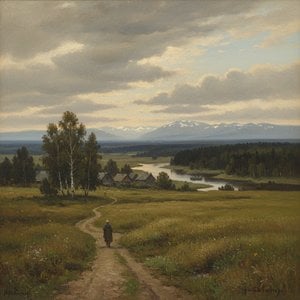
Nikolajus Roerichas: Tarp Dvasios ir Menų
Nikojaus Roericho (1874–1947) pavardė skamba kaip legendos, o jo kūriniai – tarsi atveria duris į paslaptingą pasaulį. Gimęs Sankt Peterburge, Rusijoje, į turtingą notaro šeimą, nuo vaikystės Roerichas buvo apipavaldas intelektualinės ir kultūrinės aplinkos. Jo ankstyvieji metai buvo tarsi palankios dirvos sėkloms, iš kurių vėliau sužydėjo daugybė talentų – dailininko, archeologo, rašytojo, filosofo ir visuomeninio veikėjo. Simultaniškai studijavęs teisę ir dailę Sankt Peterburgo universitete bei Imperatoriškojo meno akademijos, Roerichas nuo jaunumo rodė gebėjimą jungti intelektualinį pagrindumą su meniniu įkvėpimu – sąjungą, kuri apibrėš jo visą gyvenimą. Šis dualumas nebuvo prieštaringas; priešingai, jis atspindėjo įsitikinimą, kad meniškos vizijos reikia istorinio konteksto ir intelektualinės disciplinos.
Simbolizmo Naštos ir Teatrų Magija
Roericho meninis vystymasis buvo giliai paveiktas Rusijos simbolizmo srovės – judėjimo, siekusio atskleisti emocinius ir dvasinius gelmes per įkvepiančius vaizdus ir užuominas. Jis greitai įsitraukė į Sergejaus Diagiliovo įtakingą „Pasaulio meno“ draugiją, vėliau netgi ėmęs vadovauti šiai organizacijai. Šis ryšys buvo kertinis akmuo, atvėręs jam inovatyvių dailininkų, kompozitorių ir mąstytojų tinklą, perkuriančius Rusijos meno kraštovaizdį. Ankstyvieji jo darbai atskleidė susidomėjimą archeologija ir scenografija, sukūrusius reikšmingus bendradarbiavimus su Diagiliovo „Ballets Russes“. Roericho dizainai tokioms spektaklėms kaip Aleksandro Borodino *Princas Igoris* (1909) ir garsiausias – Igorio Stravinskio revoliucinis *Pavasario šventė* (1913), nebuvo tik dekoracijos; jie buvo integralios teatro dalys. Jis derindavo kruopščius istorinius tyrimus su drąsiu vaizdiniu, sukurdamas vizualiai stulbinančias erdves, sustiprinusias muzikos ir choreografijos emocinį poveikį. Šie dizainai nebuvo tik dekoratyvūs; jie buvo bandymai atskleisti pranašumo jėgas ir senovės ritualus, atspindėdami simbolistų susidomėjimą mitu ir dvasiniu pasauliu. Jo kūryba taip pat buvo paveikta okultinių tekstų ir viduramžių sektantiškų raštų, tokių kaip „Apgalvotoji knyga“, kurie įdėjo esoterinio reikšmingumo sluoksnius į jo meninius sukūrimus.
Link Dvasios Gelmių ir Himalajų Vizijų
Roericho karjera progresuojant, jo paveikslai patyrė reikšmingą transformaciją, vis labiau priimdami mistines ir dvasines temas. Šis poslinkis buvo paskatintas jo augančiu susidomėjimu Teosofija ir Rytų religijomis – filosofijomis, pabrėžiančiomis visko tarpusavio ryšį ir vidinės išminties siekį. Jo *Architektūriniai tyrimai* serijoje (1904–1905) buvo parodyta ne tik jo architektūrinių įgūdžių, bet ir gilus atsisakymas saugoti kultūros paveldo, numatęs jo vėlesnės veiklos siekį apsaugoti meną karo metais. Jo kūriniuose vis dažniau pasirodydavo pakartotiniai motyvai: didingosios gamtos panoramos, senovės miestai apipiešti paslaptimi ir figūros, įkvėptos dvasiniu reikšmingumu, tokios kaip Šv. Panteleimonas ir Kuan Jin. Galbūt svarbiausia, Himalajai tapo pagrindiniu jo paveikslų motyvu, atstovaujančiu ne tik geografine vieta, bet ir gilios dvasinės galios bei apšvietimo sritimi. Jis surengė išsamius kelionės po Centrinę Aziją, vykdė archeologinius tyrimus ir dokumentavo senovesnes kultūras – patirtys, kurios giliai paveikė jo meninę viziją ir sustiprino įsitikinimą dėl kultūrų supratimo svarbos.
Pavelės Išsaugojimas ir Nuolatinis Įtaka
Nikojaus Roericho atsidavimas išsidergė už drobės ribų; jis buvo dedikuotas menų ir architektūros apsaugos gynėjas karo metais. Supratęs kultūrinių vertybių pažeidžiamumą, jis inicijavo Roericho Paktą 1935 m. – tarptautinę sutartį, skirtą apsaugoti kultūrines vertybes nuo sunaikinimo. Ši iniciatyva užtikrino jam kelis Nobelio Taikos premijos kandidatūras, pabrėžiant jo gilią humanitarinę poziciją. Jo nepaprasti pastodai parodė įsitikinimą, kad kultūros paveldo išsaugojimas yra būtina ne tik suprantant praeitį, bet ir statant taikesnę ateitį. Šiandien Roericho kūriniai yra šveniami žymiausiose muziejų kolekcijose visame pasaulyje, įskaitant Astrakhan State Picture Gallery ir garsiąją Nicholas Roerich Museum Niujorke. Jo poveikis Rusijos menui ir kultūrai lieka neįvertinamas. Jis sujungė meno išraišką su dvasiniu tyrinėjimų, įkvėpdamas kartas dailininkų ir mąstytojų savo vizionierišku požiūriu.
Jis prisimintas ne tik kaip dailininkas, bet ir kaip mokslinis veikėjas, humanistas bei vilties spindulys kultūros išsaugojimui.
Pagrindiniai Darbai ir Nuolatinis Relevancija
- Šv. Nikolajus: Detalus monochrominis muralas, kuriame pavaizduota viduramžių dailė ir herbų simbolika.
- Miestas: Įkvepiančios senovės miesto kraštovaizdžio nuotraukos, atspindinčios jo archeologinį susidomėjimą.
- Nagų Ežeras: Temperos paveikslas, jungiantis simbolizmą ir gamtą, pavyzdžiui, unikalus meninis požiūris.
Roericho palikimas ir šiandien skamba aktualiai. Kultūriniame konflikte ir aplinkosaugos problemose Roericho apsaugos gynimas atrodo dar svarbesnis. Jo menas kviečia mus apmąstyti egzistencijos paslaptis, dvasios galią ir mūsų bendro žmogaus paveldo išsaugojimo svarbą. Jis paliko kūrinių rinkinį, kuris ne tik vizualiai stulbinantis, bet ir giliai reikšmingas, siūlantis amžiną taikos, supratimo ir pagarbos visoms kultūroms žinią.



 Peržiūrėti realaus dydžio版
 Perjungti į spausdinimą
 Siųsti
 Dalintis
 Išsamiau
 Vadovas

 Atsisiųsti
 Panašūs eksponatai
 Rentgeno spindulių nuotrauka
 Diaporama
 Statistika


 Rodyti daugiau






































 Stiklo variantas prieinamas tik pasirinkus dydį iki 110 cm