Nathan Jay Jaffee: A Chronicle of American Life
Nathan Jay Jaffee (1921-1999) wasn’t a name immediately recognized by the public, yet his photographs offer an intimate and remarkably honest portrait of mid-20th century America. More than simply documenting scenes, Jaffee possessed a keen eye for capturing the essence of everyday life – from bustling city streets to quiet rural landscapes, from political rallies to solitary moments of reflection. His work, often characterized by its understated elegance and subtle social commentary, reveals a deep understanding of human nature and a profound connection to the American spirit.
Born in Brooklyn, New York, into a family of Russian immigrants, Jaffee’s early life instilled in him a strong sense of independence and resilience. He began working as a typesetter at a young age, supporting himself through the challenging years of the Great Depression. This experience, coupled with his military service during World War II – earning a Bronze Star for valor – shaped his perspective and informed his artistic approach. Following the war, he enrolled in photography classes taught by Sid Grossman, a key figure in the influential Photo League, an organization dedicated to socially conscious documentary photography. Grossman’s guidance proved pivotal, introducing Jaffee to techniques of street photography and fostering a commitment to capturing authentic representations of urban life.
The Early Years: Brooklyn Streets and the Echoes of the Photo League
Jaffee's early work focused primarily on the streets of Brooklyn – a vibrant tapestry of immigrant communities, working-class neighborhoods, and burgeoning cultural scenes. He meticulously documented these environments, capturing the faces, gestures, and textures that defined daily life. His photographs weren’t grand pronouncements; instead, they were quiet observations—a solitary figure reading a newspaper, children playing in a stoop, the weathered facade of a tenement building. This approach echoes the ethos of the Photo League, though Jaffee ultimately forged his own distinct style, characterized by a sensitivity to light and composition that set him apart.
Crucially, Jaffee’s connection to the Photo League extended beyond mere instruction; it provided him with a framework for understanding photography as a tool for social engagement. He participated in exhibitions alongside other members of the league, contributing to a broader dialogue about the role of art in reflecting and shaping society. His early work was later compiled and published in 1976 under the title “N. Jay Jaffee: Photography 1947-1956,” solidifying his place within this important photographic movement.
Expanding Horizons: From Urban Landscapes to Social Commentary
As time progressed, Jaffee’s subject matter broadened beyond the confines of Brooklyn. He traveled extensively throughout the United States and Europe, documenting diverse landscapes and capturing scenes of political demonstrations and social movements. The rise of the Civil Rights Movement and the anti-war protests of the 1960s profoundly influenced his work, leading him to photograph rallies, marches, and gatherings where individuals voiced their concerns about injustice and peace.
His portraits became increasingly significant during this period. He photographed a diverse range of subjects – artists, intellectuals, activists, and ordinary people—capturing their personalities and conveying their stories with remarkable empathy. Notable among his portrait subjects were Yoko Ono, Pete Seeger, Isaac Bashevis Singer, and Stan Brodsky, reflecting his engagement with the cultural and intellectual currents of his time.
A Shift Towards Nature: Late Works and Enduring Legacy
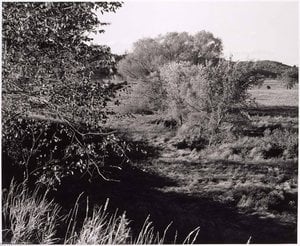
In later years, Jaffee’s focus shifted towards nature photography. He moved to Lloyd Harbor, Long Island, where he found solace and inspiration in the landscapes surrounding him. His late works are characterized by a serene beauty and a contemplative mood—images of coastlines, fields, and forests that evoke a sense of timelessness and connection to the natural world.
Despite his relatively quiet career trajectory, Jaffee’s work has been recognized for its enduring quality and artistic merit. A major retrospective, “Inward Image: Photographs by N. Jay Jaffee,” was held at the Brooklyn Museum in 1981, followed by another significant exhibition in 1999 at the Heckscher Museum of Art, Long Island, shortly after his death. His photographs are now housed in numerous museums and institutions across the United States and abroad, testament to their lasting impact on American photography. Nathan Jay Jaffee’s legacy lies not in grand pronouncements or revolutionary styles, but in his quiet, observant eye—a window into the heart of America.



 Peržiūrėti realaus dydžio版
 Perjungti į spausdinimą
 Siųsti
 Dalintis
 Išsamiau
 Vadovas

 Atsisiųsti
 Panašūs eksponatai
 Rentgeno spindulių nuotrauka
 Diaporama
 Statistika


 Rodyti daugiau






































 Stiklo variantas prieinamas tik pasirinkus dydį iki 110 cm