Autoriaus biografija
A Life Forged in Abstraction: The Journey of Milton Resnick
Milton Resnick, born Rachmiel Resnick on January 7, 1917, in Bratslav, Ukraine, was a pivotal figure in the evolution of American Abstract Expressionism. His story is one of displacement, artistic dedication, and an unwavering commitment to exploring the depths of abstract form and color. The early years of his life were marked by upheaval; his family, prosperous Jewish merchants – builders on his father’s side, flour traders through his mother – fled the turmoil following the Russian Revolution, seeking refuge in the United States in 1922. Settling in Brooklyn, young Rachmiel would later become Milton, a transformation mirroring his embrace of a new world and a new artistic identity. This immigrant experience profoundly shaped his sensibility, instilling a sense of searching and a willingness to forge his own path. Even as a teenager, Resnick defied familial expectations, leaving home at seventeen to pursue his passion for art, supporting himself through arduous means – selling blood, modeling – all while immersing himself in the burgeoning artistic landscape of New York City. His formal education included studies at Pratt Institute Evening School of Art and the American Artists School, but it was a close friendship with Willem de Kooning and tutelage under Hans Hofmann that proved most formative, guiding his early explorations into abstraction.
Parisian Echoes and the Rise of Abstract Expressionism
The years following World War II were crucial in Resnick’s artistic development. Serving in the Army during the war provided a stark contrast to the creative world he yearned for, but upon his discharge in 1945, he immediately sought inspiration abroad. From 1946 to 1948, Resnick lived and worked in Paris, a city still resonating with artistic innovation despite the recent conflict. This period proved transformative; he encountered giants of modern art – Wols, Giacometti, Brancusi, Matisse, Picasso, and Derain – absorbing their influences while simultaneously forging his own unique vision. The Parisian experience instilled in him a deep appreciation for materiality and form, qualities that would become hallmarks of his work. Returning to New York, Resnick became a founding member of the Artist’s Club in 1949, a vital hub for the burgeoning Abstract Expressionist movement. This collective, which included figures like Franz Kline, Ad Reinhardt, and Jack Tworkov, provided a platform for experimentation and intellectual exchange, solidifying his place within this groundbreaking artistic community. His participation in the seminal 9th Street Art Exhibition in 1951 further cemented his reputation as a rising force in American art.
Scale, Density, and the Pursuit of the Sublime
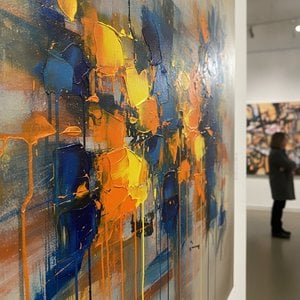
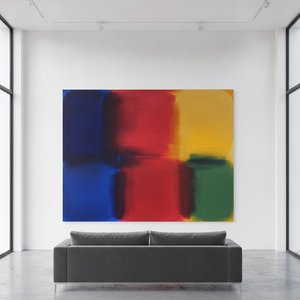
Resnick’s mature style is immediately recognizable for its monumental scale and intensely pigmented surfaces. He wasn't merely painting *on* canvas; he was building it up, layer upon layer, often resulting in works weighing over 300 pounds – a testament to his commitment to materiality. Initially, his paintings were characterized by muscular, interlocking forms reminiscent of de Kooning’s energetic brushwork. However, Resnick gradually moved towards looser handling of paint and expansive monochromatic fields, exploring the expressive potential of color and texture. He became known for his unique approach to scale and density, creating immersive environments that enveloped the viewer. His canvases weren't windows onto another world; they *were* worlds unto themselves. This exploration wasn’t simply about aesthetics; it was a spiritual quest, an attempt to capture something of the sublime – a sense of awe-inspiring vastness and emotional power. In his later years, Resnick began incorporating figurative and imagistic elements into his abstract compositions, hinting at narratives without ever fully revealing them, adding another layer of complexity to his already profound work.
Legacy and Enduring Influence
Throughout his career, Milton Resnick exhibited widely in prominent galleries including the Poindexter Gallery, Howard Wise Gallery, Max Hutchinson, and Robert Miller, gaining critical acclaim for his unique vision. His paintings are now held in numerous prestigious public collections, including the Smithsonian American Art Museum, the National Gallery of Art, the Museum of Modern Art (NYC), The Metropolitan Museum of Art, the National Gallery of Australia, and the Whitney Museum of American Art – a testament to his lasting impact on the art world. Beyond painting, Resnick was also an accomplished poet, writing nearly daily for the last thirty years of his life, revealing another facet of his creative spirit. He taught at Pratt Institute and New York University, sharing his knowledge and passion with generations of aspiring artists. He purchased and renovated an abandoned synagogue on Eldridge Street in Manhattan, transforming it into both a studio and residence – a space that became synonymous with his artistic practice. The Milton Resnick and Pat Passlof Foundation, established to manage his estate alongside the work of his wife, plans to open this historic building as a public exhibition space, ensuring that his legacy will continue to inspire for years to come. Milton Resnick died on March 12, 2004, in New York City, leaving behind a body of work that stands as a powerful and enduring contribution to post-war American art – a testament to the transformative power of abstraction and the relentless pursuit of artistic truth.



 Peržiūrėti realaus dydžio版
 Pirkti rankomis tapytą reprodukciją
 Siųsti
 Dalintis
 Išsamiau
 Vadovas

 Atsisiųsti
 Panašūs eksponatai
 Rentgeno spindulių nuotrauka
 Diaporama
 Statistika


 Rodyti daugiau






































 Stiklo variantas prieinamas tik pasirinkus dydį iki 110 cm