


Šiame puslapyje rodomas meno kūrinys yra saugomas autorių teisių įstatymais, todėl neturime teisės legaliai kurti ar parduoti jo identiškos reprodukcijos. Ši apsauga užtikrinama remiantis tokiais tarptautiniais susitarimais kaip Bernės konvencija ir pagal nacionalines įstatymų nuostatas, įskaitant tas, kurias nurodo JAV autoriškos teisės įstatymas – 17-asis skyrius.
Šis metodas visiškai atitinka autorių teises, nes jame nėra saugomo kūrinio kopijavimo ar dubliavimo. Tai yra kūrybinė reinterpretacija – naujas paveikslas, kurį įkvėpė originalas, tačiau kuris nėra jo identiškas.
Muziejų lygio „giclée“ arba drobos spausdinimas: greita gamyba ir lankstios apdailos parinktys. ( Pirkti rankų darbo tapybą Perejti prie skaitmeninių vaizdų)





























Pasirinkite iš mūsų nustatytų dydžių, atitinkančių originalaus meno kūrinio proporcijas.

Įveskite jums reikiamą plotį ir aukštį, kad atvaizdas derėtų prie jūsų rėmo ar sienos. Spausdiną galima tik sumažinti, bet nepadidinti virš originalaus paveikslėlio dydžio, todėl keičiant proporcijas, dalis vaizdo prarandama. Prieš spausdinimą atsiųsime jums skaitmeninį maketą patvirtinimui. Šioje puslapio nuotraukoje matomas pjūvis nėra tikslus – jį rodo tik maketas.
Pristatymas visame pasaulyje () per 2 weeks, o ne įprastas 4/5 savaičių laikotarpis. (9 lapkritis)
Waiting for Father
Reprodukcijos matmenys
To gaze upon Max Domi's "Waiting for Father" is to step into a moment suspended in time—a tableau rich with the quiet resonance of familial connection and the sweet, tangible bounty of life. The composition immediately draws the eye to the central figures: a woman seated with an upward gaze that seems fixed on some unseen wonder above, and a child standing close by, embodying pure, unadulterated curiosity. This is not merely a portrait; it is an emotional landscape rendered in vibrant color.
The artist masterfully employs a style that balances accessible realism with profound emotional undertones. While the depiction of the figures and the surrounding objects—the lush bananas, the scattered apples, the bright oranges—are rendered with careful attention to detail, the overall feeling transcends mere documentation. It speaks instead to memory, anticipation, and the enduring bonds between people.
What elevates this piece beyond a simple genre scene is the meticulous inclusion of fruit. The abundance of bananas, apples, and oranges scattered throughout the blue-hued setting transforms the background into a vibrant still life that speaks volumes. In art history, such arrangements often symbolize fertility, nourishment, or the passage of time itself. Here, the sheer quantity of ripe produce suggests a moment of plenty, perhaps even a celebration, yet it is juxtaposed against the quiet waiting suggested by the title. The fruit becomes a visual metaphor for the life that surrounds and sustains the figures, grounding their emotional state within a context of earthly richness.
The striking blue background acts almost like an atmospheric curtain, intensifying the saturation of the warm tones found in the produce and the skin tones of the subjects. It provides a cool counterpoint to the warmth of human connection, allowing the viewer's focus to remain intimately engaged with the interaction between mother and child.
Domi’s technique allows for both vivid color saturation and delicate handling of form. The paintwork appears rich and layered, giving depth to every curve of an apple and every fold in the woman's clothing. For collectors and designers considering a reproduction, this level of detail is paramount; it promises a piece that will catch the light and draw attention within any curated space. Emotionally, the painting resonates with a universal yearning—the wait for connection, the anticipation of news, or simply the quiet comfort found in shared presence. It invites contemplation on what we are waiting for, whether it be a person, an event, or a feeling.
Whether displayed in a formal gallery setting or brought into the intimate warmth of a living space, "Waiting for Father" serves as a powerful focal point. It is art that does not shout but rather hums with quiet significance. Its blend of vibrant, almost tropical color palettes with deeply human emotion makes it exceptionally versatile for interior design schemes ranging from bright, modern aesthetics to richly decorated, classic rooms. Owning this piece means acquiring more than just decoration; it means curating a moment of poignant beauty into your daily life.
„Waiting for Father“ reprodukcija puikiai tinka į Lounge.
„Waiting for Father“ vaizduoja family portrait, still life, fruit arrangement, blue background, waiting theme, domestic scene, o įrašytos Max Domi temos yra family life depiction, memory and emotion focus, everyday objects arrangement. Šių dviejų lyginimas parodo, kaip šis kūrinys susijęs su įprastais šio kūrybinio veiksmo objektais.
„Waiting for Father“ – Max Domi yra Square kompozicija. Prieš renkantis spausdinimo dydį, verta patikrinti proporcijas.

Maxwell Johannes Domi, known as Max Domi, is a Canadian professional ice hockey player whose artistic endeavors have recently gained recognition through platforms like WahooArt.com. While celebrated for his athletic prowess on the rink, Domi’s connection to the art world offers an intriguing parallel story.
Born in Winnipeg, Canada, in 1995, Max Domi comes from a family deeply rooted in the world of professional sports. His father, Tie Domi, was a renowned NHL enforcer known for his physical play and protective role on the ice. This upbringing undoubtedly instilled discipline and dedication – qualities that appear to translate into both his athletic and artistic pursuits.
Though primarily recognized as an athlete, Max Domi’s artistic expression centers around poignant depictions of family and memory. His work blends realism with emotional depth, creating evocative pieces that resonate with viewers on a personal level. While details regarding his formal art training are limited, the quality and impact of his artwork suggest a natural talent honed through practice and observation.
Currently, “Waiting for Father” is a prominent example of Domi’s artistic output available through WahooArt. This piece exemplifies his ability to capture complex emotions and familial bonds within a realistic framework. Further exploration of his portfolio reveals a consistent focus on intimate moments and personal narratives.
While specific artistic influences are not widely documented, Domi’s work aligns with contemporary trends in portraiture that emphasize emotional honesty and psychological depth. The Canadian art scene, particularly the legacy of artists like Lawren Stewart Harris and members of the Group of Seven, may have indirectly influenced his aesthetic sensibilities through a shared appreciation for capturing the essence of Canadian life and experience.
Canada boasts a rich artistic heritage. Institutions such as the McMichael Canadian Art Collection play a vital role in preserving and promoting the nation’s cultural legacy, showcasing works by historical figures like Tom Thomson alongside contemporary artists. Domi's emergence as an artist contributes to this vibrant landscape, offering a unique perspective informed by his background and experiences.
Although still early in his artistic journey, Max Domi’s work has garnered attention through platforms like WahooArt, demonstrating a growing interest in his unique style. His ability to successfully balance a demanding athletic career with creative expression is noteworthy. As he continues to develop as an artist, it will be fascinating to observe the evolution of his vision and its impact on the art world.

1995 - , Canada

Explore the profound beauty of fruit arrangement masterpieces. From Dutch Golden Age opulence to Baroque chiaroscuro, discover the art history, symbolism, and timeless elegance of classical still life paintings for the discerning collector.
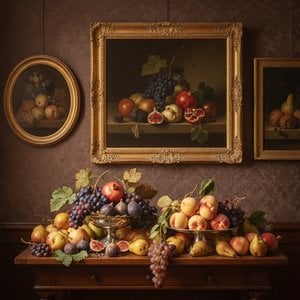
Discover the profound beauty of fruit still life paintings. Explore the rich symbolism, Baroque mastery, and timeless allure of nature's bounty through an art-historical lens, perfect for collectors and enthusiasts of classical fine art.
 Peržiūrėti realaus dydžio版
 Pasidalinti
 Dalintis
 Išsamiau
 Vadovas

 Atsisiųsti
 Panašūs eksponatai
 Rentgeno spindulių nuotrauka
 Automatinė diorama
 问答
问答
 Statistika


 Skaityti daugiau









 Stiklo variantas prieinamas tik pasirinkus dydį iki 110 cm


