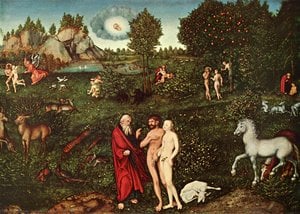
Lucretia (1532) by Lukaso Kranacho Vyresniojo Vardas, hand-painted oil painting reproduction by a master artist
Peržiūrėti realaus dydžio版 Peržiūrėti AR realybėje Perjungti į spausdinamus版作品 Perejti prie skaitmeninių vaizdų Pasidalinti
Išsamiau Vadovas Pridėti į mėgstamiausius Atsisiųsti Panašūs eksponatai Rentgeno spindulių nuotrauka Automatinė diorama Q&A Statistika

Lucretia Hand-painted oil painting reproduction

Matmenys
42.0 x 37.0 cm

Lucas Cranach the Elder, born in Kronach, Germany around 1472, stands as a pivotal figure of the German Renaissance. His life unfolded during a period of immense religious and political upheaval, and his art became inextricably linked to both the burgeoning Protestant Reformation and the opulent courts he served.

Lukaso Kranacho meistras – Šiaurės Rezgiseno meno šedevrai, įkvėpę Reformą ir iššūkianti tradicijas! Jo paveikslai žvelgia į istoriją ir įsikėlė į muziejų kolekcionierių širdis.

Rankų darbo aliejinės reprodukcijos

Rankiniu būdu tapytas aliejus ant droblio jūsų pageidaujamame dydį ir rėmuose – tai mūsų menininkų pagal užsakymą sukurtas darbas. ( Perjungti į spausdinamus版作品 Perejti prie skaitmeninių vaizdų)

Corner sample of the P118B picture frame: lieto polistirolo detalės, 5 cm wide and 3 cm thick
P118B €10
Corner sample of the P118H picture frame: lieto polistirolo detalės, 5 cm wide and 3 cm thick
P118H €10
Corner sample of the P118W picture frame: lieto polistirolo detalės, 5 cm wide and 3 cm thick
P118W €10
Corner sample of the P438Z picture frame: lieto polistirolo detalės, 5.5 cm wide and 3.5 cm thick
P438Z €10
Corner sample of the P508JH picture frame: lieto polistirolo detalės, 7 cm wide and 3.5 cm thick
P508JH €12
Corner sample of the P508YH picture frame: lieto polistirolo detalės, 7 cm wide and 3.5 cm thick
P508YH €12
Corner sample of the P805H picture frame: lieto polistirolo detalės, 5 cm wide and 3.5 cm thick
P805H €10
Corner sample of the P805Z picture frame: lieto polistirolo detalės, 5 cm wide and 3.5 cm thick
P805Z €10
Corner sample of the P919BZ picture frame: lieto polistirolo detalės, 7 cm wide and 3.5 cm thick
P919BZ €10
Corner sample of the P919G picture frame: lieto polistirolo detalės, 7 cm wide and 3.5 cm thick
P919G €10
Corner sample of the P919XJ picture frame: lieto polistirolo detalės, 7 cm wide and 3.5 cm thick
P919XJ €10
Corner sample of the P959ZH picture frame: lieto polistirolo detalės, 5 cm wide and 3 cm thick
P959ZH €10
Corner sample of the P968JZ picture frame: lieto polistirolo detalės, 6 cm wide and 4 cm thick
P968JZ €12
Corner sample of the W106C picture frame: solidus medžio

**Improved version:**
solidus medis, 5 cm wide and 3 cm thick
W106C €8
Corner sample of the W218G picture frame: solidus medžio

**Improved version:**
solidus medis, 5 cm wide and 3 cm thick
W218G €10
Corner sample of the W218JH picture frame: solidus medžio

**Improved version:**
solidus medis, 5 cm wide and 3 cm thick
W218JH €8
Corner sample of the W218Y picture frame: solidus medžio

**Improved version:**
solidus medis, 5 cm wide and 3 cm thick
W218Y €10
Corner sample of the W307PJ picture frame: solidus medžio

**Improved version:**
solidus medis, 6 cm wide and 3 cm thick
W307PJ €10
Corner sample of the W316G picture frame: solidus medžio

**Improved version:**
solidus medis, 6 cm wide and 3 cm thick
W316G €10
Corner sample of the W316PJ picture frame: solidus medžio

**Improved version:**
solidus medis, 6 cm wide and 3 cm thick
W316PJ €8
Corner sample of the W316Y picture frame: solidus medžio

**Improved version:**
solidus medis, 6 cm wide and 3 cm thick
W316Y €10
Corner sample of the W398PJ picture frame: solidus medžio

**Improved version:**
solidus medis, 5 cm wide and 3 cm thick
W398PJ €8
Corner sample of the W4111J picture frame: solidus medžio

**Improved version:**
solidus medis, 6.5 cm wide and 3.5 cm thick
W4111J €10
Corner sample of the W500HY picture frame: solidus medžio

**Improved version:**
solidus medis, 7 cm wide and 5 cm thick
W500HY €15
Corner sample of the W500JH picture frame: solidus medžio

**Improved version:**
solidus medis, 7 cm wide and 5 cm thick
W500JH €15
Corner sample of the W692G picture frame: solidus medžio

**Improved version:**
solidus medis, 8 cm wide and 4 cm thick
W692G €12
Corner sample of the W849H picture frame: solidus medžio

**Improved version:**
solidus medis, 5 cm wide and 3 cm thick
W849H €8
Corner sample of the W940BG picture frame: solidus medžio

**Improved version:**
solidus medis, 7.5 cm wide and 4.5 cm thick
W940BG €15
Corner sample of the W953PJ picture frame: solidus medžio

**Improved version:**
solidus medis, 6 cm wide and 3.5 cm thick
W953PJ €8

Standartinis dydis
pagal užsakymą
CM
INCH

Pasirinkite iš mūsų nustatytų dydžių, atitinkančių originalaus meno kūrinio proporcijas.

plotis
aukštis

Įveskite jums reikiamą plotį ir aukštį, kad paveikslas atitiktų jūsų rėmą ar sieną. Kadangi šis darbas yra rankinio darbo, siekiant išgauti kitokios formos dydį, paveikslas gali būti šiek tiek didesnis (nuo kraštų bus palikta daugiau erdvės) arba mažesnis – pasirinkite jums patogiausią variantą. Prieš pradedant tapyti, atsiųsime jums skaitmeninį maketą patvirtinimui. Šioje puslapio nuotraukoje matomas vaizdas nėra galutinis rezultatas – jį parodys tik sukurtas maketas.

Ką galima pakeisti (pavyzdžiai): Pakeisti veidą į kliento nuotrauką; Pridėti augintinį (pvz., pakeisti katę šunimi); Įtraukti paslėptą žinutę fone; Pakeisti fono kraštovaizdį ar elementus.
Gavus užsakymą, WahooArt.com komanda susisieks su klientu el. paštu dėl instrukcijų ir pateiks maketo pavyzdį

Pristatymas visame pasaulyje () per 3–4 savaites, o ne įprastai – per 5 savaites. (1 lapkritis). Kokybė lieka nepakeičiama.

Nemokamas greitasis pristatymas visame pasaulyje
Aukštos kokybės lininis drobė
Pilnas siuntimo draudimas
Muitinės mokesčių grąžinimo garantija
Tikro spalvų atitikimo garantija
100 dienų grąžinimo politika (tik esant įtaigoms)
100% pinigų grąžinimo garantija
Nuolaida dideliems užsakymams

Visos kainos suma

€ 242

Lucretia

Reprodukcijos technika

Reprodukcijos matmenys

-

Bendroji kaina

€ 242

Trumpa informacija

  • Artistic style: Realistic
  • Title: Lucretia
  • Subject or theme: Mythology
  • Year: 1532
  • Notable elements or techniques: Psychological depth
  • Location: Academy of Fine Arts Vienna

A Haunting Vision of Virtue: Lucas Cranach the Elder’s Lucretia

In the quiet, somber depths of Lucas Cranach the Elder’s 1532 masterpiece, Lucretia, viewers are invited into a moment of profound psychological and spiritual intensity. This work is far more than a mere depiction of a classical tragedy; it is a haunting testament to the intersection of Renaissance humanism and the religious anxieties that defined Reformation Germany. As one gazes upon the figure, there is an immediate sense of being transported to a period where the boundaries between personal morality and divine will were being violently redrawn. Cranach, a master of the Northern Renaissance, utilizes a strikingly restrained approach, eschewing the vibrant, distracting palettes of his contemporaries in favor of a monochrome-leaning aesthetic that demands solemn contemplation.

The composition is masterfully understated, focusing the viewer's attention on the raw emotional gravity of the scene. Lucretia is presented with a vulnerability that is both heartbreaking and empowering. Her gaze, fixed upward toward an unseen heavens, suggests a soul caught in the midst of an agonizing transition—a refusal to succumb to the darkness of her trauma and an acceptance of her tragic fate. Beside her, the presence of Collatinus provides a poignant contrast; his kneeling posture and attempt to offer solace highlight the human struggle to find comfort amidst insurmountable grief. The starkness of the palette, dominated by muted shades of grey, ochre, and bone, amplifies this sense of mourning, creating an atmosphere where every subtle tonal gradation carries the weight of a heavy heart.

Symbolism and the Mastery of Light

Beyond the immediate narrative of the Roman legend, Cranach weaves a rich tapestry of symbolism that resonates with both mythological and theological depth. The rocky outcrop upon which Lucretia rests serves as more than just a physical setting; it represents the harsh, unyielding realities of earthly existence and the trials of the human spirit. Through his expert use of chiaroscuro, Cranach creates dramatic contrasts between light and shadow that do not merely define form, but illuminate the internal struggle of his subject. The light seems to catch the edges of her grief, emphasizing her physical vulnerability while simultaneously suggesting a flicker of divine resilience.

For the discerning collector or interior designer, this painting offers an unparalleled opportunity to introduce a piece of profound intellectual and emotional depth into a space. The technique of tempera on panel allows for a precision and a matte finish that lends the work an antique, timeless quality, making it a sophisticated focal point for any curated collection. It is a work that does not merely decorate a room but transforms it, inviting conversation about history, ethics, and the enduring strength of the human character. To possess a high-quality reproduction of this piece is to hold a fragment of the Northern Renaissance—a window into an era where art served as the ultimate mirror for the complexities of the human soul.

Klausimai ir atsakymai

Kokia „Lucretia“ – Lukaso Kranacho Vyresniojo Vardas suvokiamas ryškumas?

Visapusiškai „Lucretia“ įtvirtinta kaip deep_shadow. Perceptinis ryškumas apibūdina, koks kūrinys atrodo šviesus ar tamsus.

Kokia „Lucretia“ – Lukaso Kranacho Vyresniojo Vardas nuotaika yra apibūdinama?

Bendrąją „Lucretia“ – Lukaso Kranacho Vyresniojo Vardas nuotaiką apibrėžia Elegant. Ši nuotaika atspindi bendrą kūrinio atmosferą.

Kaip atsisiųsti „Lucretia“ – Lukaso Kranacho Vyresniojo Vardas vaizdą?

Kūrinio „Lucretia“ – Lukaso Kranacho Vyresniojo Vardas vaizdą galite atsisiųsti puslapio Atsisiųsti skaitmeninį vaizdą skiltyje: aukštos raiškos skaitmeninio vaizdo atsisiuntimas.


Autoriaus biografija

Lucas Cranach the Elder

Lucas Cranach the Elder, born in Kronach, Germany around 1472, stands as a pivotal figure of the German Renaissance. His life unfolded during a period of immense religious and political upheaval, and his art became inextricably linked to both the burgeoning Protestant Reformation and the opulent courts he served. Initially trained by his father, Hans Maler, Cranach’s early artistic development remains somewhat shrouded in mystery, though influences from South German masters are evident in his evolving style. He quickly distinguished himself not merely as a skilled craftsman but as an artist capable of capturing psychological depth alongside technical precision – qualities that would soon draw the attention of powerful patrons. In 1504, he entered the service of Frederick III, Elector of Saxony, a relationship that would define much of his career and provide him with both stability and access to influential circles. This appointment as court painter in Wittenberg wasn’t simply about producing decorative works; it placed Cranach at the very heart of one of the most transformative movements in European history.

Early Life and Artistic Training

Little is known definitively about Lucas Cranach's formative years, but evidence suggests he received a comprehensive artistic education from his father, Hans Maler—a respected painter and craftsman who practiced in Kronach and Nuremberg. Hans Maler instilled in Lucas a meticulous attention to detail and a mastery of traditional techniques – skills that would serve as the foundation for Cranach’s subsequent artistic endeavors. While biographical information remains scarce, scholars believe Cranach's exposure to the artistic traditions of Nuremberg—particularly the influence of Albrecht Dürer—contributed significantly to his stylistic development. Dürer’s pioneering use of engraving and printmaking techniques undoubtedly shaped Cranach’s approach to visual communication, fostering a fascination with precision and clarity that would characterize much of his oeuvre. The workshop environment fostered by Hans Maler instilled in Lucas not only technical proficiency but also an understanding of the collaborative process—a practice that would become central to Cranach's artistic career.

Service to Frederick III and Wittenberg

Cranach’s ascension to prominence began with his appointment as court painter to Frederick III, Elector of Saxony, a patronage that proved remarkably fruitful both artistically and financially. Frederick III recognized Cranach’s talent for portraiture and commissioned numerous portraits of himself and members of the Saxon nobility—works that exemplify Cranach's stylistic innovations and demonstrate his ability to convey psychological nuance alongside technical virtuosity. Wittenberg, where Cranach served as court painter during Luther’s tenure, became a crucible of artistic and intellectual ferment—a place where Cranach wrestled with theological debates and engaged in dialogues with leading humanist thinkers. This engagement with the Reformation profoundly influenced Cranach's artistic vision, prompting him to explore themes of faith, morality, and human dignity—subjects that would permeate his paintings and woodcuts throughout his career. The patronage of Frederick III provided Cranach with access to resources and opportunities unavailable to many other artists of his time—allowing him to establish a thriving workshop and produce an astonishingly diverse body of work.

Style and Technique: Northern Renaissance Elegance

Lucas Cranach’s artistic style is characterized by its refined elegance and meticulous attention to detail—qualities that align perfectly with the aesthetic sensibilities of the Northern Renaissance. He employed a distinctive technique combining oil painting, woodcut, and engraving—a combination that enabled him to achieve remarkable visual effects while maximizing accessibility through affordable prints. Cranach's figures possess elongated proportions—a stylistic convention reflecting influences from Flemish masters—and are rendered with subtle shading and modeling that convey a sense of depth and realism. His use of color is vibrant yet restrained—creating harmonious compositions that prioritize clarity and balance. The artist’s meticulous rendering of drapery—particularly in portraits—demonstrates his mastery of traditional techniques and underscores the importance he placed on conveying visual accuracy. Cranach's woodcuts, in particular, stand out for their expressive power—capturing fleeting moments of emotion with remarkable immediacy.

Legacy and Influence

Lucas Cranach the Elder died in 1553, leaving behind an unparalleled artistic legacy that continues to inspire admiration and scholarly inquiry. He was a master of portraiture, a skilled interpreter of religious themes, and a shrewd businessman who understood the transformative potential of visual communication. His work not only reflects the cultural and intellectual landscape of his era but also actively shaped it—particularly through his engagement with the Protestant Reformation and his contribution to the dissemination of humanist ideas. Cranach’s influence extended far beyond Wittenberg and Saxony—reaching artists across Europe and establishing him as one of the most celebrated figures of the German Renaissance. His stylistic innovations—including elongated proportions, vibrant colors, and meticulous attention to detail—became hallmarks of Northern Renaissance art—and his legacy persists in the works of subsequent generations of painters. Cranach’s enduring fascination with mythology—evident in paintings depicting Venus and other classical deities—demonstrates his intellectual curiosity and underscores his commitment to exploring universal themes of beauty, love, and human aspiration. He remains a testament to the power of artistic vision—a figure whose work continues to captivate audiences worldwide.
Lukaso Kranacho Vyresniojo Vardas

Lukaso Kranacho Vyresniojo Vardas

1472 - 1553 , Vokietija

Trumpa informacija

  • Artistic Movement Or Style: Nordrenaissance
  • Artists Or Movements Influenced By This Artist: ['Martin Luther']
  • Artists Who Influenced This Artist: ['Hans Maler']
  • Date Of Birth: Kronach, Deutschland
  • Date Of Death: 1553
  • Full Name: Lucas Cranach der Ältere
  • Nationality: Deutsch
  • Notable Artworks:
    • Jagd der Hirsche
    • Selbstbildnis
    • Ankündigung an Joachim
  • Place Of Birth: Deutschland
Tyrinėkite meno kūrinius, suskirstytus pagal temas, stilius ir savybes.