x
Peržiūrėti realybėjePeržiūrėti realybėje Peržiūrėti ARPeržiūrėti AR Pirkti rankomis tapytą paveikslą Pirkti rankomis tapytą paveiksląPirkti vaizdą Pirkti vaizdą PasidalintiPasidalinti
IšsamiauIšsamiau Pridėti į mėgstamiausius Pridėti į mėgstamiausius AtsisiųstiAtsisiųsti Panašūs eksponataiPanašūs eksponatai Rentgeno nuotraukaRentgeno nuotrauka Automatinė dioramaAutomatinė diorama

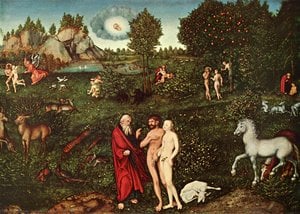
Law and Grace

Explore Lucas Cranach the Elder's 'Law and Grace,' a 1529 masterpiece depicting Lutheran theology. Witness symbolic scenes of faith, redemption & divine guidance.

Lukaso Kranacho meistras – Šiaurės Rezgiseno meno šedevrai, įkvėpę Reformą ir iššūkianti tradicijas! Jo paveikslai žvelgia į istoriją ir įsikėlė į muziejų kolekcionierių širdis.

Giclée / Meno spausdinimas

Muziejų lygio „giclée“ arba drobos spausdinimas: greita gamyba ir lankstios apdailos parinktys. (Pirkti rankomis tapytą paveikslą Pirkti rankomis tapytą paveiksląPirkti vaizdą Pirkti vaizdą)

P118B $10
P118H $10
P118W $10
P438Z $10
P508JH $12
P508YH $12
P805H $10
P805Z $10
P919BZ $10
P919G $10
P919XJ $10
P959ZH $10
P968JZ $12
W106C $8
W218G $10
W218JH $8
W218Y $10
W307PJ $10
W316G $10
W316PJ $8
W316Y $10
W398PJ $8
W4111J $10
W500HY $15
W500JH $15
W692G $12
W849H $8
W940BG $15
W953PJ $8

Standartinis dydis
individualiame dydį
CM
INCH

Pasirinkite iš mūsų nustatytų dydžių, atitinkančių originalaus meno kūrinio proporcijas.

plotis
aukštis

Galite nurodyti savo matmenis, kad vaizdas atitiktų konkretų rėmą ar erdvę. Jei pasirinktas dydis nesutaps su originalaus paveikslėlio proporcijomis, mes arba apkirpsime kūrinį, arba išplėsime vaizdą naudojant veideliu atspindėtą arba vientisą šoną. Skaitmeninis maketas bus išsiųstas jums patvirtinti prieš pradedant gamybą.
Atkreipkite dėmesį, kad ekrane matomas vaizdinys neatspindi tikrojo apkirpimo ar išplėtimo. Tik maketas tiksliai parodytų galutinę kompoziciją.
Nors galima rinktis ir individualius dydžius, rekomenduojame pasirinkti vieną iš išanksti nustatytų matmenų, kad būtų išlaikytos originalios proporcijos.

Pristatymas visame pasaulyje () per 2 weeks, o ne įprastas 4/5 savaičių laikotarpis. (5 rugsėjis)

why_choose_icon
Nemokamas greitasis pristatymas visame pasaulyje
why_choose_icon
Aukštos kokybės lininis drobė
why_choose_icon
Pilnas siuntimo draudimas
why_choose_icon
Muitinės mokesčių grąžinimo garantija
why_choose_icon
Tikro spalvų atitikimo garantija
why_choose_icon
60 dienų grąžinimo politika (tik esant gamyklinėms defektams)
why_choose_icon
100% pinigų grąžinimo garantija
why_choose_icon
Nuolaida už kelias reprodukcijas

Visų darbų kaina

$ 68

reproduction

Law and Grace

Giclée / Meno spausdinimas

Reprodukcijos matmenys

-

Galutinė kaina

$ 68

Trumpos informacija

  • Subject or theme: Religious scene, Lutheran doctrine
  • Title: Law and Grace
  • Artistic style: Complex narratives, human interaction
  • Artist: Lucas Cranach the Elder
  • Dimensions: 72 x 88 cm
  • Notable elements or techniques:
    • Symbolism
    • Religious figures

Karo viktorina

Kiekviename klausime yra tik vienas teisingas atsakymas.

Klausimas 1:
What is the title of the artwork?
Klausimas 2:
In what year was 'Law and Grace' created?
Klausimas 3:
Which artistic style is 'Law and Grace' classified under?
Klausimas 4:
What religious movement heavily influenced the artwork’s creation?
Klausimas 5:
According to the description, what does the left side of the painting primarily symbolize?

Law and Grace: A Masterpiece of the Northern Renaissance

Lucas Cranach the Elder's "Law and Grace," painted in 1529, stands as a pivotal work within the Northern Renaissance artistic landscape. This oil on panel artwork, measuring 72 x 88 cm, is more than just a visually striking piece; it’s a profound theological statement reflecting the burgeoning Protestant Reformation.

Composition and Symbolism

The painting's composition is meticulously structured to convey its complex message. The foreground features two men seated on rocks – one holding a book and another reading from it, symbolizing the study of scripture. Behind them, various figures engage in different actions: a person stands near a tree, another kneels, all contributing to a bustling narrative scene. Central to the work are religious figures like Jesus and Mary, alongside other characters likely representing biblical stories or allegorical representations of faith and salvation.

  • The Law (Left Side): Depicts scenes emphasizing human fallibility and the consequences of sin. The presence of Death and demons tormenting a figure highlights the futility of relying on good works for redemption. Moses receiving the tablets represents the Old Testament law.
  • Grace (Right Side): Showcases the promise of salvation through faith in Jesus Christ. John the Baptist points towards Christ on the cross, symbolizing sacrifice and forgiveness. The vibrant tree signifies life and renewal offered through grace.
  • Central Tree: Acts as a visual divider between Law and Grace, its contrasting states (dead vs. alive) further emphasizing the theological distinction.

Historical Context: Lutheran Merkbilder

"Law and Grace" is a prime example of what are known as "Lutheran Merkbilder"—simple, didactic illustrations designed to convey Christian doctrine in an accessible way. Created during a period of intense religious upheaval—the Protestant Reformation—the painting directly reflects Cranach's close association with Martin Luther and his role as a visual propagandist for the burgeoning Protestant cause. The artwork served as a powerful tool for disseminating Lutheran beliefs amidst challenges to Catholic teachings.

Artistic Significance and Technique

Lucas Cranach the Elder (1472-1553) was a leading figure of the Northern Renaissance, renowned for his portraits, landscapes, and religious paintings. His workshop produced numerous woodcuts and engravings, establishing him as a master of an ornate and idyllic style. "Law and Grace" showcases Cranach's skill in combining complex narratives with human interactions, demonstrating his ability to translate theological concepts into compelling visual imagery. The use of oil on panel allowed for rich detail and vibrant colors, characteristic of the Northern Renaissance aesthetic.

Emotional Impact and Relevance

“Law and Grace” evokes a sense of contemplation and spiritual reflection. It prompts viewers to consider fundamental questions about salvation, faith, and humanity's relationship with the divine. The painting’s enduring appeal lies in its ability to communicate profound theological ideas through accessible imagery, making it a significant work for art enthusiasts and those interested in the history of religious art.


Autoriaus biografija

Lucas Cranach the Elder

Lucas Cranach the Elder, born in Kronach, Germany around 1472, stands as a pivotal figure of the German Renaissance. His life unfolded during a period of immense religious and political upheaval, and his art became inextricably linked to both the burgeoning Protestant Reformation and the opulent courts he served. Initially trained by his father, Hans Maler, Cranach’s early artistic development remains somewhat shrouded in mystery, though influences from South German masters are evident in his evolving style. He quickly distinguished himself not merely as a skilled craftsman but as an artist capable of capturing psychological depth alongside technical precision – qualities that would soon draw the attention of powerful patrons. In 1504, he entered the service of Frederick III, Elector of Saxony, a relationship that would define much of his career and provide him with both stability and access to influential circles. This appointment as court painter in Wittenberg wasn’t simply about producing decorative works; it placed Cranach at the very heart of one of the most transformative movements in European history.

Early Life and Artistic Training

Little is known definitively about Lucas Cranach's formative years, but evidence suggests he received a comprehensive artistic education from his father, Hans Maler—a respected painter and craftsman who practiced in Kronach and Nuremberg. Hans Maler instilled in Lucas a meticulous attention to detail and a mastery of traditional techniques – skills that would serve as the foundation for Cranach’s subsequent artistic endeavors. While biographical information remains scarce, scholars believe Cranach's exposure to the artistic traditions of Nuremberg—particularly the influence of Albrecht Dürer—contributed significantly to his stylistic development. Dürer’s pioneering use of engraving and printmaking techniques undoubtedly shaped Cranach’s approach to visual communication, fostering a fascination with precision and clarity that would characterize much of his oeuvre. The workshop environment fostered by Hans Maler instilled in Lucas not only technical proficiency but also an understanding of the collaborative process—a practice that would become central to Cranach's artistic career.

Service to Frederick III and Wittenberg

Cranach’s ascension to prominence began with his appointment as court painter to Frederick III, Elector of Saxony, a patronage that proved remarkably fruitful both artistically and financially. Frederick III recognized Cranach’s talent for portraiture and commissioned numerous portraits of himself and members of the Saxon nobility—works that exemplify Cranach's stylistic innovations and demonstrate his ability to convey psychological nuance alongside technical virtuosity. Wittenberg, where Cranach served as court painter during Luther’s tenure, became a crucible of artistic and intellectual ferment—a place where Cranach wrestled with theological debates and engaged in dialogues with leading humanist thinkers. This engagement with the Reformation profoundly influenced Cranach's artistic vision, prompting him to explore themes of faith, morality, and human dignity—subjects that would permeate his paintings and woodcuts throughout his career. The patronage of Frederick III provided Cranach with access to resources and opportunities unavailable to many other artists of his time—allowing him to establish a thriving workshop and produce an astonishingly diverse body of work.

Style and Technique: Northern Renaissance Elegance

Lucas Cranach’s artistic style is characterized by its refined elegance and meticulous attention to detail—qualities that align perfectly with the aesthetic sensibilities of the Northern Renaissance. He employed a distinctive technique combining oil painting, woodcut, and engraving—a combination that enabled him to achieve remarkable visual effects while maximizing accessibility through affordable prints. Cranach's figures possess elongated proportions—a stylistic convention reflecting influences from Flemish masters—and are rendered with subtle shading and modeling that convey a sense of depth and realism. His use of color is vibrant yet restrained—creating harmonious compositions that prioritize clarity and balance. The artist’s meticulous rendering of drapery—particularly in portraits—demonstrates his mastery of traditional techniques and underscores the importance he placed on conveying visual accuracy. Cranach's woodcuts, in particular, stand out for their expressive power—capturing fleeting moments of emotion with remarkable immediacy.

Legacy and Influence

Lucas Cranach the Elder died in 1553, leaving behind an unparalleled artistic legacy that continues to inspire admiration and scholarly inquiry. He was a master of portraiture, a skilled interpreter of religious themes, and a shrewd businessman who understood the transformative potential of visual communication. His work not only reflects the cultural and intellectual landscape of his era but also actively shaped it—particularly through his engagement with the Protestant Reformation and his contribution to the dissemination of humanist ideas. Cranach’s influence extended far beyond Wittenberg and Saxony—reaching artists across Europe and establishing him as one of the most celebrated figures of the German Renaissance. His stylistic innovations—including elongated proportions, vibrant colors, and meticulous attention to detail—became hallmarks of Northern Renaissance art—and his legacy persists in the works of subsequent generations of painters. Cranach’s enduring fascination with mythology—evident in paintings depicting Venus and other classical deities—demonstrates his intellectual curiosity and underscores his commitment to exploring universal themes of beauty, love, and human aspiration. He remains a testament to the power of artistic vision—a figure whose work continues to captivate audiences worldwide.
Lukaso Kranacho Vyresniojo Vardas

Lukaso Kranacho Vyresniojo Vardas

1472 - 1553 , Vokietija

Trumpa informacija

  • Artistic Movement Or Style: Nordrenaissance
  • Artists Or Movements Influenced By This Artist: ['Martin Luther']
  • Artists Who Influenced This Artist: ['Hans Maler']
  • Date Of Birth: Kronach, Deutschland
  • Date Of Death: 1553
  • Full Name: Lucas Cranach der Ältere
  • Nationality: Deutsch
  • Notable Artworks:
    • Jagd der Hirsche
    • Selbstbildnis
    • Ankündigung an Joachim
  • Place Of Birth: Deutschland
Tyrinėkite meno kūrinius, suskirstytus pagal temas, stilius ir savybes.