Peržiūrėti realybėje Peržiūrėti AR Perejti prie spausdinimo Perejti prie skaitmeninio vaizdo Pasidalinti
Išsamiau Pridėti į mėgstamiausius Atsisiųsti Panašūs eksponatai Rentgeno nuotrauka Automatinė diorama Statistika

The Lamentation

Explore the life & works of Luca Giordano, the celebrated Neapolitan Baroque master. Discover his prolific fresco cycles, Roman commissions, and lasting influence on European art history. Learn more at WahooArt.

Luca Giordano (1634–1705): Italijos baroko meistras, žinomas dėl savo greitos kūrybos ir įspūdingų freskų. Jo darbą galima įvardinti kaip vieną iš svarbiausių italijos meno istorijoje – WahooArt.com.

Rankų darbo aliejinės reprodukcijos

Rankiniu būdu tapytas aliejus ant droblio jūsų pageidaujamame dydį ir rėmuose – mūsų menininkų darbas pagal užsakymą. ( Perejti prie spausdinimo Perejti prie skaitmeninio vaizdo)

P118B $10
P118H $10
P118W $10
P438Z $10
P508JH $12
P508YH $12
P805H $10
P805Z $10
P919BZ $10
P919G $10
P919XJ $10
P959ZH $10
P968JZ $12
W106C $8
W218G $10
W218JH $8
W218Y $10
W307PJ $10
W316G $10
W316PJ $8
W316Y $10
W398PJ $8
W4111J $10
W500HY $15
W500JH $15
W692G $12
W849H $8
W940BG $15
W953PJ $8

Standartinis dydis
individualiame dydį
CM
INCH

Pasirinkite iš mūsų nustatytų dydžių, atitinkančių originalaus meno kūrinio proporcijas.

plotis
aukštis

Galite įvesti savo matmenis, kad jie atitiktų konkretų rėmą ar erdvę. Jei pasirinktas dydis neatitinka originalaus paveikslėlio proporcijų, mes arba apkropsime meno kūrinį, arba papildysime tapybą rankomis dažytい elementais. Prieš pradėdami gamybą, jūsų patvirtinimui atsiųsime skaitmeninį maketą.
Atkreipkite dėmesį, kad ekrane rodomas vaizdas neatspindi tikrojo apkarpymo ar papildymo. Tik maketas tiksliai parodys galutinę kompoziciją.
Nors galima rinktis ir individualius dydžius, rekomenduojame pasirinkti matmenis iš nustatytos sąrašo, kad būtų išlaikytos originalios proporcijos.

Ką galima pakeisti (pavyzdžiai): Pakeisti veidą į kliento nuotrauką; Pridėti augintinį (pvz., pakeisti katę šunimi); Įtraukti paslėptą žinutę fone; Pakeisti fono kraštovaizdį ar elementus.
Gavus užsakymą, WahooArt.com komanda susisieks su klientu el. paštu dėl instrukcijų ir pateiks maketo pavyzdį.

Pristatymas visame pasaulyje () per 3–4 savaites, o ne įprastai – per 5 savaites. (17 rugsėjis). Kokybė lieka nepakeičiama.

why_choose_icon
Nemokamas greitasis pristatymas visame pasaulyje
why_choose_icon
Aukštos kokybės lininis drobė
why_choose_icon
Pilnas siuntimo draudimas
why_choose_icon
Muitinės mokesčių grąžinimo garantija
why_choose_icon
Tikro spalvų atitikimo garantija
why_choose_icon
100 dienų grąžinimo politika (tik esant įtaigoms)
why_choose_icon
100% pinigų grąžinimo garantija
why_choose_icon
Nuolaida už kelias reprodukcijas

Visų darbų kaina

$ 272

reproduction

The Lamentation

Reprodukcijos technika

Reprodukcijos matmenys

-

Galutinė kaina

$ 272

Trumpos informacija

  • Influences:
    • Ribera
    • Rubens
  • Artist: Luca Giordano
  • Dimensions: 155x182 cm
  • Notable elements or techniques: Dramatic lighting, expressive faces
  • Movement: Baroque
  • Medium: Oil on canvas
  • Artistic style: Neapolitan Baroque

Luca Giordano’s ‘The Lamentation’: A Baroque Symphony of Grief and Grace

WahooArt.com presents a meticulously hand-painted reproduction of Luca Giordano's “The Lamentation,” a profoundly moving work completed in 1669, offering a rare glimpse into the heart of late Baroque religious art. Measuring 117 x 160 cm, this canvas transcends mere representation; it’s an immersive experience of sorrow, faith, and the profound human response to suffering. Giordano, a “Neapolitan Dynamo” as he was known, was a prolific artist whose influence spanned Italy and Spain, characterized by his dynamic compositions and masterful use of light – a direct descendant of his formative apprenticeship under Jusepe de Ribera, yet infused with a distinctly brighter, more fluid sensibility.

  • Subject Matter: The scene depicts the traditional Pietà motif – the Virgin Mary mourning the dead Christ. This subject was incredibly popular during the Baroque period, reflecting the era’s intense religious fervor and fascination with themes of death, redemption, and divine sorrow.
  • Style & Technique: Giordano's style is a compelling blend of realism and theatricality, hallmarks of the late Baroque. Notice the carefully rendered musculature of Christ’s body, echoing Ribera’s influence, combined with a vibrant palette and swirling drapery that convey movement and emotion. The artist employs a loose brushstroke technique, creating a sense of immediacy and urgency within the scene.

Symbolism Woven into the Fabric of Grief

“The Lamentation” is rich in symbolic meaning, deeply rooted in Christian iconography. Mary Magdalene, positioned prominently at Christ’s side, represents repentance and divine grace – a common association during this period. The inclusion of other mourners, including women holding children, underscores the universal nature of grief and the potential for salvation through faith. The baby held by one woman is particularly poignant, symbolizing innocence lost and offering a glimmer of hope amidst despair. The angel figure on the right, often interpreted as Gabriel, adds to the divine presence observing this earthly tragedy. Even the small bird perched near the top left corner could symbolize the soul’s journey towards heaven.

  • Color Palette: Giordano utilizes a rich and luminous color palette dominated by deep blues, reds, and golds – colors traditionally associated with royalty, divinity, and sacrifice.
  • Compositional Dynamics: The diagonal lines created by Christ’s body and the figures' gestures contribute to the painting’s dramatic tension and guide the viewer’s eye through the scene.

Historical Context & Giordano’s Legacy

Created in 1669, “The Lamentation” reflects the artistic climate of Naples during Giordano’s career – a period marked by intense religious patronage and a desire to create works that would inspire piety and awe. Giordano's ability to quickly execute complex commissions earned him his nickname, "Luca fa presto," highlighting his remarkable productivity and skill. This painting stands as a testament to his mastery of the Baroque style and his significant contribution to Neapolitan art history. It’s a powerful reminder of the enduring themes explored in religious art – grief, faith, and the promise of redemption – rendered with exceptional technical skill and emotional depth.

Perfect for Collection & Interior Design

This hand-painted reproduction captures the essence of Giordano's masterpiece, offering an exquisite addition to any art collection or interior design scheme. Its scale (117 x 160 cm) makes it suitable for a variety of spaces, from formal living rooms to contemplative study areas. The vibrant colors and dramatic composition will undoubtedly become a focal point, evoking the grandeur and emotional intensity of Baroque art.


Autoriaus biografija

Luca Giordano (18 October 1634 – 3 January 1705): Exploring the Vibrant Baroque Masterpieces of ‘Luca Fa Presto’

Luca Giordano, born in Naples on October 18, 1634, stands as one of Italy's most celebrated and prolific painters of the late Baroque era. He wasn’t merely a craftsman; he was an incandescent force—a whirlwind of creativity whose output dramatically reshaped both canvases and architectural spaces across Italy and Spain. His father, Antonio Giordano, instilled in him early artistic training, but it was under the tutelage of Jusepe de Ribera that Luca truly honed his distinctive style, forging connections with a master who profoundly shaped his formative years. This apprenticeship bequeathed an unmistakable mark—the dramatic intensity and meticulous realism characteristic of Giordano’s initial compositions, reflecting Ribera's darker palette and more austere approach. Yet, unlike Ribera’s somber aesthetic, Giordano possessed an innate inclination toward luminosity and movement—qualities that would ultimately define his singular artistic vision. Even then, he earned the moniker “Luca fa presto”—Luca the quick one—a testament to his remarkable speed and seemingly boundless energy; a descriptor that perfectly encapsulated his unparalleled ability to capture profound emotion and breathtaking spectacle with effortless grace.

From Naples to Spain: A Journey Fueled by Commissions and Artistic Exploration

Giordano’s artistic trajectory transcended mere geographical boundaries. It was propelled forward by successive commissions and extensive travels, traversing the Italian peninsula and venturing beyond its shores. Establishing himself as a rising star in Naples solidified his reputation, prompting him to seek opportunities in Rome, Florence, and Venice—cities that absorbed the diverse stylistic currents of their respective periods like sponges. In Venice, he immersed himself in the legacy of Titian and Veronese, embracing their opulent color palettes and dynamic compositional techniques—a deliberate contrast to Ribera’s tenebristic style. Florence witnessed Giordano undertake monumental fresco cycles, most notably adorning the dome of the Corsini Chapel at Santa Maria del Carmine, showcasing his burgeoning mastery of illusionistic space and narrative storytelling—a feat that cemented his position as one of the foremost artists of his time. However, it was his decade-long engagement with Spain (1682–1692) – appointed court painter to Charles II – that irrevocably etched his name into European artistic history. During this period, Giordano revitalized Spanish interiors with lavish frescoes imbued with Italian exuberance—a bold departure from the prevailing stylistic conventions of the era and demonstrating his ability to fuse intellectual depth with visual splendor. The Biblioteca Riccardiana in Florence stands as a testament to this transformative influence, showcasing Giordano’s unparalleled skill in blending classical ideals with Baroque dynamism.

A Synthesis of Styles: Giordano's Artistic Signature

Giordano’s genius resided not in inventing entirely novel techniques but rather in synthesizing existing artistic traditions into a remarkably fluid and decorative style—a hallmark of his mature oeuvre. He skillfully blended the dramatic realism inherited from Ribera, the luminous colorism inspired by Venetian painters, and the dynamic compositional principles championed by Pietro da Cortona—resulting in an aesthetic that defied categorization yet resonated powerfully with audiences across Europe. His brushwork was characterized by its freedom and spontaneity, conveying an impression of effortless grace and capturing fleeting moments of emotion with breathtaking precision. Giordano eschewed rigid formalism, preferring instead to infuse his canvases with intricate details and swirling draperies—a stylistic choice that underscored his commitment to visual richness and expressive depth. This multifaceted approach enabled him to tackle a diverse range of subjects – from religious iconography and mythological narratives to portraits and decorative schemes – with equal conviction and artistry.

Notable Achievements & Artistic Connections

Giordano’s legacy extends far beyond his own lifetime, influencing generations of artists who followed in his footsteps. He trained numerous pupils—including Paolo de Matteis—who subsequently achieved considerable success as painters themselves, disseminating Giordano's stylistic innovations throughout Italy and beyond. His work served as a pivotal bridge between the High Baroque and the Rococo periods, fostering a lighter, more playful aesthetic that would dominate artistic expression during the latter half of the eighteenth century. The sheer volume of his output—estimated at over six hundred paintings and numerous fresco cycles – continues to captivate audiences today. The Palazzo San Francesco in Naples houses an exceptional collection of Giordano’s masterpieces, offering a comprehensive panorama of his artistic evolution. Furthermore, Giordano's connections with prominent artists of his era—such as Ribera, Titian, Veronese, and Cortona—demonstrated the breadth of his intellectual engagement and solidified his position as one of Italy’s most influential figures of the Baroque period.

Concluding Reflections: The Enduring Brilliance of ‘Luca Fa Presto’

Luca Giordano died peacefully in Naples on January 3, 1705, leaving behind an indelible mark on Italian art history—a testament to his unwavering dedication to artistic excellence and his unparalleled ability to transform visual experience into a conduit for profound emotion. His enduring brilliance continues to inspire artists and scholars alike, ensuring that “Luca fa presto”—Luca the quick one—remains synonymous with the vibrant spirit of the late Baroque and a beacon of creativity for centuries to come.
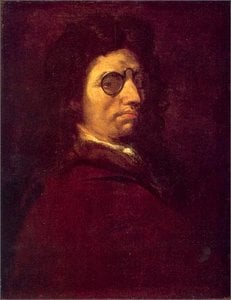
Luca Džordanas

Luca Džordanas

1634 - 1705 , Италия

Trumpa informacija

  • Artistic Movement Or Style: Vėlyvas Barokas
  • Artists Who Influenced This Artist:
    • Chosė de Ribera
    • Tietijanas
    • Veronėzas
    • Pietro da Kortona
  • Date Of Birth: 1634 m.
  • Date Of Death: 1705 m.
  • Full Name: Luca Giordano
  • Nationality: Italianas
  • Notable Artworks:
    • Šv. Jonas Krikštytojas
    • Kristus su gydytojais
    • Freskų darbai Neapolyje
  • Place Of Birth: Neapolijus, Italija