x
Peržiūrėti realybėjePeržiūrėti realybėje Peržiūrėti ARPeržiūrėti AR Pirkti spaudinį Pirkti spaudinįPirkti rankomis tapytą paveikslą Pirkti rankomis tapytą paveikslą PasidalintiPasidalinti
IšsamiauIšsamiau Pridėti į mėgstamiausius Pridėti į mėgstamiausius AtsisiųstiAtsisiųsti Panašūs eksponataiPanašūs eksponatai Rentgeno nuotraukaRentgeno nuotrauka Automatinė dioramaAutomatinė diorama

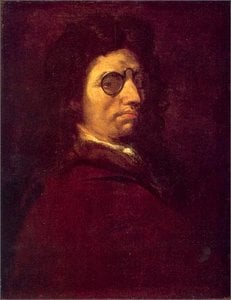
Heraclitus

Discover 'Heraclitus' by Luca Giordano – a stunning Baroque oil painting of a scholar immersed in cartography. Explore its dramatic lighting, rich textures & historical significance. A captivating piece for art collectors.

Luca Giordano (1634–1705): Italijos baroko meistras, žinomas dėl savo greitos kūrybos ir įspūdingų freskų. Jo darbą galima įvardinti kaip vieną iš svarbiausių italijos meno istorijoje – WahooArt.com.

Įsigykite aukštos skiriamosios raiškos, patobulintą skaitmeninį vaizdą, gerokai pranašesnį už internetinę peržiūrą.

Kiekvieną failą mūsų specialistai kruopščiai paruošia naudojant pažangias technologijas ir profesionalų rankinį retušavimą. Užtikriname, kad kiekvienas vaizdas pasižymėtų išskirtiniu aiškumu, tikslia spalvų atspalviu ir smulkiomis detalėmis.

Baigiamas failas el. paštu pristatomas per 72 valandas; jis optimizuotas nedelsiant naudojimui profesionalioje, redakcinėje ir spausdinimo aplinkoje. Tai ta pati kokybė, kuria pasitiki aukščiausios klasės dizaino studijos, leidyklos ir galerijos.

Skaitmeninis vaizdas

Atsisiųskite didelės raiškos failą asmeniniam naudojimui, spausdinimui ir kūrybiniams projektams. (Pirkti spaudinį Pirkti spaudinįPirkti rankomis tapytą paveikslą Pirkti rankomis tapytą paveikslą)

Visų sumos kaina

$ 24,90

Kiekvieną skaitinio vaizdo užsakymą papildė

Profesionalus skaitmeninis pristatymas, garantuotas

Pasirinkę WahooArt.com, jūs ne tik gaunate paveikslėlį – jūs gaunate profesionaliai patobudintą skaitmeninį kūrinį, sukurtą itin tikniai ir užtikrinantį pasitenkinimą. Štai viską, kas automatiškai pritékia jūsų užsakymui:

shipping_icon
Greitas siuntimas el. paštu

Jūsų aukštos raiškos skaitmeninis vaizdo failas bus išsiųstas jums el. paštu per 72 valaudas nuo užsakymo – paruoštas naudojimui be jokių papildomų veiksmų.

canvas_icon
Skaitmeninis failas su dirbtiniu intelektu

Jūsų meno kūrinys profesionaliai optimizuojamas naudojant pažangius dirbtinio intelekto įrankius ir rankinį redagavimą, užtikrinant maksimalią detalę, aiškumą ir spalvų tikslumą.

insurance_icon
Nemokamas visam laikui pakartotinis siuntimas

Atsitiktinai ištrytikote ar praradote savo failą? Nebijokite – bet kuriuo metu atsiųsime jį jums vėl nemokamai.

tax_icon
Jokio importo mokesčio – niekada

Mėgaukitės savo meno kūriniu akimirka – skaitiniai failai visada yra neapmokestinami, todėl nereikės mokėti muitinės, mokesčių ar pristatymo mokesčių.

color_icon
Spalvų tikslumo garantija

Naudodami profesionalią įrangą ir spalvų valdymo sistemas, užtikriname, kad jūsų skaitmeninis vaizdas kuo tiksliau atspindėtų originalias spalvas.

return_icon
60 dienų pasitenkinimo garantija

Jei nebuvate patenkinti savo skaitinio vaizdo, per 60 dienų jį pertaisysime arba grąkinsime 100% sumą – be jokių klausimų.

guarantee_icon
100% pinigų grąžinimo garantija

Nepat 만족inti? Gaukite visą sumokėtą sumą per 60 dienų nuo skaitmeninio failo gavimo – be jokių papildomų klausimų.

discount_icon
Nuolaidos dideliems užsakymams

Pirkti 3 nuotraukas – pasiūla 10% - Pirkti 5 – pasiūla 15% - Pirkti 10 ir daugiau – pasiūla 20%. Puikiai tinka kūrybiniams projektams, galerijoms bei agentūroms.

Trumpos informacija

  • Movement: Neapolitan Baroque
  • Location: Chiesa Nuova, Naples
  • Artistic style: Baroque realism
  • Influences:
    • Jusepe de Ribera
    • Venetian painting
  • Notable elements or techniques: Chiaroscuro and luminous color
  • Subject or theme: Philosophical contemplation and flux
  • Title: Heraclitus

Luca Giordano’s Heraclitus: A Symphony of Light and Paradox

Luca Giordano (1634 – 1705) stands as one of the titans of Neapolitan Baroque, an artist who redefined visual expression with a singular blend of dynamism and luminous color. His monumental frescoes adorning churches across Italy—particularly those in Naples—remain breathtaking testaments to his genius, but it is “Heraclitus,” painted circa 1650 for the Chiesa Nuova in Naples’s historic centre, that encapsulates the essence of Giordano's artistic vision and continues to fascinate scholars and connoisseurs alike. This portrait isn’t merely a depiction of a philosopher; it’s an embodiment of Giordano’s philosophical preoccupation with change and contradiction—themes mirrored throughout his oeuvre.
  • Subject Matter: Giordano chose Heraclitus, the enigmatic Ionian philosopher known for his paradoxical pronouncements about flux and unity, as his subject. Unlike many portraits of his time that aimed for idealized beauty or solemn piety, Giordano’s depiction prioritizes intellectual contemplation over aesthetic perfection. The figure is presented in profile, conveying a sense of dignified stillness amidst an energetic composition.
  • Style: Giordano's style decisively departed from the sombre austerity championed by Caravaggio and Ribera—his predecessors—embracing instead the radiant luminosity characteristic of Venetian painting. He skillfully employed chiaroscuro – dramatic contrasts between light and shadow – to sculpt the form of Heraclitus’s face and torso, creating a palpable sense of volume and depth. This technique wasn't simply decorative; it served as a conduit for Giordano’s philosophical ideas about constant transformation.
  • Technique: Executed in oil paint on canvas, “Heraclitus” demonstrates Giordano’s mastery of layering pigments to achieve remarkable textural richness. Minute brushstrokes meticulously render the wrinkles of Heraclitus's face and the folds of his cloak—details that convey both physical realism and psychological complexity. The artist’s meticulous attention to surface texture underscores his belief in the materiality of existence, mirroring Heraclitus’s assertion that “everything flows.”
  • Historical Context: Giordano’s work emerged during a period of intense artistic experimentation in Naples—a city grappling with religious fervor and political upheaval. The Chiesa Nuova itself was undergoing significant renovations, reflecting the broader cultural ambitions of the Bourbon monarchy. Giordano's embrace of Venetian influences signaled a rejection of prevailing stylistic conventions and positioned him at the forefront of Baroque innovation.
  • Symbolism: Beyond its formal brilliance, “Heraclitus” is laden with symbolic significance. The inclusion of a compass rose—a symbol of navigation and exploration—suggests Giordano’s fascination with intellectual inquiry and his desire to represent Heraclitus as a seeker of knowledge. Furthermore, the dark background serves to heighten the luminosity of Heraclitus's figure, emphasizing his role as a beacon of reason amidst chaos.
Further Exploration: Consider examining Giordano’s other portraits—particularly those depicting philosophers—to appreciate the consistency of his artistic vision. Comparing “Heraclitus” to works by Ribera and Caravaggio reveals the distinctive character of Giordano's style and its contribution to the broader Baroque aesthetic. Visiting San Luca Museum in Genoa offers a chance to see masterpieces from the Neapolitan Baroque alongside other significant artworks from the era. Resources: Additional Information:
  • Explore Giordano's influence on subsequent artists through his masterful use of light and color—a technique that continues to inspire painters today.
  • Delve into the philosophical underpinnings of Giordano’s work by examining Heraclitus’s writings on change, paradox, and the unity of opposites.

Autoriaus biografija

Luca Giordano (18 October 1634 – 3 January 1705): Exploring the Vibrant Baroque Masterpieces of ‘Luca Fa Presto’

Luca Giordano, born in Naples on October 18, 1634, stands as one of Italy's most celebrated and prolific painters of the late Baroque era. He wasn’t merely a craftsman; he was an incandescent force—a whirlwind of creativity whose output dramatically reshaped both canvases and architectural spaces across Italy and Spain. His father, Antonio Giordano, instilled in him early artistic training, but it was under the tutelage of Jusepe de Ribera that Luca truly honed his distinctive style, forging connections with a master who profoundly shaped his formative years. This apprenticeship bequeathed an unmistakable mark—the dramatic intensity and meticulous realism characteristic of Giordano’s initial compositions, reflecting Ribera's darker palette and more austere approach. Yet, unlike Ribera’s somber aesthetic, Giordano possessed an innate inclination toward luminosity and movement—qualities that would ultimately define his singular artistic vision. Even then, he earned the moniker “Luca fa presto”—Luca the quick one—a testament to his remarkable speed and seemingly boundless energy; a descriptor that perfectly encapsulated his unparalleled ability to capture profound emotion and breathtaking spectacle with effortless grace.

From Naples to Spain: A Journey Fueled by Commissions and Artistic Exploration

Giordano’s artistic trajectory transcended mere geographical boundaries. It was propelled forward by successive commissions and extensive travels, traversing the Italian peninsula and venturing beyond its shores. Establishing himself as a rising star in Naples solidified his reputation, prompting him to seek opportunities in Rome, Florence, and Venice—cities that absorbed the diverse stylistic currents of their respective periods like sponges. In Venice, he immersed himself in the legacy of Titian and Veronese, embracing their opulent color palettes and dynamic compositional techniques—a deliberate contrast to Ribera’s tenebristic style. Florence witnessed Giordano undertake monumental fresco cycles, most notably adorning the dome of the Corsini Chapel at Santa Maria del Carmine, showcasing his burgeoning mastery of illusionistic space and narrative storytelling—a feat that cemented his position as one of the foremost artists of his time. However, it was his decade-long engagement with Spain (1682–1692) – appointed court painter to Charles II – that irrevocably etched his name into European artistic history. During this period, Giordano revitalized Spanish interiors with lavish frescoes imbued with Italian exuberance—a bold departure from the prevailing stylistic conventions of the era and demonstrating his ability to fuse intellectual depth with visual splendor. The Biblioteca Riccardiana in Florence stands as a testament to this transformative influence, showcasing Giordano’s unparalleled skill in blending classical ideals with Baroque dynamism.

A Synthesis of Styles: Giordano's Artistic Signature

Giordano’s genius resided not in inventing entirely novel techniques but rather in synthesizing existing artistic traditions into a remarkably fluid and decorative style—a hallmark of his mature oeuvre. He skillfully blended the dramatic realism inherited from Ribera, the luminous colorism inspired by Venetian painters, and the dynamic compositional principles championed by Pietro da Cortona—resulting in an aesthetic that defied categorization yet resonated powerfully with audiences across Europe. His brushwork was characterized by its freedom and spontaneity, conveying an impression of effortless grace and capturing fleeting moments of emotion with breathtaking precision. Giordano eschewed rigid formalism, preferring instead to infuse his canvases with intricate details and swirling draperies—a stylistic choice that underscored his commitment to visual richness and expressive depth. This multifaceted approach enabled him to tackle a diverse range of subjects – from religious iconography and mythological narratives to portraits and decorative schemes – with equal conviction and artistry.

Notable Achievements & Artistic Connections

Giordano’s legacy extends far beyond his own lifetime, influencing generations of artists who followed in his footsteps. He trained numerous pupils—including Paolo de Matteis—who subsequently achieved considerable success as painters themselves, disseminating Giordano's stylistic innovations throughout Italy and beyond. His work served as a pivotal bridge between the High Baroque and the Rococo periods, fostering a lighter, more playful aesthetic that would dominate artistic expression during the latter half of the eighteenth century. The sheer volume of his output—estimated at over six hundred paintings and numerous fresco cycles – continues to captivate audiences today. The Palazzo San Francesco in Naples houses an exceptional collection of Giordano’s masterpieces, offering a comprehensive panorama of his artistic evolution. Furthermore, Giordano's connections with prominent artists of his era—such as Ribera, Titian, Veronese, and Cortona—demonstrated the breadth of his intellectual engagement and solidified his position as one of Italy’s most influential figures of the Baroque period.

Concluding Reflections: The Enduring Brilliance of ‘Luca Fa Presto’

Luca Giordano died peacefully in Naples on January 3, 1705, leaving behind an indelible mark on Italian art history—a testament to his unwavering dedication to artistic excellence and his unparalleled ability to transform visual experience into a conduit for profound emotion. His enduring brilliance continues to inspire artists and scholars alike, ensuring that “Luca fa presto”—Luca the quick one—remains synonymous with the vibrant spirit of the late Baroque and a beacon of creativity for centuries to come.

Luca Džordanas

Luca Džordanas

1634 - 1705 , Италия

Trumpai apie šį kūrėją

  • Artistic Movement Or Style: Vėlyvas Barokas
  • Artists Who Influenced This Artist:
    • Chosė de Ribera
    • Tietijanas
    • Veronėzas
    • Pietro da Kortona
  • Date Of Birth: 1634 m.
  • Date Of Death: 1705 m.
  • Full Name: Luca Giordano
  • Nationality: Italianas
  • Notable Artworks:
    • Šv. Jonas Krikštytojas
    • Kristus su gydytojais
    • Freskų darbai Neapolyje
  • Place Of Birth: Neapolijus, Italija