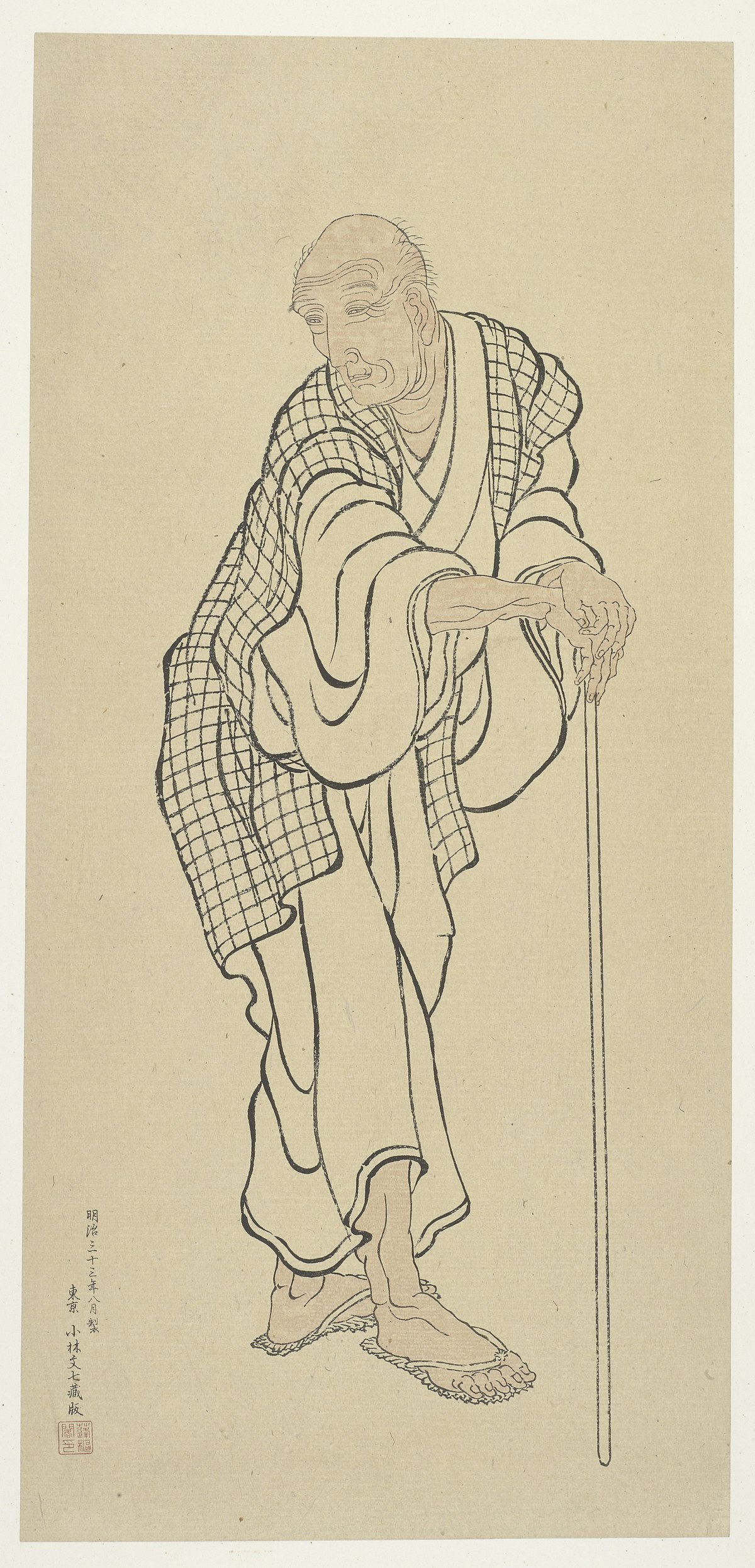
Katsushika Hokusai: Bangos ir bangų menininkas
Katsushika Hokusai, vardas, neatsiejamas nuo japoniškosios dailės ir ikoninio vaizdinio *Didžioji banga Kanagavos*, buvo kur kas daugiau nei tik medžio išraižomis atspausdintas pavekslas. Gimė Edo (šiandieninis Tokijas) maždaug 1760 metais, jo gyvenimas buvo nuolatinis meninio meistriškumo siekimas, pastovi transformacija, pažymima besikeičiančiais vardais ir nepasotinamu smalsumu. Iš kuklių pradžių, kaip veidrodžių gamintojo sūnus, Hokusai ankstyvas polinkis į dailę nebuvo iš karto skatinamas; tačiau jis atkakliai tobulino savo įgūdžius, pasakodama, kad piešti ėmė dar šešerių. Šis atsidavimas apibrėšė karjerą, kuri truko beveik devyniolika dešimtmečių, paliekantį palikimą, kuris ir toliau rezonuoja su publikomis visame pasaulyje. Jo tėvas, Nakajima Ise, nors pats nebuvo dailininkas, atpažino ir galbūt skatino šį gimstantį talentą, sukurdamas pagrindus keliauti, kuris transformuotų japoniškosios vizualinės kultūros pasaulį. Hokusai ankstyvas gyvenimas nebuvo privilegijuotas, bet veikiau nuolatinis įkalbėjimas, varomas ambicijomis ir gilia nusistatymu užčiuopti pasaulio esmę.
Nužengimas nuo mokinių kelių iki naujovių: Stiliaus atsiradimas
Hokusai formalūs dailės mokymai prasidėjo dvylikos metų, kai jis įstojo į Katsukawa Shunshō studiją, pagrindinio *ukijo-e* – „plaukiančio pasaulio“ – meistro. Šis žanras, populiarus Edo laikotaronyje, vaizdavo kasdienio gyvenimo scenas: aktorius, geišas, kraštovaizdžius ir įžvalgas apie dinamišką miesto kultūrą. Po Shunshō vadovavimo Hokusai įvaldė medžio išraižomis atspausdinimo techniką – sudėtingą procesą, reikalaujantį tikslumo ir meninės jautriosios pusės. Tačiau jis nebuvo patenkintas tiesiogiai kopijuodamas savo mokytojo stilių. Net ankstyvame darbe buvo juntinas neramus dvasia, noras peržengti ribas ir tyrinėti naujas raiškos priemones. Jis eksperimentavo su įvairiais objektais – nuo knygų iliustracijų iki atskirų atspaudų – nuolat tobulindamas savo įgūdžius ir ugdydamas unikalų vizualinį kalbos būdą. Šis laikotarpis taip pat pažymėjo daugybės vardų keitimus – įprasta praktika tarp *ukijo-e* menininkų, simbolizuojančių meno atsigimimo ar susijungimo su skirtingomis mokyklomis etapus.
Fudži kalnas ir plaukiojantis pasaulis: Apibrėžiantys šedevrai
Hokusai kūrybos apimtys buvo stulbinančiai gausios; tūkstančiai medžio išraižomis atspausdintų paveikslų, dažų darbų ir iliustruotų knygų pasižymi jo parašu. Nors jis tyrė daugybę temų, būtent serija *Trylikos Fudži kalno vaizdai* (apie 1831 m.) padėjo įtvirtinti jo šlovę. Šis rinkinys, kuriame yra dabar žinomas *Didžioji banga Kanagavos*, nebuvo tik kraštovaizdžio atvaizdas; tai buvo meistriškas perspektyvos, kompozicijos ir gamtos jėgos tyrimas. Pati banga, pakili jėga, ruošiasi sugriauti mažyčius laivus, įkūnija tiek jūros grožį, tiek siaubą. Be *Fudži*, tokie kūriniai kaip *Fejerverkas Ryogoku tiltas* (1790 m.) pademonstravo jo gebėjimą užčiuopti dinamiškas kasdienio gyvenimo scenas su nepaprastu energijos ir detalių kiekiais. Jo *Hokusai Manga* – eskizų ir tyrimų rinkinys, apimantis žmones, gyvūnus, kraštovaizdžius ir fantastinius padarbus – buvo novatoriškas savo masteliu ir įtaka, pranašaujant modernaus manga atsiradimą kaip meno formą. Šie darbai nebuvo izoliuoti pasiekimai; jie buvo nuolatinio meninio kelionės etapai, kiekvienas statydamas ant ankstesnio sukurdami kūrinius, kurie yra tiek giliai įsišaknyję japoniškose tradicijose, tiek nepaprastai novatoriški.
Palikimas už sienų: Hokusai ilgalaikis įtaka
Hokusai įtaka išplito toli už Japonijos ribų. Vėlyvojo 19-ojo amžiaus pabaigoje, kai Japonija atidarė savo duris vakarų pasauliui, *ukijo-e* atspaudai plaukdavo į Europos rinkas, sukeldami vadinamąją *Japonizmu*. Tokie dailininkai kaip Klodas Monetis, Edgaras Degasas ir Vincentas van Gogas buvo sužavėti Hokusai drąsiomis kompozicijomis, ryškiomis spalvomis ir neįprastomis perspektyvomis. Van Gogas, ypač, buvo giliai paveiktas *Didžiosios bangos*, netgi bandydamas ją atkurti savo paveiksluose. Hokusai įtaka neapsiribojo impresionizmu; ji prasiskverbė per įvairius modernaus meno judėjimus, formavusi dailininkų požiūrį į kompoziciją, spalvas ir temas. Jo pabrūžimas užčiuopti trumpalaikius momentus, jo dinamiškas linijų naudojimas ir jo gebėjimas rasti grožį kasdieniame gyvenime atsiliepėsi visos kartos dailininkų, ieškančių naujų raiškos formų. Net ir šiandien Hokusai darbai toliau įkvepia ir meta iššūkius menininkams visame pasaulyje, tvirtindami jo vietą kaip vieno svarbiausių meno istorijos veikėjų. Jis ir toliau piešė iki savo mirties 1849 metais būdamas 89 metų amžiaus, palikęs didelį kūrinių korpusą, kuris tebėra liudijimas jo neatsiejamo atsidavimo ir meninio genialumo.
- Pagrindiniai įtakos šaltiniai: Ukiyo-e tradicijos, kinų kraštovaizdžio tapybos, Edo kasdienis gyvenimas.
- Pagrindinės savybės: Drąsios linijos, ryškios spalvos, dinamiškos kompozicijos, atidžus gamtos stebėjimas.



 Peržiūrėti realaus dydžio版
 Perjungti į spausdinimą
 Siųsti
 Dalintis
 Išsamiau
 Gidas
Gidas

 Atsisiųsti
 Panašūs eksponatai
 Rentgeno spindulių nuotrauka
 Diaporama
 Statistika

 Rodyti daugiau