Muziejų lygio „giclée“ arba drobos spausdinimas: greita gamyba ir lankstios apdailos parinktys. ( Pirkti rankų darbo tapybą Perejti prie skaitmeninių vaizdų)





























Pasirinkite iš mūsų nustatytų dydžių, atitinkančių originalaus meno kūrinio proporcijas.

Įveskite jums reikiamą plotį ir aukštį, kad atvaizdas derėtų prie jūsų rėmo ar sienos. Spausdiną galima tik sumažinti, bet nepadidinti virš originalaus paveikslėlio dydžio, todėl keičiant proporcijas, dalis vaizdo prarandama. Prieš spausdinimą atsiųsime jums skaitmeninį maketą patvirtinimui. Šioje puslapio nuotraukoje matomas pjūvis nėra tikslus – jį rodo tik maketas.
Pristatymas visame pasaulyje () per 2 weeks, o ne įprastas 4/5 savaičių laikotarpis. (16 lapkritis)
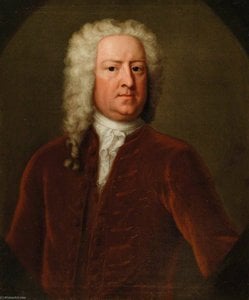
William Pitt
Reprodukcijos matmenys
The gaze of William Pitt meets the viewer through this oil on canvas, a work emerging from the studio of John Hoppner. The portrait captures the statesman in a moment of heavy stillness, rendered with a sense of gravity that lingers on the surface. It is a work from circa 1805 or after, a period when the subject's presence in British politics was deeply felt. The scale of the image, measuring 55 1/2 in. x 42 1/2 in. (1410 mm x 1080 mm), gives the figure a physical weight that commands the space around it.
John Hoppner’s studio provides the hand behind this depiction, translating the likeness of the man into a study of light and shadow. The paint sits upon the canvas, building a presence that feels immediate and substantial. Every brushstroke contributes to the quiet intensity of the sitter, holding him in a permanent state of contemplation. The work exists as a direct encounter with a man who shaped the direction of a nation, frozen here in the medium of oil.
The subject emerges from a dark, indistinct background, positioned in a bust-length portrait that feels immediate and heavy with presence. He sits slightly off-center, his gaze directed toward the viewer's left, creating a sense of quiet, internal movement. Light descends from the upper left, carving out the contours of his face and neck with a soft, directional glow. This interplay of light and shadow grants the figure a palpable three-dimensional volume, pulling him forward from the atmospheric gloom behind him.
The color palette remains somber and grounded, relying on a restrained selection of earthy, muted tones. Browns, ochre, and cream dominate the scene, while subtle flesh tones define the skin. There is a tactile quality to the surface, where the texture of the canvas peeks through the layers of paint. The brushwork appears smooth and blended, particularly in the soft transitions of the background and the heavy folds of the clothing, yet it maintains enough definition to trace the sharp structure of the facial features and the weight of the coat.
The origins of this portrait trace back to a private commission by Lord Mulgrave, who sought to capture the likeness of the statesman. The artist began the work in December 1804, and the final brushstrokes were applied on the 28th of October, 1805. This specific version, identified as NPG L267, exists as a studio copy of the original portrait. While the primary work was intended for the Mulgrave family, the demand for the image grew rapidly among the subject's supporters, leading to many bespoke copies being produced by the artist's studio.
The movement of this painting through various collections reflects its enduring presence in British history. It currently resides within the collection of the Tate, though it is frequently seen on loan to the National Portrait Gallery in London. This arrangement allows the work to remain accessible to those tracing the political landscape of the era. The provenance of the piece is deeply intertwined with the social circles of the time, as the portrait's popularity ensured that many versions circulated among the elite of the Regency period.
The portrait stirs a profound tension between those who see its technical brilliance and those who recoil from its unflinching honesty. To some observers, the work represents the artist's finest achievement, a peak of his creative ability. Yet, this praise is met with sharp, visceral condemnation from those who knew the man behind the statesman. One contemporary observer famously dismissed the image as a vile picture, finding the depiction far too harsh to be a true likeness.
The debate centers on the psychological weight carried in the subject's expression. Critics have argued that the face appears anxious and diseased, as if reddened by wine and soured by the heavy burden of disappointment. There is a sense that the portrait captures a man at his breaking point, a version of the statesman that many found difficult to accept. This perceived severity led some to suggest that the likeness was almost too unflattering, questioning if such a grim portrayal should ever have been intended for a man of his standing.
While some find the work's power in its ability to strip away the veneer of political dignity, others see it as a departure from the idealized grace expected in high-society portraiture. The tension remains: is this a profound study of a man weathered by his duties, or a failure to capture the youthful spirit of a leader? The brushstrokes hold both the weight of a statesman's exhaustion and the controversy of a likeness that refuses to look away from the toll of power.
The portrait resides within the National Portrait Gallery in London, United Kingdom. Visitors find the subject waiting for them on the third floor, specifically positioned in Room 18. It exists as a vital part of the National Portrait Gallery collection, though its presence in the gallery is a temporary arrangement. The work is currently on loan from the Tate Gallery, which maintains its primary stewardship.
Walking through the halls of the museum, one encounters this depiction of the statesman in a space dedicated to the faces that shaped a nation. The lighting in the gallery room catches the subtle textures of the oil on canvas, allowing the viewer to observe the heavy shadows and the serious expression of the sitter. It remains a central fixture for those tracing the political history of the United Kingdom through its visual records.
The artist's hand moves through other lives and faces, capturing the essence of the Georgian era with a similar command of light. In one notable work, he presents Mrs. Jordan as Viola in 'Twelfth Night', a piece that highlights his celebrated ability to render women and children. This portrait reveals a specific skill that defined his career, much like the way he handles the textures and shadows in his other commissions. He moves between the heavy gravity of statesmen and the softer, more spirited depictions of his female sitters, always maintaining a sense of physical presence.
His reach extends into the highest circles of British society, where he finds himself painting the very figures who shape the nation. He captures the likeness of the Prince of Wales, a man whose patronage helped secure Hoppner's position among the elite. This ability to navigate the social landscape is evident in his portraits of influential men like Lord Hugh Seymour. Each sitter emerges from the dim, atmospheric backgrounds with a distinct vitality, whether they are members of the royal court or prominent figures of the military and aristocracy.
The artist's brush also finds its way to the faces of those who leave their own marks on history, such as in his portrait of Thomas Williams. Through these various subjects, a pattern of character emerges. He uses chiaroscuro to sculpt forms, pulling his subjects forward from the shadows to create a sense of depth. Whether he is working on a formal bust-length portrait or a more expansive composition, his touch remains loose and free, avoiding a rigid or overly precious finish in favor of a living, breathing likeness.
„William Pitt“ reprodukcija puikiai tinka į Office.
„William Pitt“ – Johnas Hoppneris pasižymi Classic atmosfera ir yra rekomenduojamas Office. Nuotaika – tai tai, ką šis kūrinys suteikia aplinkinei erdvėje.
Norėdami užsisakyti „William Pitt“ – Johnas Hoppneris spausdinį, tiesiog jį užsisakykite puslapio Kūrinio spausdinimas aukščiausia kokybe skiltyje: aukščiausios kokybės spausdinys ant medžio siuvinėjamų audinių arba archyvinio kanvas tipo popieriaus.

Johnas Hoppneris gimė 1758 metais Londone, Whitechapel, vokiečių kilmės šeimoje. Jo motina dirbo viena iš karališkojo rūmo vokiečių darbuotojų, todėl šeima nuo pačios pradžios buvo glaudžiai susijusi su karališkąja aplinka. Ši ankstyvoji aplinka prad_{\text{i}}nė jo gyvenimo kryptį, nors pradiniai žingsniai buvo linkę ne į vaizdinį, o į muzikinį meną. Jaunastieniu Johnas buvo karališkosios kapelicos choristas – tai darbas, reikalaujantis griežtos disciplinos, tačiau galiausiai muzika negalėjo prilygti jo natūraliam polinkio menui.
Jo oficialus žingsnis į meno pasaulį įvyko 1775 metais, kai jis įstojo į Karališkąją akademiją. Institucinis pripažinimas leidė jam greitai įrodyti savo techninį meistriškumą. 1778 metais jis pelnė sidabrinę medalį už piešimą iš gyvo modelio, kas tapo praktiniu jo stebėjimo įgūdžių patvirtinimu. Iki 1782 metų jis jau buvo pasiekęs auksinę akademijos medaliai už istorinę tapybą savo darbe apie karalių Learą. Šis ankstyvasis sėkmės etapas sukūrė tvirtą techninę pamatą aukščiausioji visuomenės portretų tapybai, kuri vėliau tapo jo karjeros apibrėžimu.
Johnas Hoppneris savo vietą aukščiausiosiose britų visuomenės aplinkas užsitikrino meistriškai įtvirtindamas paveikslavuose to karto įtakingiausių asmenų veidų ir sielos esmę. Jo gebėjimas įstoti į aukštuosius socialinių sluoksnių užsakymų ratą suteikė jam galimybę portretuoti Karoliną, Velsos princą, Yorko kunigaikštį bei kunigaitenę, Lordą Rodney ir Lordą Nelsoną – šie darbai buvo pakabinti St. James rūmų valstybiniuose kambariuose. Tokia vieta nebuvo tik dekoratyvinis sprendimas; tai buvo jo profesinės meistriškumo ir aukštos socialinės padėties aiškus ženklas. Nors istorinė tapyba jam suteikė ankstyvosios šlovės ir pripažinimą, būtent moterų bei vaikų vaizdiniai buvo laikomi sėkmingiausiais jo kūriniais, kuriuos vertintojai nuolatos išskirdavo kaip aukščiausią jo talento ištrypimą.
Jo gebėjimas perteikti žmogaus charakterį yra labiausiai supraskamas veidelyje Mrs. Jordan kaip Viola „Dvylika nakčių“ filme – šiame darbe, kurį šiuo metu saugo English Heritage kolekcija Londone, Jungtinėje Karalystėje. Šis paveikslas demonstruoja tą ypatingą meistriškumą, kuris apibrėžė jo karjerą. Tačiau kūryba Hoppnerio neapsiribojo tik paveikslų drobėmis; jis aktyviai dalyvavo to laikotarpio literatūros kultūros gyvenime. 1803 metais jis išleido „Dama portretų seriją“, o iki 1805 metų pasiekė dar ir kitokio pobūdžio pasiekimų – išleido išvėžtą rytų pasakų vertimų rinkinį angliškuose eilėskrapiuose. Šie kūrybiniai posmėgiai byloja apie menininką, kurio įtampa persiekė vizualinį meną ir įsiliesino į intelektualinę bei socialinę to laikotarpio visuomenės audinį.
Johnas Hoppneris savo techninė identitetė yra neatsiejama nuo jo gebėjimo meistriškai valdyti spalpas. Jis buvo plačiai pripažintas kaip išskirtingas koloristas, naudojantis meistrišką pigmentų kontrolę savo paveikslų subiectams apibrėžti. Jo požiūris niekada nebuvo pernatai griežtas ar pernatai kruopštus; priešingai, jo brushas pasižymėjo plačiomis ir laisvomis traukomis. Ši laisvė leido jam išsipaliti už paprasto imitavimo ribų, suteikdama jo portretams ypatingą gyvybingumą, kuri išskyrė jo kūrybą iš griežnesių to laiko akademinių tradicijų.
Metodai, kurių vadovavosi Johnas Hoppneris, neatsiejamai sieja su Joshua Reynolds šeimuliu. Jis buvo stipriai paveiktas Reynoldso, prisisavindamas darbo būdą, kuris atspindėjo įsitvirtinusio meistro jautrumą. Šis įtampas labiausiai pasodinamas toje spaldoje, kaip jo tapyba nešioja subtilų Reynoldso žavesio atspindį, ypač tai pasireiškia šviesos valdymu bei švelnia, maloniu atmosferą, kuri apgaubia jo modelius. Jis ne tik paprastai kopiavo stilių; jis pritaikė jo principus savo pačios išraiškos poreikiams.
Praktikoje tai davė stilių, kuriame natūralizmas susitinka su tam tikru aristokratišku šlifingumu. Jis taikė kiaroskūrą, kad skulptuotų formų, ištrauktų figūras iš tamsių fonių per dramatišką šviesos ir šešėlio žaidimą. Ši technika buvo ypač efektyvi jo tekstūras vaizduojant – nuo itin smulkių plaukų detalių iki sunkios akademinės rūbų pliaustų. Gebėjimas valdyti šiuos elementus užtikrino, kad jo portretai pasiektų tokį fizinį egzistavimą, kuris išlieka įspūdingas ir suprantamas moderniam žiūrovui.
Profespinė Johnas Hoppneris gyvenimą apžvelgė intensyvi ir karšta konkurencija su Thomasu Lawrence’u. Ši rivalitė nebuvo tik reputacijos siekimo kwestija, tai buvo tiesioginė kova dėl prestižingos Londono elitos dėmesio. Įtampa tarp šių dviejų menininkų tapo beveik fiziškai akivaizdi tarp 1803 ir 1809 metų, kai jie, pasivaikščiodami po to pačios profesinės aplinkos, bendradarbė buvo tas pats asistentas, Samuel Lane. Toks darbuotojų persipildymas akcentuoja itin siaurą ir konkurencingą portretų rinką tuo laikmeniu.
Jo profesionalioji aplinka apėmė svarbias bendradarbiavimo akimirkas, kurios susisiekia su aukščiausiais britų meno lygmenais. Verslyje apie 1788 metus jis prisidėjo prie Thomas Gainsborough kūrinio, ypač sukuridamas fono tapybą portretui, kuriame vaizduota Charlotte, Talbotės kunigaitytė. Be to, jis glaudžiai bendradarbiavo su griažtuvu Charlesu Wilkinu, siekdamas išleisti savo portretų seriją. Šios partnerystės demonstruoja, kaip jo kūryba, siekdama pasiekti platesnę auditoriją, remėsi tvirtu techninių specialistų sistema.
Johnas Hoppneris savo meniniu palikimu pasiekė ne tik Britijos valstybės ribas, o jo kūriniai šiandien puoseliami svarbiausiuose pasaulio kolekcijose. Jį pagrindai galime rasti Jungtinėse Valstijose: Niujorko Metropolitan Museum of Art saugo du jo šedevrus, o Cincinati Taft Museum of Art pristato dar du paveikslus. Šie darbai suteikia galimybę tiesiogiai pajusti jo meistrišką spalvų ir formų valdymą, kuris buvo itin aktualus jo laikotarpio auksiausios visuomenės portretų menui.
Jungtinėje Karalystėje jo meninė aprėptis išskrinta tarp kelių pagrindinių institucijų. Londone, organizacijos „English Heritage“ kolekcijoje saugomas itin reikšmingas darbas – Mrs Jordan kaip Viola dramoje „Dvylika nakčių“, kuris yra nepakeičiamas jo portretinės tapybos meistriškumo įrodymas. Be to, Londone esantis Nacionalinis jūros muziejus taip pat saugo vieną jo tapybų, taip užtikrinančias, kad menininko įtampa išlieka gyva britų jūros ir socialinės istorijos naratyve. Be to, Aberystwyth mieste, Vakarų Velonijos Nacionalinėje bibliotekoje, taip pat galima rasti vieną jo kūrinį.

1758 - 1810 , Jungtinė Karalystė
 Peržiūrėti realaus dydžio版

 Pasidalinti
 Dalintis
 Išsamiau
 Vadovas


 Atsisiųsti
 Panašūs eksponatai
 Rentgeno spindulių nuotrauka
 Automatinė diorama
 问答

 Statistika


 Skaityti daugiau









 Stiklo variantas prieinamas tik pasirinkus dydį iki 110 cm