Peržiūrėti realaus dydžio版 Peržiūrėti AR realybėje Perjungti į spausdinimą Perejti prie skaitmeninių vaizdų Siųsti
Išsamiau Gidas Pridėti į mėgstamiausius Atsisiųsti Panašūs eksponatai Rentgeno spindulių nuotrauka Diaporama Statistika

The Fortune Teller

Discover Jean-Baptiste Pater’s ‘The Fortune Teller,’ a captivating Rococo painting of aristocratic society. Explore its elegant style, rich colors & symbolic details – a timeless masterpiece.

Atraskite Jean-Baptiste Pater (1695-1736), prancūzų Rokoko paveikslautoją ir vienintelį Watteau mokinį. Tyrinėkite elegantiškas „fête galante“ scenas, spindinčias linijas bei portretus Didžiajam Friedrichui. Raskite reprodukcijas!

Rankų darbo aliejinės reprodukcijos

Rankiniu būdu tapytas aliejus ant droblio jūsų pageidaujamame dydį ir rėmuose – mūsų menininkų darbas pagal užsakymą. ( Perjungti į spausdinimą Perejti prie skaitmeninių vaizdų)

P118B $10
P118H $10
P118W $10
P438Z $10
P508JH $12
P508YH $12
P805H $10
P805Z $10
P919BZ $10
P919G $10
P919XJ $10
P959ZH $10
P968JZ $12
W106C $8
W218G $10
W218JH $8
W218Y $10
W307PJ $10
W316G $10
W316PJ $8
W316Y $10
W398PJ $8
W4111J $10
W500HY $15
W500JH $15
W692G $12
W849H $8
W940BG $15
W953PJ $8

Standartinis
individualaus dydžio
CM
INCH

Pasirinkite iš mūsų nustatytų dydžių, atitinkančių originalaus meno kūrinio proporcijas.

plotis
aukštis

Galite įvesti savo matmenis, kad jie atitiktų konkretų rėmą ar erdvę. Jei pasirinktas dydis neatitinka originalaus paveikslėlio proporcijų, mes arba apkropsime meno kūrinį, arba papildysime tapybą rankomis dažytい elementais. Prieš pradėdami gamybą, jūsų patvirtinimui atsiųsime skaitmeninį maketą.
Atkreipkite dėmesį, kad ekrane rodomas vaizdas neatspindi tikrojo apkarpymo ar papildymo. Tik maketas tiksliai parodys galutinę kompoziciją.
Nors galima rinktis ir individualius dydžius, rekomenduojame pasirinkti matmenis iš nustatytos sąrašo, kad būtų išlaikytos originalios proporcijos.

Ką galima pakeisti (pavyzdžiai): Pakeisti veidą į kliento nuotrauką; Pridėti augintinį (pvz., pakeisti katę šunimi); Įtraukti paslėptą žinutę fone; Pakeisti fono kraštovaizdį ar elementus.
Gavus užsakymą, WahooArt.com komanda susisieks su klientu el. paštu dėl instrukcijų ir pateiks maketo pavyzdį

Pristatymas visame pasaulyje () per 3–4 savaites, o ne įprastai – per 5 savaites. (24 rugsėjis). Kokybė lieka nepakeičiama.

why_choose_icon
Nemokamas greitasis pristatymas visame pasaulyje
why_choose_icon
Aukštos kokybės lininis drobė
why_choose_icon
Pilnas siuntimo draudimas
why_choose_icon
Muitinės mokesčių grąžinimo garantija
why_choose_icon
Tikro spalvų atitikimo garantija
why_choose_icon
100 dienų grąžinimo politika (tik esant įtaigoms)
why_choose_icon
100% pinigų grąžinimo garantija
why_choose_icon
Nuolaida dideliems užsakymams

Bendroji kaina

$ 447

reproduction

The Fortune Teller

Reprodukcijos technika

Reprodukcijos dydis

-

Visų pasirinktų variantų kaina

$ 447

Pagrindinė informacija

  • Artist: After Jean Baptiste Joseph Pater
  • Notable elements or techniques: Shimmering lines, skillful brushwork
  • Dimensions: 34 x 46 cm
  • Title: The Fortune Teller
  • Movement: Rococo
  • Subject or theme: Aristocratic rendezvous
  • Influences: Antoine Watteau

A Glimpse into Rococo Splendor

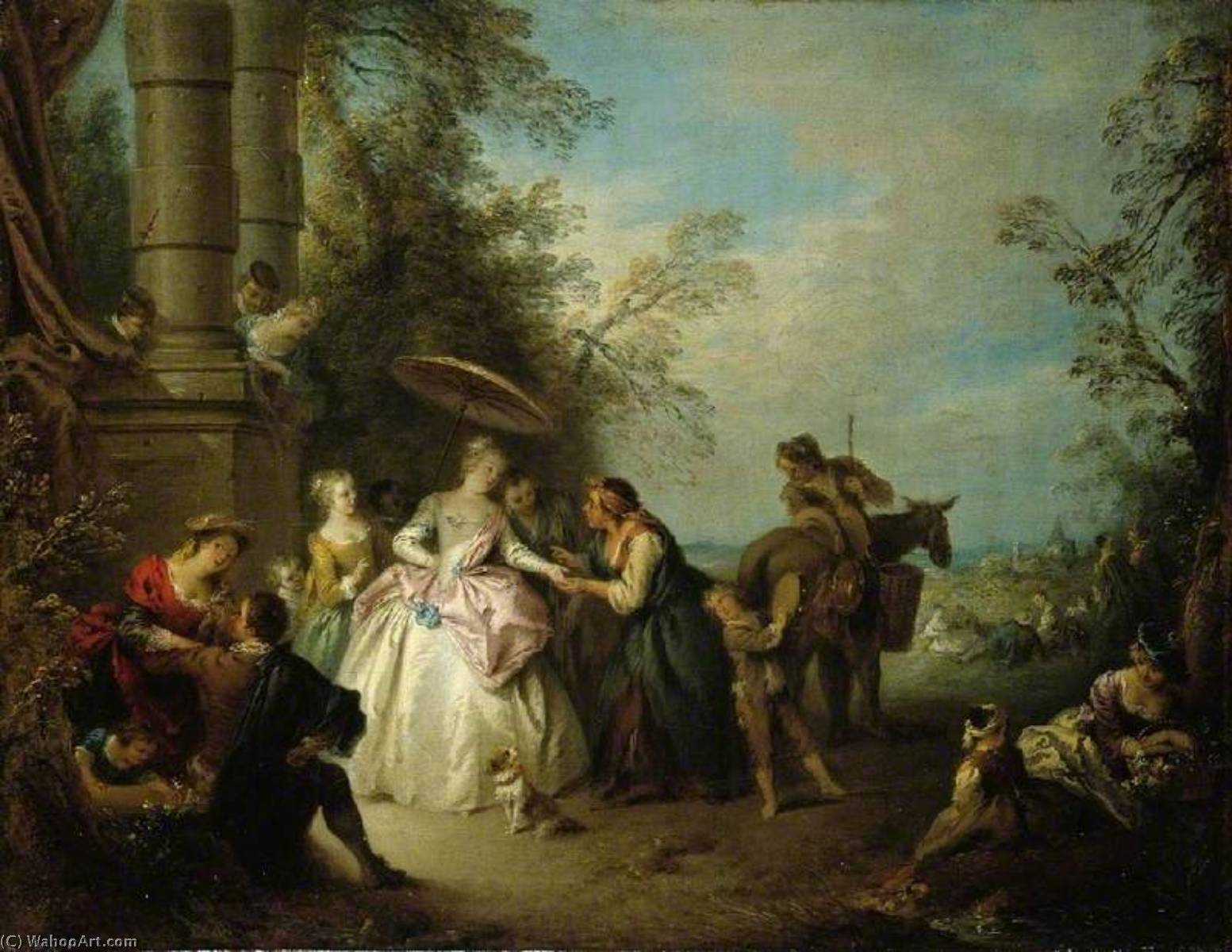
In the delicate dance of light and shadow that defines Jean-Baptiste Pater’s The Fortune Teller, we find ourselves transported to the heart of an era defined by grace, leisure, and the pursuit of pleasure. As the most notable pupil of Antoine Watteau, Pater did more than merely inherit a technique; he breathed life into the fête galante tradition, creating scenes that feel less like static paintings and more like captured whispers of aristocratic life. This particular work invites the viewer to step into a lush, sun-drenched landscape where the boundaries between reality and enchantment seem to blur. The composition is a masterful arrangement of social intimacy, pulling us into a crowded yet harmonious gathering where every figure contributes to a larger tapestry of refined merriment.

The painting serves as a window into the Rococo spirit, an age that favored the soft over the sharp and the whimsical over the monumental. Through his brush, Pater captures the essence of a rendezvous, where the air is thick with the scent of summer gardens and the quiet thrill of social intrigue. For the discerning collector or interior designer, this piece offers more than just aesthetic beauty; it provides a sense of historical continuity and an atmosphere of timeless elegance that can anchor a room with sophistication and warmth.

Mastery of Light and Texture

Technically, The Fortune Teller is a triumph of the Rococo palette. Pater employs a luminous range of tones, utilizing the soft, blended edges characteristic of sfumato to create an atmospheric haze that suggests the heat of a summer afternoon. The color story is one of exquisite balance, where warm earth tones—rich ochres, deep browns, and romantic reds—are set against the cooling whispers of distant blues and verdant greens in the background landscape. This interplay of temperature creates a profound sense of depth, drawing the eye from the immediate, tactile details of the foreground figures toward the hazy, dreamlike silhouette of a distant town.

The artist’s hand is visible in the fluid, organic lines that define the flowing drapery of the noble figures and the soft contours of the natural world. There is a rhythmic quality to his brushwork; it is smooth yet energetic, capturing the shimmering texture of fine silks and the delicate skin tones of the participants. This mastery of oil on canvas allows for a multidimensional experience, where the light appears to catch the folds of fabric and the leaves of trees, making the scene feel vibrantly alive. Such technical prowess ensures that a high-quality reproduction remains a captivating focal point, retaining the subtle nuances that make the original so enchanting.

Symbolism and Emotional Resonance

Beyond its surface beauty, the painting is layered with the symbolic language of the 18th century. The very subject of fortune-telling suggests themes of destiny, curiosity, and the fleeting nature of time—concepts that were deeply embedded in the consciousness of the French aristocracy. Within this social tableau, small details act as silent narrators: an umbrella serves as a symbol of both status and protection from the elements, while the presence of a dog introduces motifs of loyalty and companionship amidst the transient nature of human encounters. These elements weave a narrative of courtship and social maneuvering that resonates with a sense of playful mystery.

The emotional impact of the work is one of lightheartedness tempered by a gentle nostalgia. It captures a moment of perfect, unburdened leisure, yet there is an underlying awareness of the ephemeral beauty of such gatherings. For those looking to infuse their living spaces with a sense of cultured tranquility, The Fortune Teller offers an unparalleled emotional depth. It is a piece that does not merely decorate a wall; it invites conversation, evokes memory, and brings the storied elegance of the French Rococo into the modern home.


Autoriaus biografija

Jean-Baptiste Pater: Vienysis Watteau mokinys

Jean-Baptiste Pater (1695 m. gruodžio 29 d. – 1736 m. liepos 25 d.) iškyla kaip ypatinga figūra prancūziško rokoko meno metraštuose – tai vienintelis dokumentuotas Antoine Watteau, galbūt garsiausio šio stiliaus meistro, mokinys. Gimęs Prancūzijos Valiensene, Paterio meninė kelionė prasidėjo po savo skulptoriaus tėvo, Antoine Paterio, globacija, kuri jam suteikė ankstyvą formų ir meistriškumo suvokimą, vėliau dukintį visuose jo kūrybos žingsniuose. Tačiau būtent Watteau negrįžtinai suformavo Paterio viziją, sukurdamas santykį, pasižymintį tiek susižvalgiimu, tiek trintais nuomynais – dinamiką, kuri galiausiai iškovojo vieną įtakingiausių savo laikų paveiksluotojų.
  • Pradinė mokslė ir įtodiniai veiksmai: Formatiesi metai Pateris praleido tobulindamas savo įgūdžius po Antoine Paterio priežiūra, įsisavinęs pagrindinius skulptūros principus prieš pradėdamas menines studijas su Jean-Baptiste Guide. Šis pradinė pagrindas tapo neįvertinamas, kai vėliau jis Paryzuje (1atra 1713 m.) ieškojo Watteau mentorystės, kur vyresniojo meistro išskirtinis stilius – pasižymintis subtiliomis pastelėmis ir eteriškais mirgėdžiančiais linijomis – nedelsdamas užburė jaunąjį Paterį.
  • Ryšys su Watteau: Watteau įtaka išsivystė už paprasto stiliaus imitacijos ribų; ji persmelgė visą Paterio koncepcinį mątyslą. Nepaisant žinomo sudėtingo Watteau temperamento, Pateris atpažino meistro gilią atmosferos ir emocijų supratimą – savybes, kurias jis rūpistika siekė savo darbuose. Trumpas šių dviejų menininkų bendradarbiavimas sutvirtino Watteau palikimą kaip pagrindinę Paterio vadovaujantįją jėgą.
  • Rokoko stilius ir technika: Paterio meninis stilius buvo roko estetinės apibrėžtis – elegancijos, lengvumo ir sensualaus malonumo šventė. Jis taikė meistrišką techniką, naudojant tradicines pastelines spalvas ir su neįtikėtinu tikslumu taikant mirgėdžiančias linijas. Šis išskirtinis požiūlius pranašauja vėlesnius Francesco Guardi atmosferinės perspektyvos tyrimus, demonstruodamas Paterio aštrią stebėseną ir inovatyvų dvasią.

Žinomos kūriniai ir globėjai

Paterio kūrybinė veikla pirmiausia susikoncentruoja į fête galantes – idiliškas scenas, vaizduojančias aristokratiškus susibūrimus sodo ar peizažo fone – žanrą, kurį Watteau išpopuliarino, o pats Pateris išlaikė ir patobulino. Jo garsiausiems drozdams priklauso „Conversation Galante“, kvapaudžiu vaizdas subtiliuose socialiniuose sąveikose, skystai apšviestuose šviesa, įtrapiantis roko estetinę grožio ir elegancijos obsesiją. Kitas reikšmingas pasiekimas yra „Landscape with a Cart“, kuris parodo Paterio gebėjimą perteikti subtilius tekstūros ir spalvos atspalvius – kūrinį, kuris laikomas Guardi atmosferinės perspektyvos naudojimo pranašybe.
  • Didysis Friedrichas: Pateris įgavo didelę šlovę dėl savo portretų užsakymų Prusijos karaliui Friedrichui II – ypač kūrinių „Le Sultan au Harem“ ir „Le Sultan au Jardin“. Šie portretai demonstruoja Paterio gebėjimą perteikti karališką orumą ir įamžinti psichologinį savo paveikslų subjektų sudėtingumą, taip užtvirtindami jo reputaciją kaip karališko meno meistro.
  • Muziejaus kolekcijos: Paterio paveikslai saugomi prestižinguose įstaikose visame pasaulyje, įskaitant Paryžiaus Luvrą ir Valiensene surengtą Musée des Beaux-Arts – tai yra jų neįtikėtino meno vertinimo ir istorinės reikšmės įrodymai.

Palikimas ir meninė reikšmė

Jean-Baptiste Paterio indėlis į prancūzišką roko meną yra neabejingas. Jis iškyla kaip veiksnys, įtrapiantis savo eros dvasią, įkūnijantis Watteau stiliaus inovacijas ir kartu sukuriantis savo išskirtinį meninį balsą. Jo kruopštus techniką ir evokuojanti kompozicijos ir toliau kelia susižvalgimą meno istorikų bei entuziastų lygio – tai įrodymas apie neblėstantį Paterio palikimą kaip vieno iš svarbiausių XVIII amtaus Prancūzijos paveiksluotojų. Norėdami gilesniam Paterio gyvenimo ir kūrybos supratimui, apsilankykite WahooArt arba tyrinėkite Musée des Beaux-Arts de Valenciennes svetainę.
Žan-Batist Pateras

Žan-Batist Pateras

1695 - 1736 , Prancūzija

Trumpa informacija apie kūrėją

  • Artistic Movement Or Style: Rokoko pastelinė paletė
  • Artists Or Movements Influenced By This Artist: ['Francesco Guardi']
  • Artists Who Influenced This Artist: ['Antoine Watteau']
  • Date Of Birth: 1695 m. gruodžio 29 d.
  • Date Of Death: 1736 m. liepos 25 d.
  • Full Name: Jean-Baptiste Pater
  • Nationality: Prancūzų
  • Notable Artworks:
    • Conversation Galante
    • Landscape with a Cart
    • Les Plaisirs du Bal
  • Place Of Birth: Valenciennes, Prancūzija