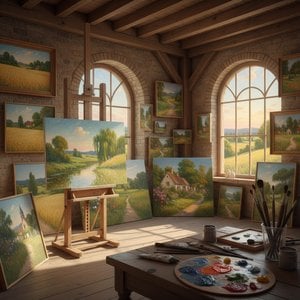
Autoriaus biografija
Žanas Batistas Kamilis Koro: Šviesos ir Peizažo Simfonija
Žanas Batistas Kamilis Koro, vardas, kuris skamba kaip tylus 19-ojo amžiaus Prancūzijos peizažinės tapybos atgarsis, gimė Paryžiuje, komfortabiliame buržuazinėje šeimoje, 1796 m. liepos 16 d. Nors iš pradžių jam buvo numatytas prekybos kelias, likimas – ir galbūt įgimtas meninis jausmas – nukrypo nuo plano. Jo ankstyvieji metai pasižymėjo neįprastu vaikystės patirtimi: iki ketverių metų jis buvo patikėtas auklės globčiai kaimo vietovėje netoli L’Isle-Adam, kas suformavo gilią ryšio su gamta. Šis ankstyvasj laikų įtraukimas į kaimo ramybę labai kontrastavo su jame laukiančiu energingu miesto gyvenimu, tačiau padėjo pagrindus visam gyvenimui trukusiai pastangai užfiksuoti šviesos ir atmosferos nepastovumą. Tėvai, sėkmingi kepurių gamintojai, suteikė jam finansinį stabilumą, leidžiantį tyrinėti savo besivystančią aistrą tapybai po nesėkulingo bandymo užsiimti prekyba – retas privalumas siekiantiems menininkams to laikmečio. Šis palaikymas buvo esminis, suteikdamas jam galimybę visiškai pasišvęsti meniniam lavinimui be tiesioginio pragyvenimo spaudimo.
Nuo Akademinių Pagrindų iki Plein Air Inovacijų
Koro formalus meno mokymas prasidėjo studijomis pas Achilį Etną Michaloną ir vėliau Žaną Viktorą Bertiną, abu gerbiami peizažo dailininkai, įsigiję neoklasikinės tradicijos. Tai įskiepijo jam kruopštų požiūrį į kompoziciją ir formą, pabrėžiant aiškumą ir struktūrą. Tačiau Koro nenusprendė tiesiog kartoti nustatytus stilius; jis geidė kažko autentiškesnio, būdo perteikti ne tik *ką* mato, bet ir *kaip* jaučiasi panardęs į peizažą. Esminis momentas įvyko su jo pirmuoju kelioniu į Italiją 1825 m. Romos Kampanija, praustas auksinės šviesos ir istorijos, uždegė jo vaizduotę. Jis praleido metus piešdamas ir tapydamas *en plein air* – tiesiogiai iš gamtos – praktika, kuri tuo metu buvo gana nereguleriška. Tai leido jam užfiksuoti subtilią šviesos ir šešėlio niuansą, atmosferinius efektus, kurie taps jo stiliaus požymiais. Jis ne tik įrašinėjo topografines detales; jis siekė sužadinti nuotaiką, jausmą apie ramybę ir harmoniją. Ankstyvieji Italijos darbai parodo klasikinio idealizmo įtaką, tačiau jau užuomina apie minkštesnį, emocionaliau atpažįstamą požiūrį, kuris apibrėš jo brandųjį stilių. Jis kruopščiai studijavo meistrų kūrybą, kopijuodamas jų darbus Romos galerijose, tačiau visada per filtrą savo vis didėjantį jautrumą gamtai.
Tarp Tradicijų Tilto
Koro meninis vystymasis nebuvo tiesus; tai buvo subtilus pusiausvyrio aktas tarp tradicijų ir naujovių. Jis reguliariai dalyvavo Paryžiaus Salone, iš pradžių pelnydamas pripažinimą darbams, įsišaknijusiems neoklasikinėse konvencijose. Tačiau tęsdamas *plein air* tapybos tyrinėjimus, jo stilius ėmė kisti. Jis atsisuko nuo labai išbaigtų, detalių kompozicijų link laisvesnio teptukų darbų ir sodresnės paletės. Šis pokytis nebuvo visiškas akademinių principų atmetimas; tai buvo bandymas į juos įpūsti tiesioginės stebėjimo ir emocinio atgarsio artumo. Jis tapo tonalizmo meistru, naudodamas subtilią vertės kaitą sukuriant gylį ir atmosferą. Jo peizažai nebuvo apie dramatiškas pasakojimus ar dideles gestus; jie buvo apie tylią kontemplaciją, kasdienio grožio įvertinimą – miškanos glūdę, saulės apšviestą pievą, ramią upelės pakrantę. Šis požiūris atsiliepė į vis didesnę auditoriją, ieškantį atsvaros 19-ojo amžiaus Prancūzijos spartaus industrializavimo ir socialinių sukrėtimų. Jis išmaniai derino realizmo elementus su beveik poetiniu jausmu, sukurdamas peizažus, kurie buvo tiek pažįstami, tiek giliai asmeniniai. Jo tikslas nebuvo didelių pareiškimų ar politinių pranešimų; jo menas buvo apie grožio radimą įprastoje, kasdienybės pakėlimą į tylios kontemplacijos sferą.
Palikimas ir Nuolatinis Įtaka
Žano Batisto Kamilio Koro įtaka vėlesnėms kartoms dailininkų yra neįvertinama. Jis buvo esminis ryšys tarp neoklasikinės tradicijos ir besivystančios impresionistinės judėjimo. Tokie dailininkai kaip Monet, Pissarro ir Sisley giliai vertino jo gebėjimą užfiksuoti šviesos ir atmosferos nepastovumą, ir jie pasitelkė jo naujoves savo revoliucijų darbuose. Koro pabrėžimas tiesioginio stebėjimo ir *plein air* tapybos atidarė kelią impresionistams radikaliai atsisakyti studijoje vykstančių praktikų. Tačiau Koro nebuvo tik pirmtakas impresionizmui; jis buvo unikalus ir reikšmingas dailininkas pats savaime. Jo didelis kūrinių kiekis – apimantis peizažus, portretus ir figūrų studijas – toliau žavi žiūrovus savo tylia grote ir emociniu gyliu. Jo darbai galima rasti pagrindiniuose muziejuose visame pasaulyje, įskaitant Musée des Beaux-Arts Dunkerque ir Musée Courbet Ornans, Prancūzijoje, taip pat Nacionalinė galerija Londone ir Metropoliteno meno muziejus Niujorke. Jis mirė 1875 m., palikdamas palikimą, kuris toliau įkvepia dailininkus ir meno mylėtojus – liudijimą apie šviesos, peizažo ir tylios kontemplacijos nuolatinę galią. The Repose, Interrupted Reading ir Agostina išlieka ikoniniu jo meistriškumo pavyzdžiu, parodydami jo gebėjimą užfiksuoti tiek fizinį pasaulį, tiek savo subjektų vidinę gyvenimo būdą su nepaprastu jautrumu ir malonumu. Jo įtaka eina toliau nei tapyba; jis skatino meno laisvės dvasią ir paragino jaunesnius dailininkus rasti savo balsą, taip patvirtindamas jo vietą prancūzų meno istorijoje.



 Peržiūrėti realybėje
 Pirkti rankomis tapytą paveikslą
 Pasidalinti
 Dalintis
 Išsamiau

 Atsisiųsti
 Panašūs eksponatai
 Rentgeno nuotrauka
 Automatinė diorama
 Statistika

 Skaityti daugiau






































 Stiklo variantas prieinamas tik pasirinkus dydį iki 110 cm