Peržiūrėti realaus dydžio版 Peržiūrėti AR realybėje Pirkti rankomis tapytą reprodukciją Perejti prie skaitmeninių vaizdų Siųsti
Išsamiau Vadovas Pridėti į mėgstamiausius Atsisiųsti Panašūs eksponatai Rentgeno spindulių nuotrauka Diaporama Statistika

Bailie Duncan McWheeble at Breakfast (from Scott

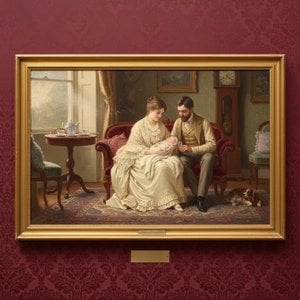
A captivating Victorian scene of two men sharing a meal at a cluttered table by James Eckford Lauder captures the romantic spirit of 1854, inviting you to bring this piece of Scottish history into your collection.

Discover James Eckford Lauder (1811-1869), a Scottish artist famed for historical paintings & portraits, including scenes from Sir Walter Scott's novels. RSA member.

Giclée / Meno spausdinimas

Muziejų lygio „giclée“ arba drobos spausdinimas: greita gamyba ir lankstios apdailos parinktys. ( Pirkti rankomis tapytą reprodukciją Perejti prie skaitmeninių vaizdų)

P118B $10
P118H $10
P118W $10
P438Z $10
P508JH $12
P508YH $12
P805H $10
P805Z $10
P919BZ $10
P919G $10
P919XJ $10
P959ZH $10
P968JZ $12
W106C $8
W218G $10
W218JH $8
W218Y $10
W307PJ $10
W316G $10
W316PJ $8
W316Y $10
W398PJ $8
W4111J $10
W500HY $15
W500JH $15
W692G $12
W849H $8
W940BG $15
W953PJ $8

Standartinis
individualaus dydžio
CM
INCH

Pasirinkite iš mūsų nustatytų dydžių, atitinkančių originalaus meno kūrinio proporcijas.

plotis
aukštis

Galite nurodyti savo matmenis, kad vaizdas atitiktų konkretų rėmą ar erdvę. Jei pasirinktas dydis nesutaps su originalaus paveikslėlio proporcijomis, mes arba apkirpsime kūrinį, arba išplėsime vaizdą naudojant veideliu atspindėtą arba vientisą šoną. Skaitmeninis maketas bus išsiųstas jums patvirtinti prieš pradedant gamybą.
Atkreipkite dėmesį, kad ekrane matomas vaizdinys neatspindi tikrojo apkirpimo ar išplėtimo. Tik maketas tiksliai parodytų galutinę kompoziciją.
Nors galima rinktis ir individualius dydžius, rekomenduojame pasirinkti vieną iš išanksti nustatytų matmenų, kad būtų išlaikytos originalios proporcijos.

Pristatymas visame pasaulyje () per 2 weeks, o ne įprastas 4/5 savaičių laikotarpis. (25 rugsėjis)

why_choose_icon
Nemokamas greitasis pristatymas visame pasaulyje
why_choose_icon
Aukštos kokybės lininis drobė
why_choose_icon
Pilnas siuntimo draudimas
why_choose_icon
Muitinės mokesčių grąžinimo garantija
why_choose_icon
Tikro spalvų atitikimo garantija
why_choose_icon
100 dienų grąžinimo politika (tik esant įtaigoms)
why_choose_icon
100% pinigų grąžinimo garantija
why_choose_icon
Nuolaida dideliems užsakymams

Bendroji kaina

$ 68

reproduction

Bailie Duncan McWheeble at Breakfast (from Scott

Giclée / Meno spausdinimas

Reprodukcijos dydis

-

Visų pasirinktų variantų kaina

$ 68

Pagrindinė informacija

  • Artist: James Eckford Lauder
  • Notable elements: Books, bottles, cups, and dining scene
  • Subject or theme: Casual gathering and meal among friends
  • Title: Bailie Duncan McWheeble at Breakfast
  • Year: 1854

A Morning of Literary Nostalgia

In the quiet, amber-hued moments of a mid-nineteenth-century morning, James Eckford Lauder invites us into a scene that feels less like a mere painting and more like a captured breath from a lost era. Bailie Duncan McWhelee at Breakfast serves as a masterful window into the romanticized Scottish past, drawing profound inspiration from the legendary literary landscapes of Sir Walter Scott. The canvas presents an intimate tableau of two men seated at a table laden with the humble yet significant artifacts of daily life—books, bottles, and cups that suggest a slow, contemplative start to the day. There is a palpable sense of companionship in the way the subjects occupy the space, their presence anchored by the heavy, domestic atmosphere of a kitchen or dining room that feels both lived-in and timeless.

Lauder, a painter deeply rooted in the traditions of Edinburgh’s artistic elite, utilizes his mastery of light and shadow to breathe life into this domestic vignette. The technique is characteristic of the Victorian era's penchant for narrative realism, where every object serves as a silent storyteller. Notice how the light falls across the table, catching the rim of a cup or the spine of a book, creating a rhythmic interplay between the subjects and their surroundings. This careful manipulation of chiaroscuro does more than just define form; it imbues the scene with a sense of warmth and historical weight, making the viewer feel as though they have stumbled upon a private moment of reflection during a casual gathering of friends or kin.

The Art of Storytelling Through Detail

Beyond the immediate visual charm, the painting functions as a rich tapestry of cultural symbolism. The inclusion of books and scholarly items hints at the intellectual pursuits that defined the era's upper and middle classes, bridging the gap between the ruggedness of Scottish tradition and the refined sensibilities of the Romantic movement. The background figures, though softly rendered and secondary to the main protagonists, add a layer of social depth, suggesting a bustling household where history and daily routine coexist seamlessly. For the discerning collector or interior designer, this piece offers more than just aesthetic beauty; it provides a profound sense of heritage and a connection to the soulful, storytelling traditions of 1854 Scotland.

Integrating a high-quality reproduction of this work into a contemporary space allows for a sophisticated dialogue between the past and the present. The painting’s muted, earthy palette and its focus on intimate human connection make it an ideal centerpiece for a study, a library, or a formal dining room where one wishes to evoke feelings of stability, intellect, and warmth. It is a work that does not merely decorate a wall but enriches the very atmosphere of a home, inviting guests to linger and contemplate the enduring beauty of a well-told story.


Autoriaus biografija

James Eckford Lauder (1811–1869): A Scottish Painter Inspired by Scott and Romanticism

James Eckford Lauder was a prominent Scottish artist of the Victorian era, renowned for his historical paintings and portraits that captured the spirit of his time—particularly influenced by the literary works of Sir Walter Scott. Born in 1811 at Silvermills, Edinburgh, he descended from a wealthy family with roots in the tannery trade, providing him with considerable financial stability to pursue his artistic ambitions. His elder brother, Robert Scott Lauder, fostered his passion for art early on, recognizing his talent and encouraging him to study diligently. ### Early Training and Artistic Influences Lauder’s formal education began at Edinburgh Academy from 1824 to 1828 where he honed his skills in drawing and painting under the tutelage of William Allan and Thomas Duncan—figures who championed classical ideals within the Scottish art scene. This formative experience instilled in him a deep appreciation for artistic tradition, shaping his stylistic choices throughout his career. Crucially, Robert Scott Lauder’s unwavering belief in James' potential propelled him toward Italy in 1834, where he spent nearly four years immersing himself in the artistic heritage of Rome and Florence. The atmosphere of these cities—characterized by grand palaces, humanist scholarship, and a revival of classical art—proved profoundly inspiring, fostering his fascination with narrative storytelling and dramatic composition. ### Career Highlights and Notable Paintings Lauder’s artistic output was marked by an unwavering dedication to portraying historical subjects and literary scenes, primarily drawn from Sir Walter Scott's novels. He became a lifelong admirer of Scott’s romantic vision of Scotland and its history, translating this enthusiasm into canvases that vividly depicted iconic moments and characters. His paintings gained considerable acclaim during his lifetime, securing commissions from prominent patrons and earning recognition at the Royal Scottish Academy and the Royal Academy in London. Among his most celebrated works were “Scene from The Two Gentlemen of Verona,” “The Wise and Foolish Virgins,” “Lorenzo and Jessica,” and “Hagar,” each demonstrating a masterful command of technique—particularly color—and conveying profound emotional depth. His engraving of "The Parable of Forgiveness" was awarded a prize at Westminster Hall, cementing his reputation as a gifted artist and illustrator. ### Legacy and Recognition James Eckford Lauder’s contribution to Scottish art history is undeniable. He established himself as one of the foremost painters of his era, embodying the Romantic spirit's fascination with storytelling and dramatic expression. His enduring influence can be seen in subsequent generations of Scottish artists who continued to explore historical themes and literary inspirations. Today, his paintings reside in prestigious institutions such as the National Gallery of Scotland, ensuring that his artistic legacy continues to resonate with audiences worldwide. He died peacefully at Edinburgh in 1869, leaving behind a remarkable body of work—a testament to his talent and unwavering devotion to his craft.
  • Notable Paintings: “Scene from The Two Gentlemen of Verona,” “The Wise and Foolish Virgins,” “Lorenzo and Jessica,” “Hagar,” “Christ Teaches Humility”
  • Royal Scottish Academy Membership: Elected in 1839, Full Academician in 1846
  • Influences: William Allan, Thomas Duncan, Sir Walter Scott

Trumpa informacija apie kūrėją

  • Artistic Movement Or Style: Victorian Portraiture
  • Artists Or Movements Influenced By This Artist: ['Walter Scott']
  • Artists Who Influenced This Artist:
    • Robert Scott Lauder
    • William Allan
  • Date Of Birth: 1811
  • Date Of Death: 1869
  • Full Name: James Eckford Lauder
  • Nationality: Scottish
  • Notable Artworks:
    • The Wise and Foolish Virgins
    • Scene from The Two Gentlemen of Verona
  • Place Of Birth: Silvermills, Edinburgh