A Legacy of Precision: The Life and Art of Jacob Toorenvliet
In the golden era of Dutch painting, few traditions captured the quiet intimacy of human existence as exquisitely as the Leiden School. At the heart of this movement stood Jacob Toorenvliet (1640–1719), a master whose brushwork served as a vital bridge between the legendary precision of Gerrit Dou and the evolving sensibilities of the late seventeenth century. Born into a lineage of artistic excellence in Leiden, Toorenvliet was the son of Abraham Toorenvliet, a respected glass painter and drawing instructor. This upbringing provided him with more than just a name; it gifted him an early immersion in the meticulous observation and technical rigor that would become the hallmark of his career.
Toorenvliet’s artistic journey was far from a solitary path within the borders of the Netherlands. His formative training under masters such as Frans van Mieris the Elder, Matthijs Naeveu, and the incomparable Gerrit Dou instilled in him the principles of fijnschilderij—the art of fine painting. This style demanded an almost superhuman level of detail, where every texture, from the sheen of silk to the glint of a copper vessel, was rendered with breathtaking clarity. However, it was his Grand Tour of Europe, beginning in 1659, that truly expanded his artistic horizon. Traveling through Italy and witnessing the dramatic light of Rome and the vibrant atmosphere of Venice, Toorenvliet absorbed the influence of Caravaggio and Rembrandt, blending Northern precision with a newfound Southern warmth and atmospheric depth.
The Mastery of Genre and the Italian Influence
As Toorenvliet traversed the continent, his work began to reflect a sophisticated synthesis of cultures. During his time in Italy, he became a member of the Bentvueghels, an eccentric guild of Northern artists sketching in Rome, adopting the nickname Jazon. This period of wandering allowed him to document not only the human condition but also the architectural splendor of the Mediterranean. His depictions of Venetian vistas and Florentine landscapes demonstrate a remarkable ability to capture light and space, moving beyond the enclosed domesticity of his Dutch roots to embrace a more expansive, panoramic vision.
Upon returning to the Netherlands, Toorenvliet’s repertoire flourished with genre scenes that resonated deeply with the contemporary appetite for narrative realism. His subjects were often found in moments of quiet contemplation or everyday industry:
- Domestic Intimacy: Scenes such as The Music Lesson showcase the tender interaction between figures, where the soft glow of light illuminates a shared moment of cultural enrichment.
- Occupational Realism: Works like A Fish Seller and The Poulterer celebrate the dignity of daily labor, utilizing rich textures and a restrained palette to ground the viewer in the tangible reality of the marketplace.
- Intellectual Curiosity: His depictions of scholars and alchemists reflect the era's fascination with science and mysticism, often using small-scale copper plates to achieve an intense, jewel-like focus.
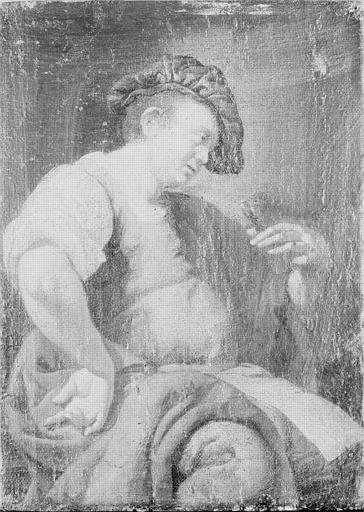
The choice of medium was as crucial as his subject matter. Toorenvliet frequently worked on copper plates, a surface that allowed for unparalleled smoothness and tonal subtlety. This technique enabled him to execute the fine details required by the fijnschilderij tradition while maintaining a luminous quality that made his portraits and interiors appear almost tactile.
Historical Significance and Lasting Impression
As the seventeenth century drew to a close, Toorenvliet remained a steadfast guardian of the Leiden tradition. Following the deaths of his mentors, he became one of the last great representatives of the school, ensuring that the meticulous standards of Dou and Mieris were passed down to subsequent generations. His leadership within the Guild of Saint Luke in Leiden and his role as a co-founder of the Leiden Drawing Academy in 1694 underscore his commitment to the institutionalization of artistic excellence.
The historical significance of Jacob Toorenvliet lies in his ability to harmonize the disparate worlds of Northern European detail and Southern European light. He did not merely imitate the masters who came before him; rather, he infused their technical rigor with a cosmopolitan spirit born of his travels. Today, his works stand as windows into a vanished world—a world of quiet domesticity, bustling markets, and the enduring pursuit of beauty through the lens of absolute precision.


 Peržiūrėti realaus dydžio版
 Perjungti į spausdinimą
 Siųsti
 Dalintis
 Išsamiau
 Gidas
Gidas

 Atsisiųsti
 Panašūs eksponatai
 Rentgeno spindulių nuotrauka
 Diaporama
 Statistika
 Rodyti daugiau


