Peržiūrėti realaus dydžio版 Peržiūrėti AR realybėje Perjungti į spausdinimą Perejti prie skaitmeninių vaizdų Siųsti
Išsamiau Gidas Pridėti į mėgstamiausius Atsisiųsti Panašūs eksponatai Rentgeno spindulių nuotrauka Diaporama Statistika

Thursday April 17

Discover iosu aramburu, a Peruvian visual artist renowned for exploring modernity, Andean history, and architecture through innovative painting, sculpture, and installation. Dive into his impactful work on Latin American modernism.

Rankų darbo aliejinės reprodukcijos

Rankiniu būdu tapytas aliejus ant droblio jūsų pageidaujamame dydį ir rėmuose – mūsų menininkų darbas pagal užsakymą. ( Perjungti į spausdinimą Perejti prie skaitmeninių vaizdų)

Standartinis
individualaus dydžio
CM
INCH

Pasirinkite iš mūsų nustatytų dydžių, atitinkančių originalaus meno kūrinio proporcijas.

plotis
aukštis

Galite įvesti savo matmenis, kad jie atitiktų konkretų rėmą ar erdvę. Jei pasirinktas dydis neatitinka originalaus paveikslėlio proporcijų, mes arba apkropsime meno kūrinį, arba papildysime tapybą rankomis dažytい elementais. Prieš pradėdami gamybą, jūsų patvirtinimui atsiųsime skaitmeninį maketą.
Atkreipkite dėmesį, kad ekrane rodomas vaizdas neatspindi tikrojo apkarpymo ar papildymo. Tik maketas tiksliai parodys galutinę kompoziciją.
Nors galima rinktis ir individualius dydžius, rekomenduojame pasirinkti matmenis iš nustatytos sąrašo, kad būtų išlaikytos originalios proporcijos.

Ką galima pakeisti (pavyzdžiai): Pakeisti veidą į kliento nuotrauką; Pridėti augintinį (pvz., pakeisti katę šunimi); Įtraukti paslėptą žinutę fone; Pakeisti fono kraštovaizdį ar elementus.
Gavus užsakymą, WahooArt.com komanda susisieks su klientu el. paštu dėl instrukcijų ir pateiks maketo pavyzdį

Pristatymas visame pasaulyje () per 3–4 savaites, o ne įprastai – per 5 savaites. (25 rugsėjis). Kokybė lieka nepakeičiama.

why_choose_icon
Nemokamas greitasis pristatymas visame pasaulyje
why_choose_icon
Aukštos kokybės lininis drobė
why_choose_icon
Pilnas siuntimo draudimas
why_choose_icon
Muitinės mokesčių grąžinimo garantija
why_choose_icon
Tikro spalvų atitikimo garantija
why_choose_icon
100 dienų grąžinimo politika (tik esant įtaigoms)
why_choose_icon
100% pinigų grąžinimo garantija
why_choose_icon
Nuolaida dideliems užsakymams

Bendroji kaina

$ 272

reproduction

Thursday April 17

Reprodukcijos technika

Reprodukcijos dydis

-

Visų pasirinktų variantų kaina

$ 272


Autoriaus biografija

A Reimagining of Modernity: The Visionary World of iosu aramburu

iosu aramburu emerges as a compelling voice in contemporary art, a Peruvian visual artist whose work transcends simple categorization. He isn’t merely painting or sculpting; he is excavating and reassembling the fragmented narratives of modernity within the Andean context. Born in Peru, aramburu dedicates his practice to exploring the utopian potentials inherent in early and mid-century modernism as it manifested—and was often reimagined—in Latin America. His research isn’t a nostalgic glance backward but a dynamic interrogation of how these architectural forms, social ideals, and artistic movements took root in a region grappling with its own unique history and identity.

Early Influences and Artistic Development

Aramburu's fascination stems from a deep engagement with the built environment of Peru and the broader Andean region. He doesn’t approach modernism as an imported style but rather as a localized phenomenon, shaped by indigenous traditions, political upheavals, and the specific geographical challenges of the Andes. His early work hinted at this preoccupation, often featuring abstracted landscapes punctuated by geometric forms reminiscent of modernist architecture. These weren't depictions of existing structures so much as echoes—ghosts of ambition and progress embedded within the natural world. This initial phase laid the groundwork for his more ambitious explorations into sculpture and installation, where he began to physically reconstruct fragments of this architectural past. The artist’s development is marked by a shift from representation towards reconstruction, from observing modernity to actively building its potential anew. He seeks not to replicate but to *reactivate* these forms, imbuing them with new meaning for a contemporary audience.

Themes and Symbolism in Aramburu's Work

At the heart of aramburu’s practice lies an investigation into the relationship between architecture, social utopias, and the human imagination. His installations often feature fragmented architectural elements—walls, staircases, windows—arranged in ways that disrupt traditional notions of space and functionality. These disruptions aren't arbitrary; they are deliberate attempts to challenge the perceived stability of modernist ideals. The recurring motif of the staircase, for example, can be interpreted as a symbol of both progress and impasse, representing the aspirations of modernity alongside its inherent limitations. His paintings frequently incorporate bold geometric shapes and vibrant colors, evoking the aesthetic language of early Latin American modernism while simultaneously introducing an element of surrealism. This juxtaposition creates a sense of uncanny familiarity, inviting viewers to question their own assumptions about history and progress. The artist’s work is deeply concerned with memory—the collective memories embedded within architectural structures and the individual experiences shaped by these spaces.

Major Achievements and Historical Significance

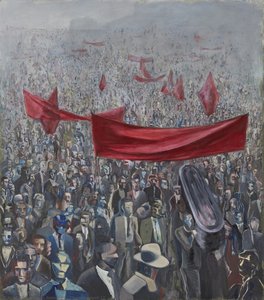
While still developing his career, aramburu has already garnered attention for his innovative approach to sculpture and installation. His piece “Thursday April 17” exemplifies his ability to create immersive environments that challenge viewers’ perceptions of space and history. The work, a fragmented architectural reconstruction, invites contemplation on the utopian ideals of modernism and their often-unfulfilled promises. Aramburu's significance lies in his refusal to treat Latin American modernism as a derivative of European or North American movements. He positions it as a distinct phenomenon—a unique response to specific historical, social, and geographical conditions. By excavating and reassembling the fragments of this past, he offers a powerful critique of colonial legacies and a hopeful vision for a more inclusive future. His work contributes to a broader conversation about the complexities of modernity and the importance of reclaiming marginalized narratives within art history. He is not simply documenting the past; he is actively shaping its future interpretation.

Trumpa informacija apie kūrėją

  • Artistic Movement Or Style: Modernism, Installation
  • Full Name: iosu aramburu
  • Nationality: Peruvian
  • Notable Artworks: ['Thursday April 17']
  • Place Of Birth: Peru