NEMOKAMA MENO KONSULTACIJA

x
Užsisakyti kopiją Užsisakyti kopijąPirkti skaitmeninį paveikslą Pirkti skaitmeninį paveikslą PasidalintiPasidalinti
IšsamiauIšsamiau Pridėti į mėgstamiausius Pridėti į mėgstamiausius AtsisiųstiAtsisiųsti Panašūs eksponataiPanašūs eksponatai RentgenogramąRentgenogramą Automatinė dioramaAutomatinė diorama

Two Witches

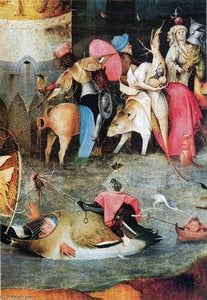
Hieronymus Bosch's "Two Witches" depicts two enigmatic figures amidst a dark, symbolic scene—a haunting exploration of morality and the supernatural from the Renaissance master.

Hieronymus Bosch (c. 1450-1516) buvo žymusis olandų renesanso meistras, garsėjantis psichodelijomis ir simboliais. Jo ikoninės drobės – „Žemės eldais“, paskutinis teisybė Triptychas, Šventosios įkalėjimų aukcionas – išraišką įrodančių meno istoriją kūriniai.

Giclée / Meno spausdinimas

Muziejų lygio „giclée“ arba drobos spausdinimas: greita gamyba ir lankstios apdailos parinktys.

P118B $10
P118H $10
P118W $10
P438Z $10
P508JH $12
P508YH $12
P805H $10
P805Z $10
P919BZ $10
P919G $10
P919XJ $10
P959ZH $10
P968JZ $12
W106C $8
W218G $10
W218JH $8
W218Y $10
W307PJ $10
W316G $10
W316PJ $8
W316Y $10
W398PJ $8
W4111J $10
W500HY $15
W500JH $15
W692G $12
W849H $8
W940BG $15
W953PJ $8

Standard
custom
CM
INCH

Pasirinkite iš mūsų nustatytų dydžių, atitinkančių originalaus meno kūrinio proporcijas.

plotis
aukštis

Galite nurodyti savo matmenis, kad vaizdas atitiktų konkretų rėmą ar erdvę. Jei pasirinktas dydis nesutaps su originalaus paveikslėlio proporcijomis, mes arba apkirpsime kūrinį, arba išplėsime vaizdą naudojant veideliu atspindėtą arba vientisą šoną. Skaitmeninis maketas bus išsiųstas jums patvirtinti prieš pradedant gamybą.
Atkreipkite dėmesį, kad ekrane matomas vaizdinys neatspindi tikrojo apkirpimo ar išplėtimo. Tik maketas tiksliai parodytų galutinę kompoziciją.
Nors galima rinktis ir individualius dydžius, rekomenduojame pasirinkti vieną iš išanksti nustatytų matmenų, kad būtų išlaikytos originalios proporcijos.

Pristatymas visame pasaulyje () per 2 weeks, o ne įprastas 4/5 savaičių laikotarpis. (6 liepa)

why_choose_icon
Nemokamas greitasis pristatymas visame pasaulyje
why_choose_icon
Aukštos kokybės lininis drobė
why_choose_icon
Pilnas siuntimo draudimas
why_choose_icon
Muitinės mokesčių grąžinimo garantija
why_choose_icon
Tikro spalvų atitikimo garantija
why_choose_icon
60 dienų grąžinimo politika (tik esant gamyklinėms defektams)
why_choose_icon
100% pinigų grąžinimo garantija
why_choose_icon
Nuolaida už kelias reprodukcijas

Visų darbų kaina

-

reproduction

Two Witches

Giclée / Meno spausdinimas

Reprodukcijos matmenys

-

Galutinė kaina

-

Trumpos informacija

  • Artistic style: Surrealism, Symbolism
  • Artist: Hieronymus Bosch
  • Notable elements: Detailed lines, hatching
  • Movement: Early Netherlandish
  • Medium: Pen & Ink
  • Location: Museum Boijmans

Karo viktorina

Kiekviename klausime yra tik vienas teisingas atsakymas.

Klausimas 1:
What is the primary artistic style associated with Hieronymus Bosch’s ‘Two Witches’?
Klausimas 2:
The image description highlights which of the following techniques used in ‘Two Witches’?
Klausimas 3:
According to the image description, what is the dominant lighting in ‘Two Witches’?
Klausimas 4:
What does the image description suggest about the overall mood or feeling evoked by ‘Two Witches’?
Klausimas 5:
Based on the image description, what is a key element of Bosch’s style evident in ‘Two Witches’?

Kolekcinio eksponato aprašymas

A Glimpse into a Twisted World: The Enigmatic "Two Witches"

Hieronymus Bosch's “Two Witches,” painted circa 1480-1490, isn’t merely a depiction of two figures; it’s an immersion into a meticulously crafted nightmare. Born in ’s-Hertogenbosch, Netherlands, during a period rife with religious anxieties and burgeoning folklore, Bosch developed a singular artistic vision—one that fused the unsettling realities of his time with fantastical imagery and profound psychological depth. This particular work, often considered a preparatory study for a larger altarpiece, offers a concentrated dose of his signature style: a world brimming with symbolic excess, moral warnings, and a pervasive sense of impending doom. The painting’s power lies not in its narrative clarity—it deliberately avoids straightforward storytelling—but rather in the unsettling atmosphere it generates through carefully orchestrated details and an almost unbearable tension between the two central figures.

The composition itself is deceptively simple. Two women, draped in long, flowing robes of indeterminate color, occupy a starkly minimalist background. Their faces are obscured by elaborate head coverings—a deliberate choice that heightens their anonymity and emphasizes their role as archetypal figures rather than individuals. One holds a book or manuscript, its contents tantalizingly out of view, while the other carries a staff topped with what appears to be an animal skull – a potent symbol of death and decay. The positioning of the figures, slightly off-center, creates a dynamic imbalance, drawing the viewer’s eye into the heart of this unsettling tableau. Bosch masterfully uses negative space to amplify the sense of isolation and foreboding, suggesting that these women exist within a larger, unseen drama.

The Language of Line and Shadow: Technique and Style

Bosch's technique is instantly recognizable—a testament to his painstaking attention to detail. The work is executed entirely in pen and ink on paper, utilizing a remarkably precise hand that renders the figures’ forms with astonishing accuracy. He employs hatching and cross-hatching to create subtle gradations of tone, suggesting depth and volume without resorting to traditional shading techniques. This meticulous approach lends a remarkable sense of realism to the fantastical elements within the scene—the intricate folds of the robes, the unsettling details of the skull, even the suggestion of texture in the women’s garments. The monochromatic palette – shades of gray – further enhances the painting's somber mood and focuses attention on the interplay of line and shadow.

The influence of Bosch’s artistic training is evident in his mastery of perspective, though it’s deliberately flattened, creating a sense of claustrophobia. He doesn’t attempt to create an illusion of depth; instead, he uses overlapping lines and carefully positioned elements to suggest spatial relationships within the scene. The figures are presented as if trapped within a confined space—a visual metaphor for the psychological constraints imposed by sin and temptation. Bosch's style is deeply rooted in the Northern Renaissance tradition, yet it transcends conventional artistic boundaries, forging a uniquely personal and profoundly unsettling vision.

Decoding the Symbols: A Journey into Morality and Madness

“Two Witches” is saturated with symbolism, inviting endless interpretation. The book held by one figure likely represents knowledge—but perhaps also dangerous or forbidden knowledge. The skull atop the staff is a clear reference to mortality and the transience of earthly pleasures. The women themselves can be seen as allegorical figures representing temptation, sin, and the perils of indulging in worldly desires. Bosch’s work frequently served as moralistic warnings, depicting the consequences of straying from religious piety. The overall atmosphere evokes a sense of impending judgment—a reminder that even seemingly innocuous actions can lead to devastating outcomes.

Furthermore, the painting resonates with themes of madness and delusion. Bosch's art often explores the boundaries between reality and fantasy, sanity and insanity. The unsettling expressions on the women’s faces, combined with the bizarre setting, suggest a descent into psychological turmoil—a reflection of the anxieties and uncertainties that plagued Renaissance society. The scene feels like a carefully constructed dreamscape, populated by figures caught in a perpetual state of unease.

A Timeless Masterpiece: Reproduction and Legacy

“Two Witches” remains one of Hieronymus Bosch’s most compelling works, captivating viewers with its unsettling beauty and profound psychological depth. Reproductions offer an accessible way to experience the power of this extraordinary painting, allowing us to contemplate its complex symbolism and appreciate Bosch's unparalleled artistic vision. Whether displayed in a grand salon or a smaller study, a high-quality reproduction of “Two Witches” serves as a constant reminder of the enduring fascination with darkness, morality, and the mysteries of the human psyche.

panašūs kūriniai


Autoriaus biografija

A Netherlandish Enigma: The Life and Art of Hieronymus Bosch

Hieronymus Bosch (c. 1450-1516), Dutch Renaissance master of surrealism & symbolism, remains one of art history’s most perplexing figures—a man whose life is shrouded in obscurity yet whose artistic output continues to resonate powerfully across centuries. Born around 1450 in ’s-Hertogenbosch, Brabant – then a bastion of medieval piety – Bosch emerged from a family steeped in artistic tradition, inheriting the skills and sensibilities of his father and grandfather, Jan van Aken. Biographical details are frustratingly sparse; records offer tantalizing glimpses but ultimately fail to illuminate the contours of his personal existence—a deliberate choice perhaps that contributed to the enduring mystique surrounding him. He married Aleyt Goyaerts van den Meerveen before 1481, securing a degree of financial stability through her family’s holdings, though little else is documented about their marital life.

Fantastical Visions and Symbolic Depths

Bosch’s artistic style defies easy categorization—a breathtaking fusion of meticulous realism and hallucinatory imagination. Primarily working with oil on oak panels, he demonstrated unparalleled mastery of the medium, achieving luminous colors and astonishing textural detail. While his early canvases mirrored prevailing Netherlandish conventions – particularly in their depiction of biblical narratives – Bosch swiftly transcended mere imitation, forging a profoundly original vision rooted in unsettling psychological explorations. His paintings aren’t simply representations of the visible world; they are elaborate allegories populated by grotesque creatures—demons, hybrids, and fantastical beasts—that embody moral failings and spiritual anxieties. These figures aren't merely decorative additions; they serve as conduits for profound theological concepts, conveying fears of sin, temptations, and the inescapable judgment of God. Consider The Garden of Earthly Delights (c. 1490-1510), a monumental triptych that depicts paradise, earthly indulgence, and hell—a complex visual tapestry designed to provoke contemplation on humanity’s relationship with divine grace. The central panel portrays a hedonistic world consumed by sensual desire, while the left panel presents Edenic bliss marred by unsettling distortions – a masterful demonstration of Bosch's ability to juxtapose beauty and terror.

Religious Themes and Moral Allegory

Bosch’s artistic impulse stemmed from deep engagement with medieval religious thought—particularly apocalyptic prophecies that underscored the vulnerability of human existence before divine wrath. He eschewed straightforward depictions of biblical stories, instead utilizing symbolism to grapple with thorny ethical dilemmas and theological conundrums. His creatures – demons, hybrids, and unsettling human figures – aren't merely visual curiosities; they embody vices and temptations, reflecting anxieties prevalent during his time—fears of heresy and social upheaval. The blending of sacred and profane imagery—a hallmark of Bosch’s oeuvre—creates a disconcerting effect that continues to captivate audiences today. Artists like Pieter Bruegel the Elder acknowledged Bosch's influence, adopting similar compositional techniques and thematic concerns. Furthermore, Surrealist painters such as Salvador Dalí drew inspiration from Bosch’s dreamlike landscapes and exploration of the subconscious mind – securing his place as a precursor to modern artistic experimentation.

Major Achievements and Legacy

Bosch’s enduring legacy rests upon a remarkable body of work—characterized by unparalleled psychological depth and stylistic innovation. Among his most celebrated masterpieces are The Last Judgement Triptych (c. 1480-1490), which portrays the harrowing spectacle of divine retribution; and Ascent of the Blessed (c. 1480-1490), depicting ethereal visions of paradise—a testament to Bosch’s ability to evoke profound emotional responses. Even smaller canvases like Epiphany (c. 1495) showcase his masterful command of oil on wood and intricate symbolism, revealing a mind perpetually wrestling with existential questions. Bosch's influence extends far beyond the confines of his own era—inspiring subsequent artists and shaping artistic movements into the 20th century. His unsettling visions continue to provoke debate and inspire creativity, cementing his position as one of art history’s most singular voices – a testament to the enduring power of imagination and symbolic expression.
Jeronim Kasas

Jeronim Kasas

1450 - 1516 , Nyderlandai

Trumpa informacija

  • Artistic Movement Or Style: Surrealizmas, Simbolizmas
  • Artists Or Movements Influenced By This Artist: ['Pieter Bruegel Senelis']
  • Date Of Birth: c. 1450
  • Date Of Death: 1516
  • Full Name: Hieronymus Bosch
  • Nationality: Olandas
  • Notable Artworks:
    • Žemės Šėldžio Sodas
    • Paskutinio Balsimo Triptychas
    • Šventųjų Ascensija
  • Place Of Birth: Den Bosch, Netherlands
Tyrinėkite meno kūrinius, suskirstytus pagal temas, stilius ir savybes.