Muziejų lygio „giclée“ arba drobos spausdinimas: greita gamyba ir lankstios apdailos parinktys. ( Pirkti rankų darbo tapybą Perejti prie skaitmeninių vaizdų)





























Pasirinkite iš mūsų nustatytų dydžių, atitinkančių originalaus meno kūrinio proporcijas.

Įveskite jums reikiamą plotį ir aukštį, kad atvaizdas derėtų prie jūsų rėmo ar sienos. Spausdiną galima tik sumažinti, bet nepadidinti virš originalaus paveikslėlio dydžio, todėl keičiant proporcijas, dalis vaizdo prarandama. Prieš spausdinimą atsiųsime jums skaitmeninį maketą patvirtinimui. Šioje puslapio nuotraukoje matomas pjūvis nėra tikslus – jį rodo tik maketas.
Pristatymas visame pasaulyje () per 2 weeks, o ne įprastas 4/5 savaičių laikotarpis. (15 lapkritis)
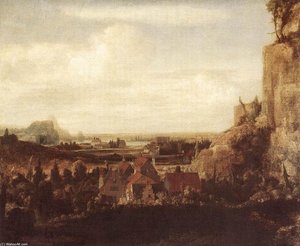
The Great Tree
Reprodukcijos matmenys
Hercules Seghers’ “The Great Tree” stands as a testament to the Baroque fascination with dramatic landscapes and masterful printmaking. Executed around 1628-29, this etching offers more than just a visual depiction; it embodies an atmosphere of quiet contemplation and profound observation of nature's grandeur.
Seghers’ skill as an engraver is immediately apparent in the artwork’s surface texture. Utilizing meticulous lines—a technique known as etching—he achieved remarkable detail, simulating bark, grass, and other natural elements with astonishing accuracy. This painstaking process involved transferring a design onto metal plate, acid etching away unwanted areas, and then applying tonal washes to create depth and luminosity within the grayscale palette.
The painting reflects the stylistic conventions of its time—the Baroque era—characterized by expansive vistas and an emphasis on grandeur. Unlike many contemporary landscapes that prioritized celestial skies, Seghers focused primarily on earthly forms: rolling hills punctuated by scattered trees and a distant village. This deliberate choice underscores the Baroque preoccupation with portraying the power and majesty of the natural world.
Though devoid of overt symbolic imagery, “The Great Tree” possesses an inherent resonance. The dominant tree itself can be interpreted as representing resilience, longevity—a symbol deeply rooted in folklore and Christian tradition—and perhaps most powerfully, a connection to the fundamental forces of nature. Its solitary presence evokes a sense of solitude yet simultaneously conveys a feeling of steadfastness against time.
“The Great Tree” exemplifies Seghers’ reputation as “the most inspired, experimental and original landscapist” of his generation. It's remarkable achievement in printmaking technique—combined with its evocative mood—continues to captivate viewers today. Reproductions from WahooArt offer a chance to experience this masterpiece’s beauty and intricacy firsthand.
„The Great Tree“ yra WallArt kūrinys.
Dominuojanti „The Great Tree“ – Hercules Segers spalva yra Green to Violet Spectrum. Šis tonas yra pagrindinė paletės spalva.
„The Great Tree“ – Hercules Segers priklauso Baroque stiliui. Ši dailės kryptis suteikia kūriniui stilistinį kontekstą.


1589 - 1638 , Nyderlandai

Explore the intricate world of etching and intaglio printmaking. Discover how masters use acid and metal to create profound textures and lines, from Romanticism to modern era, through an expert lens of art history and technical mastery.

Embark on a visual journey through art history's most tranquil landscapes. Discover the serene mastery of Corot, Renoir, and more, and learn how to bring these timeless, museum-quality escapes into your home with bespoke, hand-painted oil reproductions from WahooArt.com.

Explore the mastery of Baroque landscapes from Patinir to Bruegel. Discover the power of light and shadow today.

Discover the profound journey of concept creation at WahooArt. From digital pixels to museum-grade oil masterpieces, explore our expert process of transforming memories into bespoke, hand-painted legacies through unparalleled craftsmanship and artistic alchemy.

Explore the profound beauty of the sketch. Discover how masters use charcoal and graphite to capture raw emotion, anatomical precision, and fluid movement, bridging the gap between ephemeral marks and eternal oil masterpieces.
 Peržiūrėti realaus dydžio版
 Pasidalinti
 Dalintis
 Išsamiau
 Vadovas

 Atsisiųsti
 Panašūs eksponatai
 Rentgeno spindulių nuotrauka
 Automatinė diorama
 问答
问答
 Statistika

 Skaityti daugiau









 Stiklo variantas prieinamas tik pasirinkus dydį iki 110 cm