


Rankiniu būdu tapytas aliejus ant droblio jūsų pageidaujamame dydį ir rėmuose – mūsų menininkų darbas pagal užsakymą. ( Pirkti spaudinį Pirkti vaizdą)





























Pasirinkite iš mūsų nustatytų dydžių, atitinkančių originalaus meno kūrinio proporcijas.

Galite įvesti savo matmenis, kad jie atitiktų konkretų rėmą ar erdvę. Jei pasirinktas dydis neatitinka originalaus paveikslėlio proporcijų, mes arba apkropsime meno kūrinį, arba papildysime tapybą rankomis dažytい elementais. Prieš pradėdami gamybą, jūsų patvirtinimui atsiųsime skaitmeninį maketą.
Atkreipkite dėmesį, kad ekrane rodomas vaizdas neatspindi tikrojo apkarpymo ar papildymo. Tik maketas tiksliai parodys galutinę kompoziciją.
Nors galima rinktis ir individualius dydžius, rekomenduojame pasirinkti matmenis iš nustatytos sąrašo, kad būtų išlaikytos originalios proporcijos.
Pristatymas visame pasaulyje () per 3–4 savaites, o ne įprastai – per 5 savaites. (7 rugsėjis). Kokybė lieka nepakeičiama.


Nude(detail)
Reprodukcijos matmenys
Gustav Klimt's "Nude(Detail)", created in 1913, is a captivating fragment from a larger work that embodies the essence of the Viennese Secession movement. This piece offers a glimpse into Klimt’s exploration of female sensuality, eroticism, and the human form, rendered with his signature blend of symbolism and Art Nouveau aesthetics.
Gustav Klimt was an Austrian symbolist painter who rose to prominence as a leading figure in the Vienna Secession. Born in Baumgarten, near Vienna, he demonstrated artistic talent early on, studying at the Vienna Kunstgewerbeschule. His career progressed through collaborations with his brother Ernst and Franz von Matsch within "The Company of Artists," undertaking decorative mural commissions.
This particular detail showcases a reclining nude female figure, captured with Klimt’s characteristic loose, gestural lines. The woman's posture—reclining on her side with one arm draped over her head and the other resting gently against her body—conveys an atmosphere of intimacy and introspection. Her closed eyes suggest a state of reverie or sensual pleasure.
Klimt’s masterful use of color, though not fully visible in this detail, is integral to the work's overall impact. The application of gold leaf, a hallmark of his "Golden Phase," adds a layer of opulence and draws attention to the curves and contours of the female form. This technique elevates the subject beyond mere representation, imbuing it with an almost spiritual quality.
Created during a period of significant social change in Vienna, "Nude(Detail)" reflects Klimt's willingness to challenge conventional artistic norms and explore themes considered taboo at the time. The Viennese Secession movement sought to break away from traditional academic art, embracing new forms of expression that reflected modern sensibilities.
Today, “Nude(Detail)” remains a celebrated work, inspiring artists and collectors worldwide. Its enduring appeal lies in its powerful portrayal of female sexuality and its innovative artistic techniques. It stands as a testament to Klimt's unwavering commitment to exploring the depths of human emotion and desire through his art.


1862 - 1918 , Austrija

Explore the profound impact of the Vienna Secession movement. Discover how visionaries like Gustav Klimt revolutionized modern art through symbolism, gold leaf, and bold ornamentation in this deep dive into the aesthetic revolution that redefined the visual landscape of Europe.
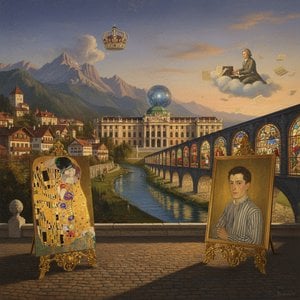
Embark on a sophisticated journey through Austrian art history. Explore the golden brilliance of Gustav Klimt and the elegance of the Vienna Secession through an expert lens, celebrating the enduring soul of Central European masterpieces.

Explore the imperial grandeur of Vienna through art history. Discover the architectural mastery of Otto Wagner and the elegance of the Secessionist movement in this sophisticated guide to Austria's timeless aesthetic legacy.

Discover the exquisite world of Art Nouveau. Explore the elegant fusion of nature and design through architectural masterpieces, organic forms, and the legendary masters of the Belle Époque. Immerse yourself in a journey of timeless sophistication and ornamental beauty.

Embark on a sophisticated journey through the splendor of Austrian art. From Gustav Klimt’s golden masterpieces to the elegance of the Viennese Secession, discover the history and symbolism behind Europe's most iconic works for the discerning collector.

 Peržiūrėti realybėje
 Pasidalinti
 Dalintis
 Išsamiau

 Atsisiųsti
 Panašūs eksponatai
 Rentgeno nuotrauka
 Automatinė diorama

 Skaityti daugiau







 Stiklo variantas prieinamas tik pasirinkus dydį iki 110 cm


