Ankstyvieji metai ir meninės pradžios
Gustavas Klimtas, gimęs 1862 m. liepos 14 d. Baumgartene, netoli Vienos, kilo iš šeimos, kurią lydėjo tiek meninis polinkis, tiek finansinės sunkumai. Jo tėvas, Ernstas Klimtas, buvo aukso graviūras meistras – profesija, kuri subtiliai, tačiau giliai paveikė jaunojo Gustavo estetinę nuovoką: aukso lakštų patrauklumas, atidumo detalės, grynas prabangos jausmas. Šeimos vargai privertė dažnai persikelti per Vieną, nuolatinis gyvenimas galbūt padėjo Klimtui lavinti savo aplinkos stebėjimo gebėjimus ir jautrumą žmogaus patirčiai. Dar vaikystėje jo piešimo įgūdžiai buvo išskirtiniai, ugdyti tėvo profesijos ir gimtosios talento dėka, kuris netrukus tapo akivaizdus. 1876 m. jis įstojo į Vienos taikomosios dailės mokyklą (Kunstgewerbeschule), pradėdamas formalų architektūrinio piešimo mokymą pas Ferdinand Laufbergerį. Tai suteikė jam tvirtą techninį pagrindą, tačiau taip pat atvėrė duris į vyraujančius akademinius stilius – stilius, kuriuos Klimtas galiausiai išbandys ir pranoks. Būtent čia susidarė svarbus meninis bendradarbiavimas su broliu Ernstu ir Franz von Matsch, bendradarbiavimas, kuris užsitarnavo ankstyvas dekoratyvinių sienų tapybos ir lubų užsakymus, padedantį pagrindą jo ateities sėmei.
Vienos secesijos pakilimas
1890-ųjų pradžioje Klimtas vis labiau nusivylė konservatyviu Vieno meno pasauliu. Jis troško didesnės kūrybinės laisvės, erdvės, kur naujovėms galėtų klestėti be tradicijų apribojimų. Šis noras pasiekė kulminaciją 1897 m., kada buvo įkurta Vienos secesija – esminis momentas Austrijos meno istorijoje. Klimtas buvo išrinktas pirmuoju prezidentu, tapo judėjimo simboliu, siekusio atsiriboti nuo griežtų akademinių normų ir priimti naujas menines sroves, sklindančias per Europą – Art Nouveau, Simbolizmas ir Japonizmas. Sekesijos pačių pastatas, sukurtas Joseph Maria Olbrich, tapo šio neatsiejamumo simboliu, meno šventykle. Klimto darbai buvo esminiai Sekesijos etosui, įkūnijant atmetimą tradicinių estetikų ir dekoratyvinių elementų, ryškių spalvų ir simbolinės vaizdų priėmimą. Jo paveikslai pradėjo tyrinėti meilės, mirties ir seksualumo temas beprecedenčiu atvirumu, iššaukdami visuomenės normas ir sukeldami tiek pasipūtimą, tiek neapykantą.
Aukso fazė ir meninis brandumas
Maždaug nuo 1900 metų Klimtas įžengė į tai, kas dabar žinoma kaip jo „aukso fazė“ – laikotarpis, pasižymintis dosniu aukso lakštų naudojimu, įkvėptu Bizantijos mozaikomis ir viduramžių iluminuotais rankraščiais. Ši technika pavertė jo paveikslus spindinčiomis, neaprėpiamomis vizijomis, kuriose slypėjo dvasios gylio ir jausmingo patrauklumo pojūtis.
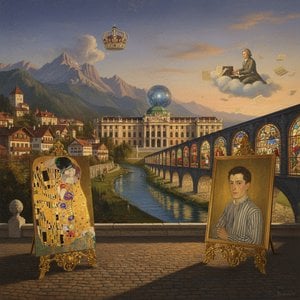
Bučinys (1907–1908), galbūt jo žinomiausias kūrinys, puikiai iliustruoja šį stilių – pora, įsivėlusi į apkabinimą, apgaubta aukso aureole, jų kūnus puošia sudėtingi raštai. Šiuo laikotarpiu Klimtas sukūrė ir nuostabių portretų seriją, įskaitant *Adele Bloch-Bauer I* (1907) portretą, kuriame parodė savo gebėjimą užfiksuoti ne tik fizinį panašumą, bet ir savo subjektų psichologinę sudėtingumo. Jis vis labiau sutapatinėjo tapybos ir apdaila ribas, į savo kompozicijas integruodamas dekoratyvius elementus, kad sukurtų harmoningą formos ir turinio sintezę. Japonų meno – japonizmo – įtaka buvo ypač juntama jo plokščiame perspektyvoje, linijų pabrėžime ir dekoratyviniuose raštuose.
Kontroversijos, įtakos ir palikimas
Klimto karjera nebuvo be prieštaravimų. 1900 m. jis gavo prestižinį užsakymą nupiešti lubų freskas Vienos universiteto Didžiajai salei, atitolinant Filosofiją, Teismą ir Teologiją. Tačiau šie darbai – ypač *Filosofija* – buvo pripažinti provokaciniais ir netgi pornografiniais konservatyvių kritikų, sukėlę visuomenės nepasitenkinimą ir galiausiai paskatino Klimtą atsisakyti tolesnių viešųjų užsakymų. Šis incidentas pažymėjo lūžį jo karjeroje, pastūmėdamas jį link privatesnio mecenatybo ir suteikdamas jam didesnę meninę laisvę. Visą gyvenimą Klimtas buvo paveiktas įvairių menininkų ir stilių – nuo Hans Makart istorinių paveikslų iki Bizantijos ir Japonijos dekoratyvaus meno. Jis taip pat semiasi įkvėpimo iš Simbolizmo judėjimo, tyrinėdamas mitologijos, alegorijų ir subkonscienso temas. Gustav Klimtas tęsė aktyviai kurti iki savo mirties 1918 m. vasario 6 d., patyręs insultą per ispanų gripą. Jo vėlesni darbai tyrė labiau abstrakčias formas ir kraštovaizdžius, rodantį nuolatinę meninę raidos eigą. Dabar jis pripažintas vienu svarbiausių Austrijos meno figūrų, Vienos secesijos pagrindiniu atstovu ir Art Nouveau elegancijos patvariu simboliu.
Jo paveikslai aukcionuose komandomi didelėmis kainomis, o jo įtaka ir toliau skamba šiuolaikinėje mene ir dizaine.
Pagrindinės savybės ir meninis stilius
- Simbolizmas: Klimto darbai giliai simboliški, dažnai tyrinėjantys meilės, mirties, seksualumo ir žmogaus būties temas.
- Art Nouveau: Jis buvo pagrindinė Art Nouveau judėjimo figūra, pasižyminti organinėmis linijomis, dekoratyviais raštais ir grožio pabrėžimu.
- Aukso fazė: Aukso lakštų naudojimas sukūrė spindinčius, prabangius paviršius, tapo jo prekiniu ženklu.
- Dekoratyviniai elementai: Klimtas į savo kompozicijas integruodavo dekoratyvius elementus, sutepdamas tapybos ir apdaila ribas.
- Moterų forma: Moters kūnas buvo centrinis jo darbų motyvas, dažnai vaizduojamas su jausmingumu ir psichologiniu gyliu.



 Peržiūrėti realybėje
 Pirkti rankomis tapytą paveikslą
 Pasidalinti
 Dalintis
 Išsamiau

 Atsisiųsti
 Panašūs eksponatai
 Rentgeno nuotrauka
 Automatinė diorama
 Statistika
 Skaityti daugiau






































 Stiklo variantas prieinamas tik pasirinkus dydį iki 110 cm