Peržiūrėti realybėjePeržiūrėti realybėje Peržiūrėti ARPeržiūrėti AR Perejti prie spausdinimo Perejti prie spausdinimoPirkti rankomis tapytą paveikslą Pirkti rankomis tapytą paveikslą PasidalintiPasidalinti
IšsamiauIšsamiau Pridėti į mėgstamiausius Pridėti į mėgstamiausius AtsisiųstiAtsisiųsti Panašūs eksponataiPanašūs eksponatai Rentgeno nuotraukaRentgeno nuotrauka Automatinė dioramaAutomatinė diorama StatistikaStatistika

Vulcan

Witness the power of Roman mythology! Guillaume Coustou II's neoclassical sculpture 'Vulcan' captures the god of fire and metalworking with dramatic chiaroscuro lighting and intricate detail. A timeless masterpiece.

Guillaume Coustou II (1716-1777): French sculptor bridging Baroque & Neoclassical styles. Known for 'Horse Tamers' & the Monument to the Dauphin, his dramatic works influenced 18th-century art.

Įsigykite aukštos skiriamosios raiškos, patobulintą skaitmeninį vaizdą, gerokai pranašesnį už internetinę peržiūrą.

Kiekvieną failą mūsų specialistai kruopščiai paruošia naudojant pažangias technologijas ir profesionalų rankinį retušavimą. Užtikriname, kad kiekvienas vaizdas pasižymėtų išskirtiniu aiškumu, tikslia spalvų atspalviu ir smulkiomis detalėmis.

Baigiamas failas el. paštu pristatomas per 72 valandas; jis optimizuotas nedelsiant naudojimui profesionalioje, redakcinėje ir spausdinimo aplinkoje. Tai ta pati kokybė, kuria pasitiki aukščiausios klasės dizaino studijos, leidyklos ir galerijos.

Skaitmeninis vaizdas

Atsisiųskite didelės raiškos failą asmeniniam naudojimui, spausdinimui ir kūrybiniams projektams. (Perejti prie spausdinimo Perejti prie spausdinimoPirkti rankomis tapytą paveikslą Pirkti rankomis tapytą paveikslą)

Visų sumos kaina

$ 24,90

Kiekvieną skaitinio vaizdo užsakymą papildė

Profesionalus skaitmeninis pristatymas, garantuotas

Pasirinkę WahooArt.com, jūs ne tik gaunate paveikslėlį – jūs gaunate profesionaliai patobudintą skaitmeninį kūrinį, sukurtą itin tikniai ir užtikrinantį pasitenkinimą. Štai viską, kas automatiškai pritékia jūsų užsakymui:

shipping_icon
Greitas siuntimas el. paštu

Jūsų aukštos raiškos skaitmeninis vaizdo failas bus išsiųstas jums el. paštu per 72 valaudas nuo užsakymo – paruoštas naudojimui be jokių papildomų veiksmų.

canvas_icon
Skaitmeninis failas su dirbtiniu intelektu

Jūsų meno kūrinys profesionaliai optimizuojamas naudojant pažangius dirbtinio intelekto įrankius ir rankinį redagavimą, užtikrinant maksimalią detalę, aiškumą ir spalvų tikslumą.

insurance_icon
Nemokamas visam laikui pakartotinis siuntimas

Atsitiktinai ištrytikote ar praradote savo failą? Nebijokite – bet kuriuo metu atsiųsime jį jums vėl nemokamai.

tax_icon
Jokio importo mokesčio – niekada

Mėgaukitės savo meno kūriniu akimirka – skaitiniai failai visada yra neapmokestinami, todėl nereikės mokėti muitinės, mokesčių ar pristatymo mokesčių.

color_icon
Spalvų tikslumo garantija

Naudodami profesionalią įrangą ir spalvų valdymo sistemas, užtikriname, kad jūsų skaitmeninis vaizdas kuo tiksliau atspindėtų originalias spalvas.

return_icon
100 dienų patikimumo garantija

Jei nebuvosite patenkinti savo skaitmeniniu vaizdu, mes jį peržiūrėsime arba grąžinsime 100% sumą per 100 dienų – be jokių klausimų.

guarantee_icon
100% pinigų grąžinimo garantija

Nesitenkinate? Gaukite visą sumokėtą sumą per 100 dienų nuo skaitmeninio failo gavimo – be jokių papildomų klausimų.

discount_icon
Nuolaidos dideliems užsakymams

Pirkti 3 nuotraukas – pasiūla 10% - Pirkti 5 – pasiūla 15% - Pirkti 10 ir daugiau – pasiūla 20%. Puikiai tinka kūrybiniams projektams, galerijoms bei agentūroms.

Trumpos informacija

  • Dimensions: 69 cm x 50 cm x 41 cm
  • Location: Louvre Museum, Paris
  • Year: 1742
  • Influences: Van Clève's Polyphemus
  • Title: Vulcan
  • Movement: Neoclassicism
  • Subject or theme: Roman God Vulcan

Karo viktorina

Kiekviename klausime yra tik vienas teisingas atsakymas.

Klausimas 1:
What is the primary subject depicted in Guillaume II Coustou’s sculpture, ‘Vulcan’?
Klausimas 2:
Based on the image description, what is a prominent feature of Vulcan’s pose?
Klausimas 3:
What artistic style is most evident in Guillaume II Coustou’s sculpture, ‘Vulcan’?
Klausimas 4:
The photograph utilizes dramatic chiaroscuro lighting. What effect does this primarily create?
Klausimas 5:
Considering the historical context provided, what role did Guillaume Coustou II play in the artistic landscape of his time?

The Sculptor’s Gaze: Guillaume Coustou's "Vulcan"

Guillaume II Coustou’s “Vulcan,” a remarkable marble sculpture from 1742, isn’t merely a depiction of the Roman god of fire and metalworking; it’s a poignant meditation on labor, isolation, and the weight of divine responsibility. Created during a pivotal period in French art history – bridging the Baroque’s dramatic flourishes with the burgeoning Neoclassicism – this work offers a rare glimpse into the emotional landscape of a mythological figure. Coustou, trained within a distinguished family lineage of sculptors, masterfully captures not just Vulcan's physical form but also an underlying sense of weariness and quiet contemplation that elevates the piece beyond simple portraiture.
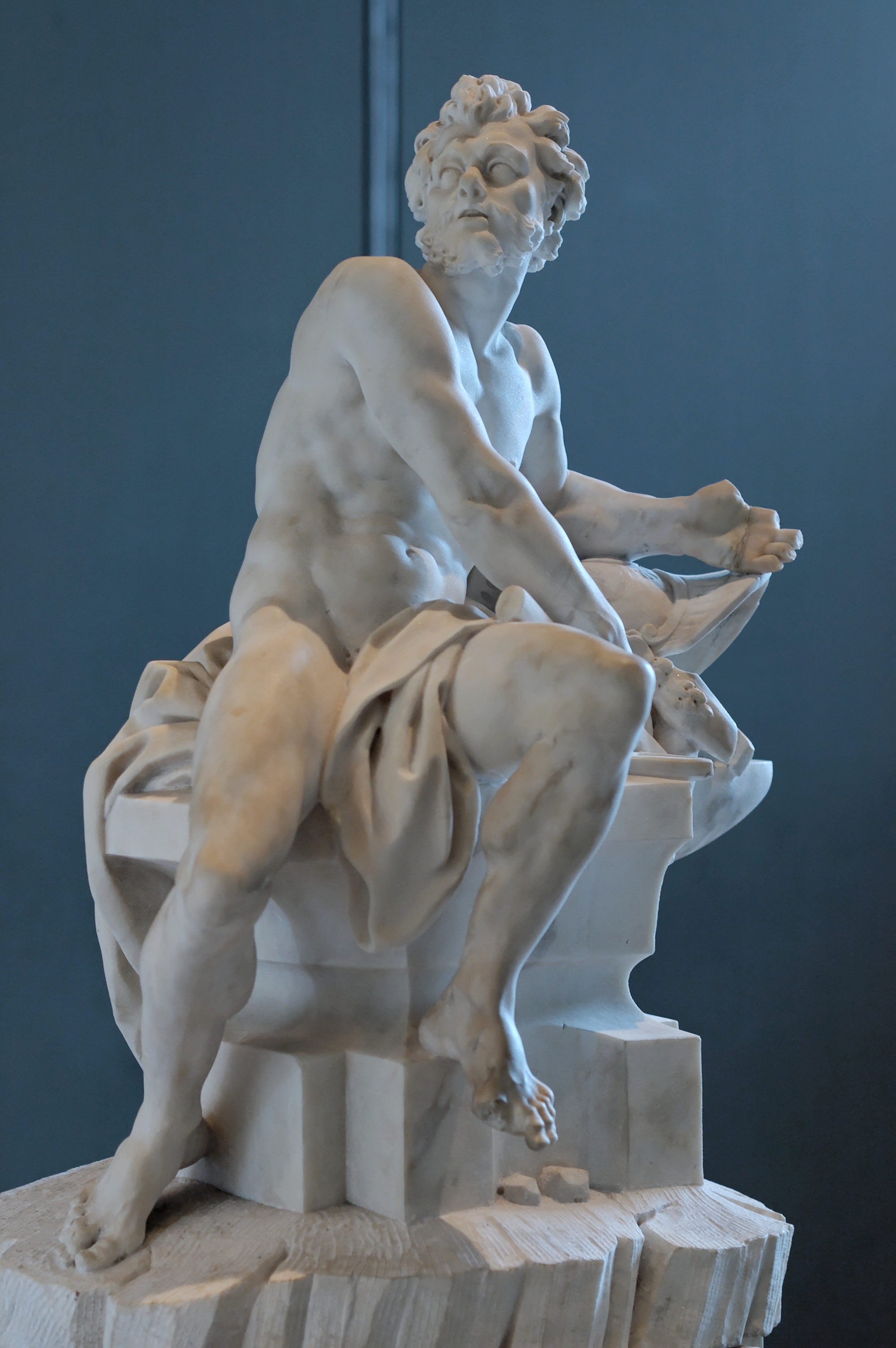
Vulcan by Coustou

Guillaume II Coustou’s “Vulcan,” Louvre Museum

Neoclassical Form and Baroque Echoes

Coustou's style is a fascinating synthesis of influences. While firmly rooted in the Neoclassical tradition – evident in the sculpture’s idealized human anatomy, precise detailing, and balanced composition – “Vulcan” retains traces of the late Baroque, particularly in its dramatic use of light and shadow (chiaroscuro). This interplay creates a powerful sense of volume and depth, emphasizing the musculature of the god's body while simultaneously hinting at his internal struggle. The pose itself—leaning heavily against a substantial barrel-like object – is reminiscent of Baroque depictions of exhausted heroes returning from battle, suggesting a parallel between Vulcan’s divine labors and the burdens faced by mortal warriors.

The sculpture was originally conceived as a *morceau de réception*, a ceremonial piece presented to patrons during an artist's return to Paris after studying abroad. This tradition demanded a work that showcased both technical skill and artistic maturity, and Coustou’s “Vulcan” undoubtedly fulfilled this requirement. It’s significant that the model was created in plaste before being cast in marble, demonstrating Coustou’s meticulous approach and his desire to refine the form before committing it to a more permanent medium.

Symbolism of Fire, Forge, and Isolation

Beyond its formal qualities, “Vulcan” is rich in symbolic meaning. The god's tools – hammers, tongs, and chisels – are meticulously rendered, underscoring his mastery over metalworking. However, the barrel-like object he leans against isn’t merely a prop; it represents the heart of his domain: the forge or cauldron where he crafts weapons for both gods and mortals. The sculpture's overall mood, however, is one of profound melancholy. Vulcan’s furrowed brow, downturned mouth, and slumped posture suggest a sense of isolation and perhaps even resentment. He is depicted as an outcast god, banished to the underworld to toil endlessly, a fate that contrasts sharply with the glory associated with other Olympian deities.

The choice of marble itself adds another layer of meaning. Marble was traditionally associated with mourning and remembrance, subtly reinforcing the theme of loss and solitude within the sculpture. Furthermore, the fact that this piece was originally intended as a reception piece – a demonstration of skill to potential patrons – highlights the inherent tension between artistic achievement and the often-unacknowledged struggles faced by artists themselves.

A Timeless Masterpiece for Interior Design

WahooArt’s hand-painted reproductions capture the essence of Coustou's “Vulcan” with exceptional fidelity. The rich tonal range, meticulously rendered textures – from the smooth surface of Vulcan’s skin to the rough grain of the barrel – and dramatic chiaroscuro lighting are faithfully reproduced, bringing this powerful image to life in a contemporary setting. Whether adorning a grand salon or a more intimate space, “Vulcan” offers a compelling conversation piece, inviting viewers to contemplate themes of labor, power, and the complexities of the human condition. Its timeless appeal makes it an ideal addition to any discerning collection.


Autoriaus biografija

Guillaume II Coustou: Life and Legacy

Early Life and Training

  • Guillaume Coustou II was born in Paris, France, in 1716. He came from a distinguished family of sculptors – the son of Guillaume Coustou I and nephew of Nicolas Coustou.
  • His artistic training began within the family atelier, benefiting directly from the expertise of his father and uncle. This familial foundation instilled in him a strong understanding of sculptural techniques and traditions.
  • In 1736, he won the prestigious Prix de Rome, granting him the opportunity to study at the French Academy in Rome until 1739. This period was crucial for his artistic development, exposing him to classical sculpture and Italian Baroque styles.

Artistic Development and Style

  • Upon returning to Paris, Coustou seamlessly continued his father’s work, most notably completing the monumental Horse Tamers (Chevaux de Marly), a commission initially undertaken by Guillaume I but left unfinished due to illness.
  • His style evolved throughout his career, demonstrating a transition from the late Baroque exuberance of his early works to the more restrained and emotionally evocative forms of emerging Neoclassicism.
  • He skillfully blended dramatic narrative with classical ideals, creating sculptures that were both visually impressive and intellectually engaging.

Major Achievements and Notable Works

  • Horse Tamers (Chevaux de Marly): Perhaps his most famous achievement, these dynamic bronze sculptures depict horsemen controlling powerful steeds, embodying strength and mastery.
  • Monument to the Dauphin: This elaborate sculptural ensemble for Sens Cathedral was a significant commission that showcased Coustou’s ability to handle complex iconography and large-scale projects. The design's detailed imagery was developed in collaboration with Charles-Nicolas Cochin.
  • Vulcan: His morceau de réception (admission piece) for the Académie Royale de Peinture et de Sculpture, a seated Vulcan, exemplifies his Baroque sensibilities.
  • Ganymede: This sculpture demonstrates Coustou’s embrace of early Neoclassical aesthetics, drawing inspiration from Roman sculptures like those of Antinous.

Influences and Legacy

  • Coustou was profoundly influenced by his father and uncle, inheriting their technical skill and artistic sensibility. His time in Rome exposed him to the works of classical sculptors and Italian Baroque masters.
  • He, in turn, influenced a generation of younger sculptors, including Claude Dejoux, Pierre Julien, and the Danish sculptor Johannes Widewelt, who studied under him.
  • His work represents an important bridge between the Baroque and Neoclassical periods in French sculpture, contributing to the evolving artistic landscape of 18th-century Europe.

Historical Significance

  • Guillaume II Coustou played a vital role in shaping the aesthetic direction of French sculpture during a period of significant artistic change.
  • His ability to adapt his style and embrace new influences allowed him to maintain a successful career under different patronage systems.
  • His sculptures continue to be admired for their technical virtuosity, dramatic power, and historical significance, solidifying his place as a notable figure in the history of French art.
guillaume ii coustou

guillaume ii coustou

1716 - 1777 , France

Trumpai apie šį kūrėją

  • Birth Date: 1716
  • Birth Place: Paris, France
  • Death Date: 1777
  • Influenced By:
    • Guillaume Coustou I
    • Nicolas Coustou
  • Movement:
    • Baroque
    • Neoclassicism
  • Name: Guillaume II Coustou
  • Nationality: French
  • Notable Works:
    • Horse Tamers (Chevaux de Marly)
    • Monument to the Dauphin
    • Vulcan
    • Ganymede