Minties saponų peizažas: Giorgio de Chirico gyvenimas ir menas
1888 metais Graikijoje, Volose, gimė itališkos kilmės tėvai – genovė motina ir sicilietis tėtis – ir čia prasidėjo Giorgio de Chirico meninė kelionė, pilna tiek klasikinio paveldos, tiek augančio modernios svetimumo pojūčio. Jo ankstyvasis mokslas Atenos Politeknikoje padėjo pagrindus tradiciniams technikos įgūdžiams, tačiau būtent vėlesnės studijos Munoje tikrai uždegė jo kūrybinę dvasią. Ten, tarp intelektualinio prieškarinio Europos pulsavimo, jis susipažino su Arnoldo Böcklinio ir Max Klingerio kūriniais – menininkais, kurių simboliniai krajobaudai ir vaizduotį sukrėtęs vaizdinys giliai atgimė jo paties vystymėjusiame estetinėje pojūtyje. Joje taip pat didelę įtaką darė to meto filosofinės srovės – Friedrich Nietzsche, Arthur Schopenhauer ir Otto Weininger rašai, kurie tyrinėjo egzistencializmo temas, žmogaus troškimų ir racionalumo prieštaravimą bei subjektinę realybės prigimtį. Šios idėjos tapo pagrindiniu de Chirico revoliūcinės meninės vizijos elementu.
Metafizinės paveikslavimo gimimas
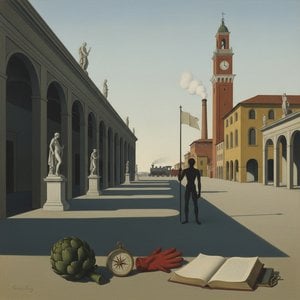
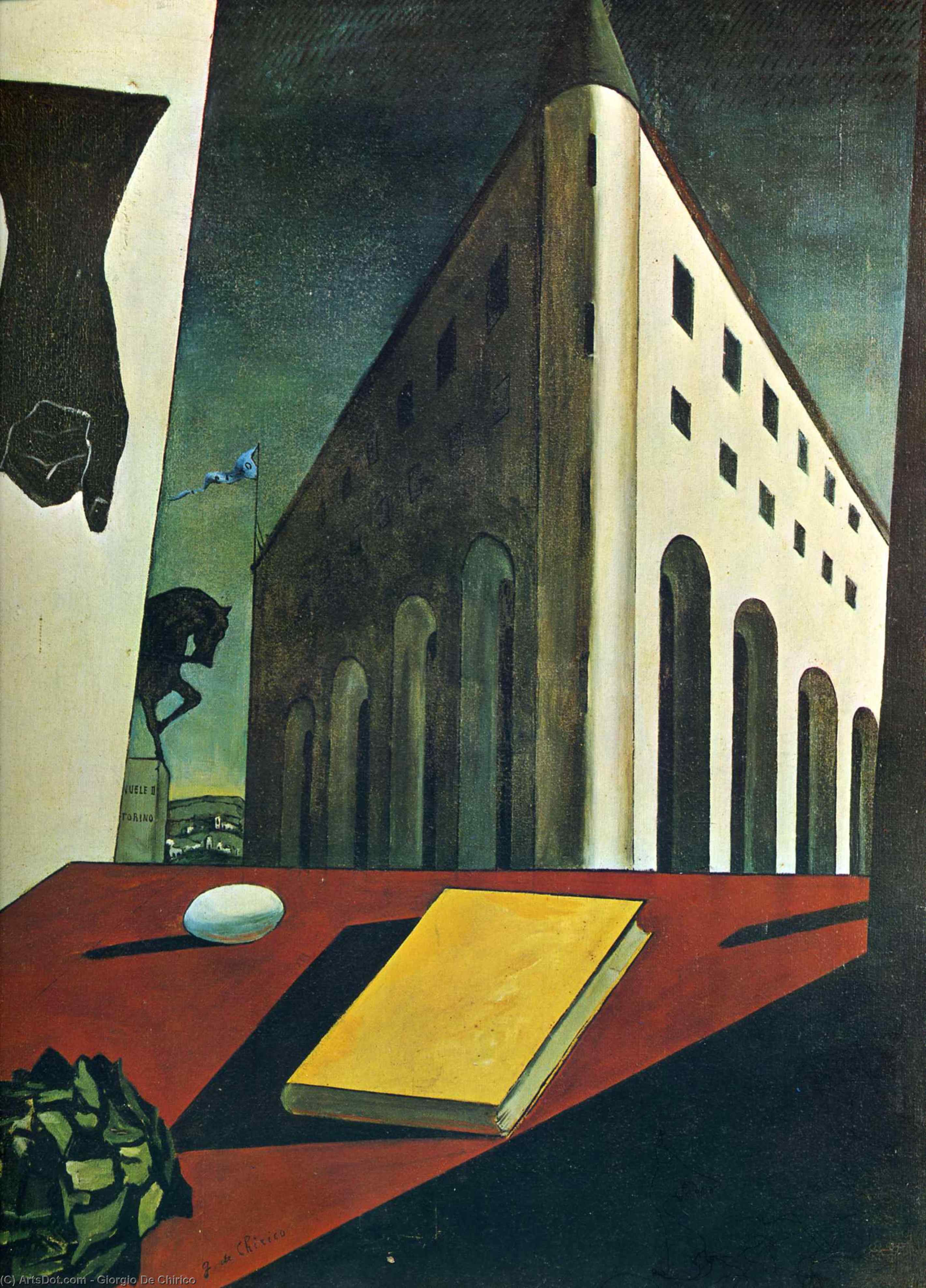
Apie 1909 metus iš de Chirico tyrimų pradėjo iškilinė stiliaus inovacija – stilius, kurį jis pats pavadino „metafizine“ menė. Tai nebuvo tik stilistinis pokytis; tai buvo gilus bandymas įamžinti paslėptąją realybę po kasdienybės paviršiumi, atskleisti nerimą keliančią poeziją, slypstančią pažįstamose erdvėse. Lemiamu momentu tapo lankytas Florencijos miestas ir patirtis Piazza Santa Croce aikštėje, kuri įkvėpė jo ikoninę „Metafizinės miesto aikštės“ seriją. Šie paveikslai pasižymi šiurpia ramybe, ilgomis dramatiškomis šešėliais,elogiška perspektyva ir klasikinės architektūros deriniu su nerimą keliančiais elementais, tokiais kaip beveikiškos manekinų figūros ar pavėsio skubančios statulos. Efektas yra giliai sukrėtantis, evokuojantis nostalgiškumą, izoliaciją ir beveik nepakeliamą ilgesį kažkam prarastam ar nepasiekiamam. De Chirico įkūrė Scuola Metafisica, taip stipriai paveikdamas surrealizmą, nors vėliau pats siekė atsisverti jo interpretacijų savo kūrybai. Jo paveikslai nebuvo skirti svajonių iliustracijoms, o labiau bandymams pavaizduoti realybę už matomosios pasaulio ribų – sferą, kurioje laikas ir erdvė yra skysliu, o ribos tarp sąmonės ir nesąmonės –lyginamos. Žymūs kūriniai, tokie kaip
The Vexations of the Thinker,
The Enigma of an Autumn Afternoon ir
The Song of Love, pavyzdžiai yra šios šiurpios estetikos, kviečiančios žiūrėtojus apsvarstyti egzistencijos paslaptis ir žmogaus suvokimo trapumą.
Stiliaus pokytis ir ilgalaikis palikimas
Po Pirmojo pasaulinio karo, apie 1919 metus, de Chirico meninė plėtra nukreipė netikėtą kryptį. Jis atsisakė savo ankstyvojo metafizinio požiūrio, vietoj to pasirinkdamas labiau tradicinį neoklasicinį ar neobarokinį stilių. Šis pokytis sulaukė didelio skandalo; daugelis kritikų gailėjo pastebėjamo kokybės kritimo ir kaltino jį atsisakant inovatyvios dvasios, kuri apibrėžė jo ankstyvąjį kūrybinį kelią. Tačiau de Chirico išliko tvirtas savo meniniuose pasirinkimuose, vėl užsivėliadamas praeities temas, tačiau juos pateikdamas su kitokia estetiška jautrumo niūja. Jis toliau tapliai tapė ir rodė savo darbus visą gyvenimą, tyrinėdamas įvairius stilius ir temas, kartu išlaikydamas nuoseklų atsidavimą meistriškumui ir techniniam įgūdžiui. Nepaisant kritikos, jo įtaka būsimoms menininkų kartoms yra neįvertinjamas. Jo inovatyvus erdvės, perspektyvos ir simbolizmo naudojimas iššūkį metė konvencinėms meninėms normoms ir atvėrė kelią naujiems iš expressionizmo formų kūrybai.
Įtampa ir neblėstantis poveikis
De Chirico kūriniai stovi kaip kritinis tiltas tarp XIX amso pamento simbolizmo judėjimo ir XX amso pradžios surrealizmo kilimo. Jam tiesioginę įtaką darė tokie menininkai kaip Arnoldo Böcklinis ir Max Klingeris, kurių evokuojantis vaizdinys rezonavo su jo paties susižavinimu mitologija ir priešświadiniu protu. Filosofai, tokie kaip Nietzsche ir Schopenhauer, suteikė jam pagrindą tyrinėti egzistencinės nerimo, svetimumo ir prasmės paieškos temas šiame mẽlynėje pasaulyje. Tačiau de Chirico įtaka išsivystė daug toli už surrealizmo ribų. Tokie menininkai kaip René Magritte ir Salvador Dalí buvo giliai įkvėpti jo metafinių paveikslų, pritaikydami jo sujuodinimo, neloginės perspektyvos ir simbolinio vaizdinio technikas savo paties sapnių pasauliams kurti. Jo darbai taip pat paveikė vėlesnius judėjimus, tokius kaip maginis realizmas, siekiantį įamžinti kasdienę realybę su padidintu paslapties pojūčiu ir psichologiniu gyliu. Šiandien de Chirico paveikslai rodomi didžiuosiuose muziejuose visame pasaulyje, įskaitant muziejų, skirtą jo kūrybai netoli Romos Ispano laiptų, užtikrinant, kad jo palikimas kaip vieno svarbiausių XX amžiaus meno veikėjų išliktų saugus. Jis paliko ne tik kūrybinį turtą, bet ir naują žiūrėjimo būdą – būdą suvokti pasaulį kaip vietą paslėptų prasmių, šiurpios grožio ir amžinos misterijos.
Pagrindinės įtakos ir meninė kilmė
- Įkvėpė: Arnold Böcklin, Max Klinger, Friedrich Nietzsche, Arthur Schopenhauer.
- Paveikė: Surrealizmą, ypač tokius menininkus kaip René Magritte ir Salvador Dalí. Jo darbai taip pat paveikė vėlesnius judėjimus, tokius kaip maginis realizmas.


 Peržiūrėti realaus dydžio版
 Perjungti į spausdinamus版作品
 Pasidalinti
 Dalintis
 Išsamiau
 Vadovas

 Atsisiųsti
 Panašūs eksponatai
 Rentgeno spindulių nuotrauka
 Automatinė diorama
 Q&A
Q&A Statistika


 Skaityti daugiau






































 Stiklo variantas prieinamas tik pasirinkus dydį iki 110 cm