Gertrude Mary Coventry: A Scottish Voice in the Early 20th Century
Gertrude Mary Coventry (1886-1964) emerges from the vibrant artistic landscape of Glasgow as a quietly significant figure – a painter who, despite not always receiving the immediate recognition afforded to her male contemporaries, consistently produced compelling portraits and evocative coastal scenes. Born in Glasgow, the daughter of Robert McGowan Coventry, a respected artist himself, Gertrude’s early life was steeped in an appreciation for visual art, providing a foundational influence that would shape her own artistic trajectory. Her formative years were spent studying at the prestigious Glasgow School of Art between 1902 and 1911, a period during which she honed her skills and absorbed the stylistic currents of the time – particularly the burgeoning Glasgow School of Art movement with its emphasis on bold color and simplified forms.
Coventry’s artistic journey was not confined to the city limits. She embarked on numerous painting trips, often in partnership with her husband, Edward Robertson, a scholar who shared her passion for travel and exploration. These excursions took them across Europe – notably to the Netherlands and Belgium – offering exposure to diverse artistic traditions and landscapes that undoubtedly enriched her visual vocabulary. However, it was her time spent in Pittenweem, Fife, Scotland, where she met Robertson, that proved pivotal. It was here, amidst the rugged beauty of the Scottish coastline, that she began to develop a distinctive style—one characterized by a nuanced understanding of light and atmosphere, coupled with a remarkable ability to capture the essence of her subjects.
A Portraitist’s Eye: Themes and Techniques
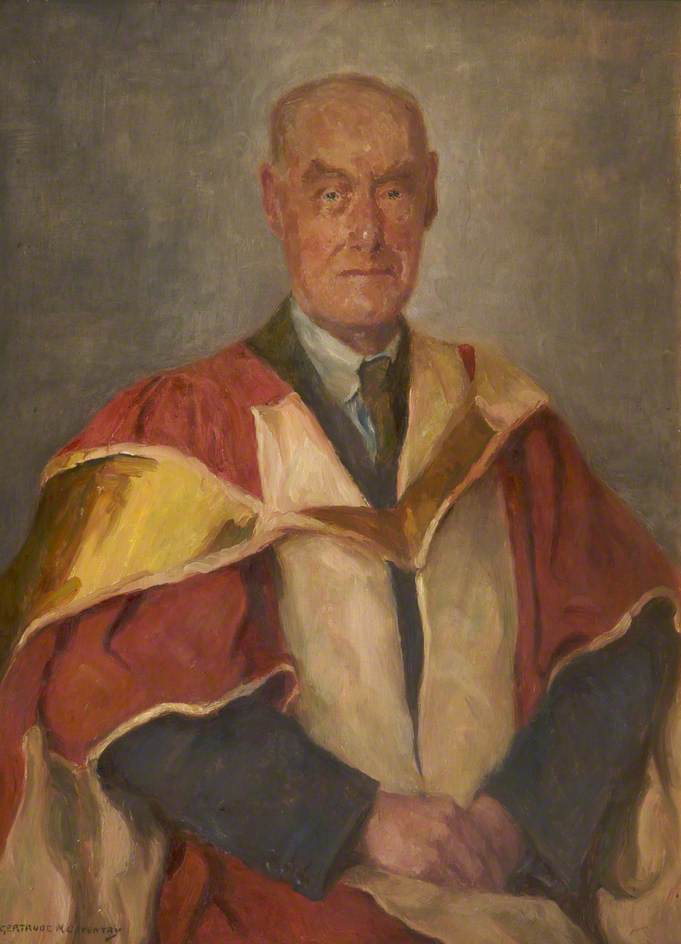
Coventry's oeuvre is predominantly defined by portraiture, yet these are not merely likenesses. She possessed a keen eye for capturing personality and inner character, imbuing her subjects with a sense of dignity and quiet contemplation. Her portraits frequently feature individuals from the academic and professional spheres – clergymen, scholars, and members of the local community—reflecting her connections within Scottish society. Her technique is notable for its subtle realism blended with impressionistic touches; she skillfully employed broken brushstrokes to create a shimmering effect, particularly when depicting light reflecting off water or clothing. The muted color palettes she favored—greens, browns, and blues—evoke the atmospheric conditions of the landscapes she painted, seamlessly integrating them into her portraiture.
Beyond portraits, Coventry produced a series of captivating coastal scenes – depictions of Fife’s dramatic coastline that reveal an intimate understanding of the region's geology and weather patterns. These works are characterized by their dynamic compositions, capturing the raw power of the sea and the ever-changing moods of the sky. She demonstrated a remarkable ability to translate the visual experience of being present in these environments onto canvas, conveying both the beauty and the inherent drama of the Scottish coast.
Royal Recognition and Artistic Circles
Coventry’s work gradually gained recognition within established artistic circles. She was admitted as an associate member of the Royal Glasgow Institute of the Fine Arts in 1905 and later became a member of the Royal Academy, the Royal Cambrian Academy, and the Royal Scottish Academy – prestigious organizations that served as vital platforms for showcasing her talent. Her paintings were exhibited extensively throughout these institutions, solidifying her position within the British art scene. Notably, she was commissioned to paint portraits of prominent figures, including the Chief Rabbi of Manchester, further establishing her reputation as a skilled and respected portraitist.
Later Life and Legacy
Following her husband’s retirement from academia, the couple moved to Didsbury near Manchester in 1921. In 1962, they relocated to Canada, settling in Hudson, Ontario, where Gertrude Mary Coventry passed away in 1964. While she may not have achieved widespread fame during her lifetime, Gertrude Mary Coventry’s work continues to be appreciated for its quiet dignity, technical skill, and evocative portrayal of the Scottish landscape and human character. Her paintings offer a valuable glimpse into the artistic life of early 20th-century Scotland, demonstrating a unique voice within a broader tradition of British art.
Further Resources
- Edward Greenly (1861–1951), DSc., Anglesey Geologist: Art UK
- Portrait of an Unknown Man (probably a member of college staff): Art UK
- Alderman Leslie Lever (1905–1977), Lord Mayor of Manchester: Art UK
- Gertrude Mary Coventry: Wikipedia
- Gertrude Mary Coventry (1886–1964) - Art UK: Art UK


 Peržiūrėti realaus dydžio版
 Perjungti į spausdinimą
 Siųsti
 Dalintis
 Išsamiau
 Vadovas

 Atsisiųsti
 Panašūs eksponatai
 Rentgeno spindulių nuotrauka
 Diaporama
 Statistika

 Rodyti daugiau


