Šviesos ir šešėlių meistras: Gerard van Honthorsto gyvenimas ir kūryba
Gerard van Honthorst, gimęs 1590 metais Utrechte (Nyderlandai), buvo iškili figūra Nyderlandų Aukso amžiuje. Pradėjęs mokytis pas savo tėvą – dekoratyvinį dailininką, jaunasis Gerard greitai patobėjo Abraho Bloemaerto dirbtuvėje, įsisavindamas kompozicijos pagrindus ir piešimo techniką. Tačiau lemiama kelionė į Romą visiškai pakeitė jo artistinę plėtrą. Ten, Italijos baroko energingoje atmosferoje, jis susipažino su revoliuciniu Caravaggio darbu – susitikimu, kuris apibrėžė jo savitą stilių ir užsitikrino jam pravardę “Gherardo delle Notti” (Gerard naktimis). Dramatiškas
tenebrismo panaudojimas – technika, naudojanti ryškius šviesos ir tamsos kontrastus – tapo Honthorsto vizitine kortele, suteikdama jo drobių apčiuopiamą dramos pojūtį ir emocinį intensyvumą. Jis ne tik imitavo Caravaggio; jis perkėlė italų meistro naujoves į savotišką olandų jautrumą, sutelkiant dėmesį į intymias scenas, apšviestas dirbtiniais šaltiniais – žvakėmis, lempomis ir ugnimis – sukuriant atmosferą, kuri buvo realistinė ir giliai teatrališkas. Šis šviesos meistriškumas nebuvo tik techninis įgūdis; tai buvo priemonė atskleisti charakterį, pritraukti žiūrėtoją į kiekvienos scenos emocinį branduolį.
Iš Romos garbių į olandų meistriškumą
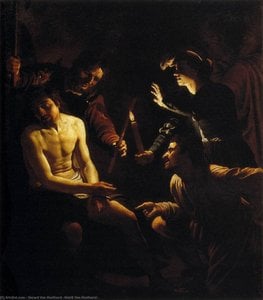
Honthorsto laikas Romoje buvo pažymėtas dideliu pasiekimu ir patronažu. Jis sulaukė miesto elito pritarimo, tarp jų Vincenzo Giustiniani, kuriam sukūrė galingą “Kristų Aukštosios Kunigo Priešais”, darbą, pabrėžiantį jo meistriškumą šviesos ir šešėlių valdymas. Šis paveikslas, dabar saugomas Londono Nacionalinėje galerijoje, demonstruoja ne tik jo techninį įgūdį, bet ir gebėjimą perteikti gilų psichologinį gylį savo figūrose. Jis dar labiau sustiprino savo reputaciją dirbdamas Cosimo II de' Medici, Toskanos didžiojo kunigaikščio, rodydamas prisitaikymo ir universalumo įgūdžius, kurie jam tarnaus visą jo karjerą. Grįžęs į Utrechtą apie 1620 metus, Honthorstas greitai įsitvirtino kaip pirmaujantis portretų dailininkas Nyderlanduose. Jo gebėjimas užfiksuoti ne tik fizinį panašumą, bet ir savo modelių charakterį bei socialinę padėtį padarė jį labai paklausų tarp turtingų prekeivių, aristokratų ir net karališkųjų asmenų. 1623 metais jis tapo Šv. Liudviko gildijos prezidentu Utrechte – tai liudija jo augantį autoritetą meno bendruomenėje. Šis laikotarpis pažymėjo užsakymų gausumą, leidusi Honthorstui tobulinti savo stilių ir įtvirtinti savitą balsą olandų tapyboje.
Dvarinis dailininkas: Užsakymai ir bendradarbiavimas
Honthorsto talento pasiekimai apėmė ne tik Nyderlandus. Jo darbai sulaukė sero Dudley Carleton dėmesio, kuris entuziastingai jį rekomendavo žymiems anglų aristokratams, tokiems kaip Arundelio grafas ir Dorčesterio lordas. Tai lėmė užsakymus nuo Karalienės Elizabeth of Bohemia, karaliaus Charles I sesers, kuri įdarbino jį kaip dailininką ir piešimo mokytoją savo vaikams. Šie karališkosios šeimos ryšiai baigėsi reikšmingais darbais, tokiais kaip alegorinis Karolio ir Henriettos Marijos vaizdavimas kaip Dianos ir Apollo, dabar saugomas Hampton Court rūmuose. Honthorsto noras bendradarbiauti su kitais menininkais taip pat byloja apie jo atvirumą ir artistinį dosnumą. Jis garsėjo tuo, kad priėmė Peter Paul Rubens vizitą Utrechte, netgi nupiešdamas jį žaismingoje scenoje, vaizduojančioje Diogeną ieškant sąžiningo žmogaus – tai liudija abiejų baroko gigantų tarpusavio pagarbą. Nors kai kurie bendradarbiavimo darbai, tokie kaip “Kristaus paėmimas”, iš pradžių buvo priskiriami tik Honthorstui, šiuolaikiniai mokslininkai atskleidė kitų menininkų indėlį, pabrėždami sudėtingą meno kūrimo dinamiką tuo laikotarpiu.
Šis bendradarbiavimas nebuvo tik apie darbo pasidalijimą; tai buvo intelektualiniai mainai, praturtinę meno kraštovaizdį.
Palikimas ir Utrechto karavagistai
Gerard van Honthorsto įtaka rezonavo gerokai po jo gyvenimo pabaigos. Jis buvo raktinis veikėjas *Utrecht Caravaggisti* judėjime – Nyderlandų dailininkų grupėje, kurie perėmė Caravaggio dramatišką realizmą ir
tenebrismą. Kartu su tokiais menininkais kaip Hendrick ter Brugghen ir Dirck van Baburen jis padėjo įtvirtinti savotišką olandų interpretaciją italų baroko stiliaus. Jo dėmesys buitinių scenų apšvietimui dirbtine šviesa, meistriški portretai ir gebėjimas perteikti emocinį gylį per sumanią chiaroscuro techniką paliko neišdildomą pėdsaką Nyderlandų Aukso amžiaus tapyboje. Net jo brolis Willem van Honthorst sekė jo pėdomis, nors dažnai kurdavo darbus, kurie iš pradžių buvo priskiriami Gerardui dėl stilistinių panašumų.
- Honthorsto paveikslai ir šiandien žavi publiką.
- Jo dramatiškas grožis ir psichologinis įžvalgumas yra nesenstantys bruožai.
- Jis įtvirtino savo vietą meno istorijoje.
Gerard van Honthorsto gebėjimas sklandžiai sujungti italų įtakas su olandišku jautrumu užtikrino jo ilgalaikį palikimą, įkvėpdamas kartas menininkų, kurie sekė po jo pėdomis. Jis mirė Utrechte 1656 metais, palikęs kūrinių rinkinį, kuris ir toliau apšviečia meno kraštovaizdį ir primena apie šviesos ir šešėlių galią atskleisti žmogaus būklę.



 Peržiūrėti realaus dydžio版
 Perjungti į spausdinimą
 Siųsti
 Dalintis
 Išsamiau
 Gidas
Gidas

 Atsisiųsti
 Panašūs eksponatai
 Rentgeno spindulių nuotrauka
 Diaporama
 Statistika


 Rodyti daugiau