Autoriaus biografija
Žoržas Sera: Šviesos ir Tikslumo Pionierius
Žoržas Pjeras Sera, gimęs 1859 m. gruodžio 2 d. Paryžiuje, įėjo į meno istoriją kaip vienas reikšmingiausių figūrų perėjimo nuo impresionizmo prie moderniosios dailės. Jo trumpa, bet intensyvi karjera sukrėtė tapybos pasaulį sukūrus taškmeninę techniką – metodą, paremtą mokslinėmis spalvų ir linijų teorijomis. Sera gyvenimas buvo kupinas atidžaus stebėjimo, intelektualinio kruopštumo ir gilaus jautrumo šviesos bei spalvos niuansams – savybių, kurios išskyrė jį iš jo to laikmečio bendraamžių ir iki šiol žavi žiūrovus. Jo ankstyvieji metai, nors ir atrodę įprasti, padėjo pagrindą būsimoms meninėms ekspedicijoms. Sera šeima gyveno Bulvar de Magenta, o jo tėvas Antuanas Krysoztomas Sera, buvęs teismo pareigūnas tapęs nekilnojamojo turto spekuliantu, suteikė jam patogią vaikystę, kuri leido jaunajam Žoržui įsitraukti į meno edukaciją. Jis pradėjo formalų mokymąsi Skulptūrų ir Piešimo municipalinėje mokykloje pas skulptoriaus Justino Lekjūną, po to įstojo į prestižinę Dailės akademiją (École des Beaux-Arts) 1878 m., studijavo Henri Lehmann. Šie metai įskiepijo jam tvirtą tradicinių technikų pagrindą, tačiau net tuomet formavosi unikalus meninis charakteris – subtilios jautrios ir besivystančio susidomėjimo sistemine analize derinys.
Nuo Akademinių Šaknų iki Spalvų Mokslų
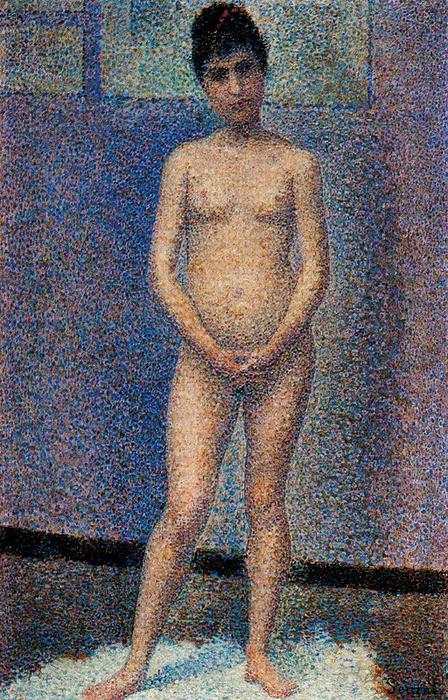
Sera meninė raida nebuvo staigus pokytis, bet palaipsniškas vystymasis, skatinamas intelektinio smalsumo ir kruopščios eksperimentavimo. Iš pradžių jo darbai atspindėjo tuo metu galiojančius akademinius standartus, rodė įgūdžius piešti ir gerbė įsitvirtinusias kompozicijos taisykles. Tačiau jis netrukus ėmė abejoti šiais prietarais, ieškodamas mokslesnio požiūrio į tapybą. Sera panėrė į besivystančią spalvų teorijos sritį, studijavo tokių mokslininkų kaip Mišelis Ševrelis ir Ogdenas Roodas darbus, kurie tyrė sudedamųjų spalvų optinius efektus. Šie tyrimai tapo revoliucingo metodo – taškminės technikos – pagrindiniu akmeniu. Esminė idėja buvo paprasta: taikyti mažus, atskirus gryno ryšio taškelius ant drobės, pasitikėdami žiūrovo akimis juos optiškai susimaišant ir sukuriant ryškų, švytintį efektą. Tai nebuvo tik apie ryškesnių spalvų pasiekimą; tai buvo apie supratimą, kaip žmogaus regėjimo sistema suvokia šviesą ir spalvas, ir panaudojus tuos žinojimus sukurti dinamiškesnę ir patrauklesnę tapybos patirtį. Jis kruopščiai ruošdavo savo didelio masto kompozicijas naudodamas Conté kreidą ant šiurkštaus popieriaus, atidžiai planuodamas kiekvieno taško padėtį, rodydamas beveik matematinį tikslumą savo meniniame procese.
Svarbiausi Darbai ir Meninis Vizijas
Sera tyrimų ir eksperimentų kulminacija galbūt geriausiai atsispindi „Sekmadienio popietė Grand Žatos saloje“ (1884–1886) – monumentaliame darbe, pažymėjusiam Neoimpresionizmo pradžią. Šis ikoninis paveikslas, kuriame paryžiečiai mėgaujasi atsipalaiduojančiu popietės laiku prie Senos upės, visapusiškai parodo jo taškminę techniką. Figūros, atvaizduojamos kruopščiai išdėstytų spalvų taškelių, atrodo švytinčios ir vibruojančios su šviesa, sukuriant tylumo aurą. „Alfalfa, Saint-Denis“ (1886–1887) rodo jo spalvų teorijos panaudojimą kaimo kraštovaizdyje, o ankstesni darbai, tokie kaip „Kraštovaizdis prie Senės“ (1882–1883), atskleidžia besivystantį jo stilių ir didėjančią susidomėjimo šviesos ir atmosferos efektų užfiksavimu. Net modernios Paryžienės gyvenimo vaizdai, tokie kaip „Eifelio bokštas“ (1889), buvo transformuoti jo unikaliu stiliumi, parodydami harmoningą pramoninės šiuolaikybės ir meninio naujumo derinį. „Maudynės Asnières“ (1884) – dar vienas reikšmingas kūrinys – tyrė laisvalaikio ir modernaus gyvenimo temas, naudodamas savo išskirtinį stilių, numatydamas labiau atnaujintą požiūrį, matomą „La Grande Jatte“. Šie paveikslai nebuvo tik scenų atvaizdai; tai buvo kruopščiai sukonstruoti vizualiniai eksperimentai, skirti tyrinėti spalvų ir suvokimo galimybes.
Pavelės Patalpa: Įtaka ir Istorinis Reikalas
Nepaisant tragiškai trumpo gyvenimo – Sera mirė būdamas vos 31 metų amžiaus 1891 m. – jo įtaka menų pasauliui buvo gili ir toli siekianti. Jo darbai išbandė tradicinius meno prietarus, atverdami kelią daugeliui vėlesnių judėjimo krypčių. Subjektyvaus pasireiškimo pabrūkimas ir naujų technikų tyrimas resonavo su menininkais, siekiančiais prasimušti pro akademinius apribojimus. Sera įtaka galima pastebėti Fovistų darbuose, kurie priėmė ryškias spalvas ir ekspresyvius teptukų potėpius; Kubistų, kurie dekonstruotavo formas į geometrines formas; ir Abstrakcionistų, kurie pirmenybę suteikė emociniam intensyvumui ir spontaniškam gestui. Jo mokslinis požiūris į tapybą, nors iš pradžių buvo ginčytinas, galiausiai išplėtė meninės galimybės apibrėžimą. Jis parodė, kad menas gali būti tiek intelektualiai kruopštus, tiek emocionaliai jautrus – sintezė, kuri ir toliau įkvepia menininkus šiandien. Sera paliko ne tik techninių naujovių paveldą; jis paliko kūrinių rinkinį, kuris su nepriekaištinga tikslumu ir grožiu užfiksuoja modernaus gyvenimo esmę, tvirtindamas savo vietą kaip tikrą moderniosios dailės pionierių. Jo paveikslai tebėra liudijimai stebėjimo galiai, eksperimentavimo ir nuolatinio žmogaus noro suprasti pasaulį aplink save per meninio išraiškos prizmę.


 Peržiūrėti realaus dydžio版
 Pirkti rankomis tapytą reprodukciją
 Siųsti
 Dalintis
 Išsamiau
 Gidas
Gidas

 Atsisiųsti
 Panašūs eksponatai
 Rentgeno spindulių nuotrauka
 Diaporama
 Statistika
 Rodyti daugiau






































 Stiklo variantas prieinamas tik pasirinkus dydį iki 110 cm


