Peržiūrėti realaus dydžio版 Peržiūrėti AR realybėje Pirkti rankomis tapytą reprodukciją Perejti prie skaitmeninių vaizdų Siųsti
Išsamiau Vadovas Pridėti į mėgstamiausius Atsisiųsti Panašūs eksponatai Rentgeno spindulių nuotrauka Diaporama Statistika

untitled

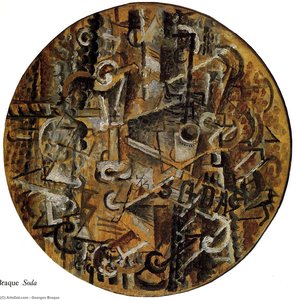
A fragmented study of a chair and still life objects defines this masterpiece of Analytic Cubism by Georges Braque, offering a profound look at early 20th-century perception that you can bring to your collection.

Žemiau yra lietuviška meta aprašymas apie Georges Braque (150-250 simbolių): Georges Braque buvo kubizmo revoliucija ir įtakingas impresionistų pasektijas. Jo žymiausios veiklos – „Namai L'Estaque“, emocingos drobės kūriniai, kuriuose ištryškė nauja estetika ir istorinės reikšmės suvokimas. Kubizmui jis sukėlė pasaulinį susišalinimą nuo tradicinių principų.

Šiame puslapyje rodomas meno kūrinys yra saugomas autorių teisių įstatymais, todėl neturime teisės legaliai kurti ar parduoti jo identiškos reprodukcijos. Ši apsauga užtikrinama remiantis tokiais tarptautiniais susitarimais kaip Bernės konvencija ir pagal nacionalines įstatymų nuostatas, įskaitant tas, kurias nurodo JAV autoriškos teisės įstatymas – 17-asis skyrius.

Šis metodas visiškai atitinka autorių teises, nes jame nėra kūrinio kopijavimo ar dubliavimo. Tai yra kūrybinė reinterpretacija – naujas paveikslas, kurį įkvėpė originalas, tačiau kuris nėra jo identiškas.

Giclée / Meno spausdinimas

Muziejų lygio „giclée“ arba drobos spausdinimas: greita gamyba ir lankstios apdailos parinktys. ( Pirkti rankomis tapytą reprodukciją Perejti prie skaitmeninių vaizdų)

Corner sample of the P118B picture frame: moulded polystyrene, 5 cm wide and 3 cm thick
P118B €10
Corner sample of the P118H picture frame: moulded polystyrene, 5 cm wide and 3 cm thick
P118H €10
Corner sample of the P118W picture frame: moulded polystyrene, 5 cm wide and 3 cm thick
P118W €10
Corner sample of the P438Z picture frame: moulded polystyrene, 5.5 cm wide and 3.5 cm thick
P438Z €10
Corner sample of the P508JH picture frame: moulded polystyrene, 7 cm wide and 3.5 cm thick
P508JH €12
Corner sample of the P508YH picture frame: moulded polystyrene, 7 cm wide and 3.5 cm thick
P508YH €12
Corner sample of the P805H picture frame: moulded polystyrene, 5 cm wide and 3.5 cm thick
P805H €10
Corner sample of the P805Z picture frame: moulded polystyrene, 5 cm wide and 3.5 cm thick
P805Z €10
Corner sample of the P919BZ picture frame: moulded polystyrene, 7 cm wide and 3.5 cm thick
P919BZ €10
Corner sample of the P919G picture frame: moulded polystyrene, 7 cm wide and 3.5 cm thick
P919G €10
Corner sample of the P919XJ picture frame: moulded polystyrene, 7 cm wide and 3.5 cm thick
P919XJ €10
Corner sample of the P959ZH picture frame: moulded polystyrene, 5 cm wide and 3 cm thick
P959ZH €10
Corner sample of the P968JZ picture frame: moulded polystyrene, 6 cm wide and 4 cm thick
P968JZ €12
Corner sample of the W106C picture frame: solid wood, 5 cm wide and 3 cm thick
W106C €8
Corner sample of the W218G picture frame: solid wood, 5 cm wide and 3 cm thick
W218G €10
Corner sample of the W218JH picture frame: solid wood, 5 cm wide and 3 cm thick
W218JH €8
Corner sample of the W218Y picture frame: solid wood, 5 cm wide and 3 cm thick
W218Y €10
Corner sample of the W307PJ picture frame: solid wood, 6 cm wide and 3 cm thick
W307PJ €10
Corner sample of the W316G picture frame: solid wood, 6 cm wide and 3 cm thick
W316G €10
Corner sample of the W316PJ picture frame: solid wood, 6 cm wide and 3 cm thick
W316PJ €8
Corner sample of the W316Y picture frame: solid wood, 6 cm wide and 3 cm thick
W316Y €10
Corner sample of the W398PJ picture frame: solid wood, 5 cm wide and 3 cm thick
W398PJ €8
Corner sample of the W4111J picture frame: solid wood, 6.5 cm wide and 3.5 cm thick
W4111J €10
Corner sample of the W500HY picture frame: solid wood, 7 cm wide and 5 cm thick
W500HY €15
Corner sample of the W500JH picture frame: solid wood, 7 cm wide and 5 cm thick
W500JH €15
Corner sample of the W692G picture frame: solid wood, 8 cm wide and 4 cm thick
W692G €12
Corner sample of the W849H picture frame: solid wood, 5 cm wide and 3 cm thick
W849H €8
Corner sample of the W940BG picture frame: solid wood, 7.5 cm wide and 4.5 cm thick
W940BG €15
Corner sample of the W953PJ picture frame: solid wood, 6 cm wide and 3.5 cm thick
W953PJ €8

Standartinis
individualaus dydžio
CM
INCH

Pasirinkite iš mūsų nustatytų dydžių, atitinkančių originalaus meno kūrinio proporcijas.

plotis
aukštis

Galite nurodyti savo matmenis, kad vaizdas atitiktų konkretų rėmą ar erdvę. Jei pasirinktas dydis nesutaps su originalaus paveikslėlio proporcijomis, mes arba apkirpsime kūrinį, arba išplėsime vaizdą naudojant veideliu atspindėtą arba vientisą šoną. Skaitmeninis maketas bus išsiųstas jums patvirtinti prieš pradedant gamybą.
Atkreipkite dėmesį, kad ekrane matomas vaizdinys neatspindi tikrojo apkirpimo ar išplėtimo. Tik maketas tiksliai parodytų galutinę kompoziciją.
Nors galima rinktis ir individualius dydžius, rekomenduojame pasirinkti vieną iš išanksti nustatytų matmenų, kad būtų išlaikytos originalios proporcijos.

Pristatymas visame pasaulyje () per 2 weeks, o ne įprastas 4/5 savaičių laikotarpis. (10 spalis)

Nemokamas greitasis pristatymas visame pasaulyje
Aukštos kokybės lininis drobė
Pilnas siuntimo draudimas
Muitinės mokesčių grąžinimo garantija
Tikro spalvų atitikimo garantija
100 dienų grąžinimo politika (tik esant įtaigoms)
100% pinigų grąžinimo garantija
Nuolaida dideliems užsakymams

Bendroji kaina

€ 59

untitled

Giclée / Meno spausdinimas

Reprodukcijos dydis

-

Visų pasirinktų variantų kaina

€ 59

Pagrindinė informacija

  • Location: Private Collection
  • Subject or theme: Still Life
  • Notable elements or techniques: Geometric deconstruction; Layered brushstrokes
  • Movement: Cubism
  • Title: untitled
  • Influences: Paul Cézanne

Karo viktorina

Kiekviename klausime yra tik vienas teisingas atsakymas.

Klausimas 1:
Which artistic movement is Georges Braque's 'untitled (7718)' a cornerstone of?
Klausimas 2:
What is the primary color palette used in this artwork?
Klausimas 3:
Which object serves as the central anchor for the composition?
Klausimas 4:
What technique does Braque use to present multiple viewpoints simultaneously?
Klausimas 5:
Which artist's influence on geometric simplification is mentioned in the historical context of this work?

The Architecture of Perception: Deconstructing Reality in Braque’s Vision

In the quiet revolution that redefined the boundaries of modern vision, Georges Braque’s “untitled (7718)” emerges as a profound meditation on the nature of sight itself. This seminal work of Analytic Cubism does not merely present a still life; it orchestrates a complex symphony of fragmented forms and muted tones that challenge the viewer to look beyond the surface. At first glance, one perceives the familiar—a chair, perhaps, adorned with the humble artifacts of daily existence: vases, books, bottles, and a bowl. Yet, as the eye lingers, the solidity of these objects begins to dissolve into a rhythmic dance of geometric planes. Braque invites us into a world where the boundaries between object and space are intentionally blurred, creating an immersive experience that transcends mere representation.

The mastery of this piece lies in its radical technique, a meticulous deconstruction of form that was revolutionary for the dawn of the 20th century. Eschewing the vibrant, emotive colors of Fauvism, Braque employs an austere and sophisticated palette dominated by grayscale, subtle browns, and soft beiges. This monochromatic approach serves a higher intellectual purpose: it strips away the distraction of color to focus the viewer's attention on the structural integrity of the composition. Through layered brushstrokes and a careful interplay of light and shadow, the artist creates a sense of depth through overlapping triangles, rectangles, and cubes. The result is a tactile, textured surface that feels both intellectually rigorous and deeply contemplative.

A Legacy of Innovation and Emotional Resonance

To understand this artwork is to understand the historical seismic shift occurring in Paris around 1908. Influenced by the structural lessons of Cézanne, Braque sought to capture the essence of an object from multiple viewpoints simultaneously. This was not a pursuit of visual accuracy, but an exploration of how we perceive reality through time and movement. The painting embodies the scientific and mathematical fascinations of its era, reflecting a desire to find the underlying geometric truth within the chaos of the physical world. There is a profound sense of order hidden within the apparent fragmentation, a structured logic that guides the gaze across the canvas along vertical axes and angular intersections.

For the discerning collector or interior designer, this reproduction offers more than just a decorative element; it provides a focal point of intellectual depth and quiet elegance. The somber, muted atmosphere of the piece lends itself beautifully to sophisticated spaces, where its complex textures can interact with natural light to create an aura of timelessness. Whether placed in a contemporary studio or a classic study, Braque’s work evokes a sense of introspection and stability. It is a piece that does not shout for attention but rather commands it through its subtle complexity, making it an enduring choice for those who appreciate art that stimulates the mind as much as it delights the eye.

问答 (or more naturally for a website heading): Klausimai ir atsakymai

Ką „untitled“ turi bendro su kitais Žoržas Brakas kūriniais?

Žoržas Brakas kūryboje „untitled“ pasižymi Cubist stiliumi, derinant jį su analytical cubism, formal experimentation, spatial distortion, geometric reduction, legacy braque’s contribution temomis.

Atsižvelgiant į spalvas, oje rekomenduojamas „untitled“, autorius – Žoržas Brakas?

Dėl savo Earthy paletės, „„untitled“, autorius – Žoržas Brakas“ rekomenduojamas Living Room. Spalvų derinys yra viena iš šios rekomendacijos priežasčių.

Ar galiu užsisakyti „untitled“ aliejinį reprodukciją?

Rankumų „untitled“, autorius – Žoržas Brakas kopijos yra parduodamos šis internetinis svetainė: rankomis dažyta aliejų reprodukcija ant lininio drobos, užsisakomos per ši ši puslapį.

Kas sukūrė „untitled“?

„untitled“ priskiriamas Žoržas Brakas.

Ar „untitled“ galima įsigyti kaip aukščiausios kokybės spausdinį?

„untitled“ galima įsigyti kaip aukščiausios kokybės spausdinys ant medžio siuvinėjamų audinių arba archyvinio kanvas tipo popieriaus. Užsakymus galite pateikti ši ši puslapį, pasirinkę jums tinkamą dydį.

Kokiam istoriniam laikotarpiui priklauso „untitled“, autorius – Žoržas Brakas?

Istorinis laikotarpis kūriniam „untitled“, autorius – Žoržas Brakas yra Modern. Ši klasifikacija priskiria šį kūrinį konkrečiam meno istorijos etapui.

Kokia paletė ir pagrindinė spalva apibrėžė „untitled“?

„untitled“, autorius – Žoržas Brakas spalvų identitetas: Earthy paletė, kurioje dominuoja Espresso (#554845).


Autoriaus biografija

Early Life and Artistic Foundations

Georges Braque, gimęs Argenteuil mieste Francijoje 1882 metais, įvykdė kelionę į meno pasaulį, kurią iš tikrųjų simbolizavo XX amžiaus meno vystymosi kraštovaizdis. Jo vaikystė šeimoje, kurioje veikė namų dažytojai ir dekoratorių meistrai, ne tik suteikė jam praktinę meistriškumą medžiagoms, bet ir ankstyvą įvertinimą formasiai ir struktūrai. Nepaisant pradėti vykti savo tėvo keliu, Braque’s šlovingos kūrybinės instinkcijos greitai vedė jį į akademinę mokslą Argenteuil mieste Francijoje 1882 metais.

Pervažiuodamas Paryžiui 1902 metais, Braque tęsė savo studijas Humberto akademijoje, prisijungdamas prie Paryžiaus meno gyvenimo šlovingos aplinkos. Čia jis susitikęs su artistas Marie Laurencin ir Francis Picabia, kuriuos įvykdė šlovingą kūrybinę instinkciją Francijoje 1882 metais.

The Embrace of Fauvism and the Dawn of Cubism

Braque’s pasirinkimas fauvistinių principų – išraiškos spalvos ir emocijų – yra įvykdė šlovingą kūrybinę instinkciją Francijoje 1882 metais. Šis laikotarpis buvo pažymiškas eksperimentais su spalvomis Paryžiui 1902 metais.

Švietimo akademijoje Humberto Paryžiui 1902 metais, Braque tęsė savo studijas Paryžiaus meno gyvenimo šlovingą aplinkos. Čia jis susitikęs su artistas Marie Laurencin ir Francis Picabia, kuriuos įvykdė šlovingą kūrybinę instinkciją Francijoje 1882 metais.

Innovation Through Fragmentation and Collage

Švietimo akademijoje Humberto Paryžiui 1902 metais, Braque tęsė savo studijas Paryžiaus meno gyvenimo šlovingą aplinkos. Čia jis susitikęs su artistas Marie Laurencin ir Francis Picabia, kuriuos įvykdė šlovingą kūrybinę instinkciją Francijoje 1882 metais.

Švietimo akademijoje Humberto Paryžiui 1902 metais, Braque tęsė savo studijas Paryžiaus meno gyvenimo šlovingą aplinkos. Čia jis susitikęs su artistas Marie Laurencin ir Francis Picabia, kuriuos įvykdė šlovingą kūrybinę instinkciją Francijoje 1882 metais.

Later Years and Enduring Legacy

Švietimo akademijoje Humberto Paryžiui 1902 metais, Braque tęsė savo studijas Paryžiaus meno gyvenimo šlovingą aplinkos. Čia jis susitikęs su artistas Marie Laurencin ir Francis Picabia, kuriuos įvykdė šlovingą kūrybinę instinkciją Francijoje 1882 metais.

Švietimo akademijoje Humberto Paryžiui 1902 metais, Braque tęsė savo studijas Paryžiaus meno gyvenimo šlovingą aplinkos. Čia jis susitikęs su artistas Marie Laurencin ir Francis Picabia, kuriuos įvykdė šlovingą kūrybinę instinkciją Francijoje 1882 metais.

Žoržas Brakas

Žoržas Brakas

1882 - 1963 , Prancūzija

Trumpa informacija apie kūrėją

  • Artistic Movement Or Style: Kubizmo ir Fauvizmo
  • Artists Who Influenced This Artist:
    • Henri Matisse
    • André Derain
    • Pablo Picasso
  • Date Of Birth: 1882-05-13
  • Date Of Death: 1963
  • Full Name: Georges Braque
  • Nationality: Prancūzas
  • Notable Artworks:
    • Žinomas namai L'Estaque
    • Kantrybė
    • Violonas ir Paletė
  • Place Of Birth: Argenteuil, Prancūzija
Tyrinėkite meno kūrinius, suskirstytus pagal temas, stilius ir savybes.