A Desert Reverie: Exploring Braque’s Untamed Landscape
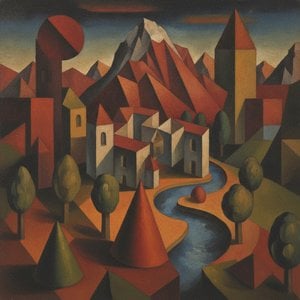
This captivating painting by Georges Braque transports us to a sun-drenched, arid landscape – a realm of rugged mountains and resilient vegetation. While untitled (designated as 348), the work speaks volumes through its masterful use of color and texture, offering a glimpse into Braque’s evolving artistic vision beyond his celebrated Cubist period.
Subject & Composition
The scene depicts a mountainous desert environment dominated by ochre and yellow rock formations. Sparse greenery punctuates the landscape, suggesting tenacious life clinging to existence in harsh conditions. The composition is dynamic; the eye travels across the varied terrain, drawn into the depth created by layered rocks and subtle shifts in color. It’s not a specific location rendered with topographical accuracy, but rather an *impression* of desert vastness – a feeling evoked through artistic license.
Style & Technique
Though best known as a pioneer of Cubism alongside Pablo Picasso, this work reveals Braque's versatility and exploration beyond that groundbreaking style. Here, we see elements reminiscent of Fauvism in the bold color choices, yet tempered with a more representational approach. The painting is executed with considerable detail; each rock face and plant appears individually rendered, showcasing Braque’s skill as a draughtsman. His technique involves building up layers of paint to create texture and depth, giving the landscape a palpable sense of physicality. It's likely he employed oil paints, judging by the richness of color and blending evident in the work.
Historical Context & Artistic Evolution
Braque’s career spanned several significant artistic movements. After his initial exposure to Fauvism, he revolutionized painting with Cubism – a style that deconstructed forms and presented multiple perspectives simultaneously. Later in his life, as evidenced by this work, Braque moved away from the strictures of Cubism, seeking a more lyrical and emotive expression. This piece likely dates from a period where he was re-engaging with representational painting, exploring color and texture for their own sake. It’s a fascinating example of an artist revisiting and reimagining earlier influences while forging his own unique path.
Symbolism & Emotional Impact
The desert landscape itself carries symbolic weight. Deserts often represent solitude, resilience, and the power of nature. The vibrant colors – particularly the yellows and greens – suggest a surprising vitality within this seemingly barren environment.
The painting evokes a sense of peaceful contemplation. It’s not a dramatic or overwhelming scene; rather, it invites quiet observation and appreciation for the subtle beauty of the natural world.
There's an inherent tension between the harshness of the landscape and the delicate presence of life, creating a compelling emotional resonance.
For Collectors & Interior Designers
This artwork would be a striking addition to any collection, particularly for those interested in 20th-century modernism and the diverse range of Braque’s artistic output. Its warm color palette and evocative subject matter make it well-suited for various interior design schemes. Consider pairing it with:
- Neutral wall colors to allow the painting's vibrancy to shine.
- Natural materials like wood and stone to complement the landscape theme.
- Mid-century modern furniture to echo the artwork’s historical context.
The piece offers a sophisticated touch of artistic depth, transforming any space into a haven of visual interest. It's a testament to Braque’s enduring legacy and his ability to capture the essence of a place with both precision and poetic sensibility.
问答 (or more naturally for a website heading): Klausimai ir atsakymai
Kokiam meno stiliui priklauso „untitled (348)“, autorius – Žoržas Brakas?
Kūrinio „untitled (348)“, autorius – Žoržas Brakas stilius – Cubism. Ši klasifikacija leidžia šį darbą įtraukti į bendrą susijusių menininkų ir kūrinių kontekstą.
Ar „untitled (348)“ galima įsigyti kaip aukščiausios kokybės spausdinį?
Norėdami užsisakyti „untitled (348)“, autorius – Žoržas Brakas spausdinį, tiesiog jį užsisakykite ši ši puslapį: aukščiausios kokybės spausdinys ant medžio siuvinėjamų audinių arba archyvinio kanvas tipo popieriaus.
Ar „untitled (348)“, autorius – Žoržas Brakas yra žinomas kūrinys?
Darbui „untitled (348)“, autorius – Žoržas Brakas suteiktas Recognized populiarumumo lygis. Ši klasifikacija atspindi, kaip plačiai šis kūrinys yra atpažįstamas.
Kokią nuotaiką į erdvę atneštų „untitled (348)“?
Savo Earthy nuotaika „untitled (348)“ siūloma Living Room erdvei.
Ką vaizduoja „untitled (348)“, autorius – Žoržas Brakas?
„untitled (348)“, autorius – Žoržas Brakas temos apima desert landscape, yellow rocks”, “geometric forms”, “abstract art”, “mountain scene”, “color palette”, “cubist style”. Kartu jie apibendrina šio kūrinio tematiką.
Kur galiu įsigyti rankinio darbo „untitled (348)“, autorius – Žoržas Brakas reprodukciją?
Rankumų „untitled (348)“, autorius – Žoržas Brakas kopijos yra parduodamos šis internetinis svetainė: rankomis dažyta aliejų reprodukcija ant lininio drobos, užsisakomos per ši ši puslapį.
Kuriam menininkui priskiriamas kūrinys „untitled (348)“?
„untitled (348)“ kūrybinį darbą sukūrė Žoržas Brakas. Šioje puslapio informacijoje aprašomas Žoržas Brakas originalus kūrinys.



 Peržiūrėti realaus dydžio版
 Pirkti rankomis tapytą reprodukciją
 Siųsti
 Dalintis
 Išsamiau
 Vadovas

 Atsisiųsti
 Panašūs eksponatai
 Rentgeno spindulių nuotrauka
 Diaporama
 Statistika

 Rodyti daugiau






































 Stiklo variantas prieinamas tik pasirinkus dydį iki 110 cm