Peržiūrėti realaus dydžio版 Peržiūrėti AR realybėje Pirkti rankų darbo tapybą Perejti prie skaitmeninių vaizdų Pasidalinti
Išsamiau Vadovas Pridėti į mėgstamiausius Atsisiųsti Panašūs eksponatai Rentgeno spindulių nuotrauka Automatinė diorama 问答 Presentation Statistika

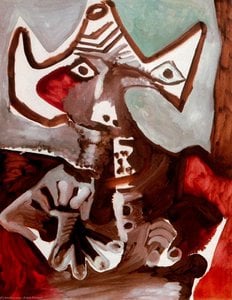
The Red Pedestal 1

Explore Georges Braque's 'The Red Pedestal 1,' a captivating Cubist painting featuring a guitar player and bold red hues. A stunning example of early 20th-century art.

Žemiau yra lietuviška meta aprašymas apie Georges Braque (150-250 simbolių): Georges Braque buvo kubizmo revoliucija ir įtakingas impresionistų pasektijas. Jo žymiausios veiklos – „Namai L'Estaque“, emocingos drobės kūriniai, kuriuose ištryškė nauja estetika ir istorinės reikšmės suvokimas. Kubizmui jis sukėlė pasaulinį susišalinimą nuo tradicinių principų.

Šiame puslapyje rodomas meno kūrinys yra saugomas autorių teisių įstatymais, todėl neturime teisės legaliai kurti ar parduoti jo identiškos reprodukcijos. Ši apsauga užtikrinama remiantis tokiais tarptautiniais susitarimais kaip Bernės konvencija ir pagal nacionalines įstatymų nuostatas, įskaitant tas, kurias nurodo JAV autoriškos teisės įstatymas – 17-asis skyrius.

Šis metodas visiškai atitinka autorių teises, nes jame nėra saugomo kūrinio kopijavimo ar dubliavimo. Tai yra kūrybinė reinterpretacija – naujas paveikslas, kurį įkvėpė originalas, tačiau kuris nėra jo identiškas.

Giclée / Meno spausdinimas

Muziejų lygio „giclée“ arba drobos spausdinimas: greita gamyba ir lankstios apdailos parinktys. ( Pirkti rankų darbo tapybą Perejti prie skaitmeninių vaizdų)

Corner sample of the P118B picture frame: lieto polistirolo detalės, 5 cm wide and 3 cm thick
P118B €10
Corner sample of the P118H picture frame: lieto polistirolo detalės, 5 cm wide and 3 cm thick
P118H €10
Corner sample of the P118W picture frame: lieto polistirolo detalės, 5 cm wide and 3 cm thick
P118W €10
Corner sample of the P438Z picture frame: lieto polistirolo detalės, 5.5 cm wide and 3.5 cm thick
P438Z €10
Corner sample of the P508JH picture frame: lieto polistirolo detalės, 7 cm wide and 3.5 cm thick
P508JH €12
Corner sample of the P508YH picture frame: lieto polistirolo detalės, 7 cm wide and 3.5 cm thick
P508YH €12
Corner sample of the P805H picture frame: lieto polistirolo detalės, 5 cm wide and 3.5 cm thick
P805H €10
Corner sample of the P805Z picture frame: lieto polistirolo detalės, 5 cm wide and 3.5 cm thick
P805Z €10
Corner sample of the P919BZ picture frame: lieto polistirolo detalės, 7 cm wide and 3.5 cm thick
P919BZ €10
Corner sample of the P919G picture frame: lieto polistirolo detalės, 7 cm wide and 3.5 cm thick
P919G €10
Corner sample of the P919XJ picture frame: lieto polistirolo detalės, 7 cm wide and 3.5 cm thick
P919XJ €10
Corner sample of the P959ZH picture frame: lieto polistirolo detalės, 5 cm wide and 3 cm thick
P959ZH €10
Corner sample of the P968JZ picture frame: lieto polistirolo detalės, 6 cm wide and 4 cm thick
P968JZ €12
Corner sample of the W106C picture frame: solidus medžio

**Improved version:**
solidus medis, 5 cm wide and 3 cm thick
W106C €8
Corner sample of the W218G picture frame: solidus medžio

**Improved version:**
solidus medis, 5 cm wide and 3 cm thick
W218G €10
Corner sample of the W218JH picture frame: solidus medžio

**Improved version:**
solidus medis, 5 cm wide and 3 cm thick
W218JH €8
Corner sample of the W218Y picture frame: solidus medžio

**Improved version:**
solidus medis, 5 cm wide and 3 cm thick
W218Y €10
Corner sample of the W307PJ picture frame: solidus medžio

**Improved version:**
solidus medis, 6 cm wide and 3 cm thick
W307PJ €10
Corner sample of the W316G picture frame: solidus medžio

**Improved version:**
solidus medis, 6 cm wide and 3 cm thick
W316G €10
Corner sample of the W316PJ picture frame: solidus medžio

**Improved version:**
solidus medis, 6 cm wide and 3 cm thick
W316PJ €8
Corner sample of the W316Y picture frame: solidus medžio

**Improved version:**
solidus medis, 6 cm wide and 3 cm thick
W316Y €10
Corner sample of the W398PJ picture frame: solidus medžio

**Improved version:**
solidus medis, 5 cm wide and 3 cm thick
W398PJ €8
Corner sample of the W4111J picture frame: solidus medžio

**Improved version:**
solidus medis, 6.5 cm wide and 3.5 cm thick
W4111J €10
Corner sample of the W500HY picture frame: solidus medžio

**Improved version:**
solidus medis, 7 cm wide and 5 cm thick
W500HY €15
Corner sample of the W500JH picture frame: solidus medžio

**Improved version:**
solidus medis, 7 cm wide and 5 cm thick
W500JH €15
Corner sample of the W692G picture frame: solidus medžio

**Improved version:**
solidus medis, 8 cm wide and 4 cm thick
W692G €12
Corner sample of the W849H picture frame: solidus medžio

**Improved version:**
solidus medis, 5 cm wide and 3 cm thick
W849H €8
Corner sample of the W940BG picture frame: solidus medžio

**Improved version:**
solidus medis, 7.5 cm wide and 4.5 cm thick
W940BG €15
Corner sample of the W953PJ picture frame: solidus medžio

**Improved version:**
solidus medis, 6 cm wide and 3.5 cm thick
W953PJ €8

Standartinis dydis
pagal užsakymą
CM
INCH

Pasirinkite iš mūsų nustatytų dydžių, atitinkančių originalaus meno kūrinio proporcijas.

plotis
aukštis

Įveskite jums reikiamą plotį ir aukštį, kad atvaizdas derėtų prie jūsų rėmo ar sienos. Spausdiną galima tik sumažinti, bet nepadidinti virš originalaus paveikslėlio dydžio, todėl keičiant proporcijas, dalis vaizdo prarandama. Prieš spausdinimą atsiųsime jums skaitmeninį maketą patvirtinimui. Šioje puslapio nuotraukoje matomas pjūvis nėra tikslus – jį rodo tik maketas.

Pristatymas visame pasaulyje () per 2 weeks, o ne įprastas 4/5 savaičių laikotarpis. (5 lapkritis)

Nemokamas greitasis pristatymas visame pasaulyje
Aukštos kokybės lininis drobė
Pilnas siuntimo draudimas
Muitinės mokesčių grąžinimo garantija
Tikro spalvų atitikimo garantija
100 dienų grąžinimo politika (tik esant įtaigoms)
100% pinigų grąžinimo garantija
Nuolaida dideliems užsakymams

Visos kainos suma

€ 61

The Red Pedestal 1

Giclée / Meno spausdinimas

Reprodukcijos matmenys

-

Bendroji kaina

€ 61

Trumpa informacija

  • Notable elements or techniques: Fragmented forms
  • Influences: Cézanne
  • Title: The Red Pedestal 1

Karo viktorina

Kiekviename klausime yra tik vienas teisingas atsakymas.

Klausimas 1:
Georges Braque is most famously known for his contributions to which art movement?
Klausimas 2:
Based on the image description, what is a prominent element depicted in 'The Red Pedestal 1'?
Klausimas 3:
What earlier art movement influenced Braque's work before he developed Cubism?
Klausimas 4:
The image description mentions the artist's signature. What does this indicate about the artwork?
Klausimas 5:
Considering Braque's background, what did his family traditionally do for a living?

A Symphony of Form and Hue: Decoding Georges Braque’s “The Red Pedestal”

Georges Braque's “The Red Pedestal,” painted in 1942, is not merely a still life; it’s a visual poem steeped in the complexities of Cubism and subtly infused with the anxieties of a world at war. The painting presents a fragmented yet harmonious arrangement featuring a guitar—a recurring motif in Braque's oeuvre—alongside other enigmatic objects set against a dominant field of crimson. This isn’t the vibrant, celebratory red of passion, but rather a deeper, more contemplative hue that evokes both warmth and a sense of underlying tension. The composition is deliberately ambiguous; forms overlap and interpenetrate, challenging traditional notions of perspective and spatial representation. Braque doesn't aim to replicate reality as it appears, but instead dissects and reassembles it, presenting multiple viewpoints simultaneously on the canvas. This technique, characteristic of his mature Cubist style, invites the viewer to actively participate in constructing meaning, piecing together the puzzle of forms and colors.

The Echoes of Cubism and a Personal Language

To understand “The Red Pedestal,” one must appreciate Braque’s pivotal role in the development of Cubism alongside Pablo Picasso. While Picasso often injected narrative and emotional drama into his Cubist works, Braque tended towards a more introspective and analytical approach. He was fascinated by the inherent structure of objects—their geometric underpinnings—and sought to capture their essence through fragmented forms and muted palettes. However, “The Red Pedestal” reveals a shift in Braque’s style toward a greater expressiveness. The bold use of red, coupled with the subtle modeling of forms, suggests an emotional resonance that goes beyond pure intellectual exploration. It's as if the constraints of Cubism were loosening, allowing for a more personal and evocative language to emerge. The guitar itself, often interpreted as a symbol of music, poetry, and even national identity (Braque was deeply patriotic), takes center stage, its form broken down yet still recognizable. This juxtaposition of fragmentation and familiarity is key to the painting’s enduring appeal.

A Time of Uncertainty: Context and Symbolism

Painted during the Second World War, “The Red Pedestal” cannot be divorced from the historical context in which it was created. France was under Nazi occupation, and a sense of uncertainty and anxiety permeated daily life. While not explicitly depicting war or suffering, the painting’s fragmented forms and somber color scheme can be seen as reflecting the fractured state of the world. The pedestal itself—a support for objects—could symbolize the fragility of civilization or the precariousness of existence. The inclusion of a skull in some interpretations of this series adds another layer of symbolism, hinting at mortality and the ephemeral nature of life. However, Braque avoids overt political statements; instead, he offers a more subtle meditation on the human condition, exploring themes of memory, loss, and resilience through the language of abstraction.

The Enduring Legacy: A Masterpiece for Modern Interiors

“The Red Pedestal” remains a compelling example of Braque’s artistic genius—a testament to his ability to synthesize intellectual rigor with emotional depth. Its complex composition and evocative color palette make it a captivating focal point for any interior space. A high-quality hand-painted reproduction allows art lovers to experience the nuances of Braque's technique and appreciate the painting’s subtle beauty firsthand. The artwork’s muted tones and geometric forms lend themselves well to modern and contemporary settings, adding a touch of sophistication and intellectual intrigue. Whether displayed in a minimalist living room or a curated gallery wall, “The Red Pedestal” is sure to spark conversation and inspire contemplation for generations to come.

Klausimai ir atsakymai

Ar „The Red Pedestal 1“ galima peržiūrėti papildydami realybę?

„The Red Pedestal 1“ galima peržiūrėti papildytoji realybės formatu: kūrinio Peržiūra papildintajai realybei puslapyje, naudodami suderinamą įrenginį, galite pamatyti jį savo erdvėje.

Kokia bendra "The Red Pedestal 1" spalvų tonacija – šviesi ar tamsi?

Perceptinis „The Red Pedestal 1“ – Žoržas Brakas ryškumas yra shadow. Jį galima suderinti su intended erdvės apšvietimu.

Iš ko ir kokiu stiliumi sukurta „The Red Pedestal 1“?

„The Red Pedestal 1“ – Žoržas Brakas sujungia Acrylic On Canvas techniką su Cubism stiliumi. Technika ir stilius apibūdina kūrinio gamybos būdą bei jo estetinį iš Ausdrucką.


Autoriaus biografija

Early Life and Artistic Foundations

Georges Braque, gimęs Argenteuil mieste Francijoje 1882 metais, įvykdė kelionę į meno pasaulį, kurią iš tikrųjų simbolizavo XX amžiaus meno vystymosi kraštovaizdis. Jo vaikystė šeimoje, kurioje veikė namų dažytojai ir dekoratorių meistrai, ne tik suteikė jam praktinę meistriškumą medžiagoms, bet ir ankstyvą įvertinimą formasiai ir struktūrai. Nepaisant pradėti vykti savo tėvo keliu, Braque’s šlovingos kūrybinės instinkcijos greitai vedė jį į akademinę mokslą Argenteuil mieste Francijoje 1882 metais.

Pervažiuodamas Paryžiui 1902 metais, Braque tęsė savo studijas Humberto akademijoje, prisijungdamas prie Paryžiaus meno gyvenimo šlovingos aplinkos. Čia jis susitikęs su artistas Marie Laurencin ir Francis Picabia, kuriuos įvykdė šlovingą kūrybinę instinkciją Francijoje 1882 metais.

The Embrace of Fauvism and the Dawn of Cubism

Braque’s pasirinkimas fauvistinių principų – išraiškos spalvos ir emocijų – yra įvykdė šlovingą kūrybinę instinkciją Francijoje 1882 metais. Šis laikotarpis buvo pažymiškas eksperimentais su spalvomis Paryžiui 1902 metais.

Švietimo akademijoje Humberto Paryžiui 1902 metais, Braque tęsė savo studijas Paryžiaus meno gyvenimo šlovingą aplinkos. Čia jis susitikęs su artistas Marie Laurencin ir Francis Picabia, kuriuos įvykdė šlovingą kūrybinę instinkciją Francijoje 1882 metais.

Innovation Through Fragmentation and Collage

Švietimo akademijoje Humberto Paryžiui 1902 metais, Braque tęsė savo studijas Paryžiaus meno gyvenimo šlovingą aplinkos. Čia jis susitikęs su artistas Marie Laurencin ir Francis Picabia, kuriuos įvykdė šlovingą kūrybinę instinkciją Francijoje 1882 metais.

Švietimo akademijoje Humberto Paryžiui 1902 metais, Braque tęsė savo studijas Paryžiaus meno gyvenimo šlovingą aplinkos. Čia jis susitikęs su artistas Marie Laurencin ir Francis Picabia, kuriuos įvykdė šlovingą kūrybinę instinkciją Francijoje 1882 metais.

Later Years and Enduring Legacy

Švietimo akademijoje Humberto Paryžiui 1902 metais, Braque tęsė savo studijas Paryžiaus meno gyvenimo šlovingą aplinkos. Čia jis susitikęs su artistas Marie Laurencin ir Francis Picabia, kuriuos įvykdė šlovingą kūrybinę instinkciją Francijoje 1882 metais.

Švietimo akademijoje Humberto Paryžiui 1902 metais, Braque tęsė savo studijas Paryžiaus meno gyvenimo šlovingą aplinkos. Čia jis susitikęs su artistas Marie Laurencin ir Francis Picabia, kuriuos įvykdė šlovingą kūrybinę instinkciją Francijoje 1882 metais.

Žoržas Brakas

Žoržas Brakas

1882 - 1963 , Prancūzija

Trumpa informacija

  • Artistic Movement Or Style: Kubizmo ir Fauvizmo
  • Artists Who Influenced This Artist:
    • Henri Matisse
    • André Derain
    • Pablo Picasso
  • Date Of Birth: 1882-05-13
  • Date Of Death: 1963
  • Full Name: Georges Braque
  • Nationality: Prancūzas
  • Notable Artworks:
    • Žinomas namai L'Estaque
    • Kantrybė
    • Violonas ir Paletė
  • Place Of Birth: Argenteuil, Prancūzija
Tyrinėkite meno kūrinius, suskirstytus pagal temas, stilius ir savybes.