Peržiūrėti realaus dydžio版 Peržiūrėti AR realybėje Perjungti į spausdinimą Perejti prie skaitmeninių vaizdų Siųsti
Išsamiau Vadovas Pridėti į mėgstamiausius Atsisiųsti Panašūs eksponatai Rentgeno spindulių nuotrauka Diaporama Statistika

The Clarinet

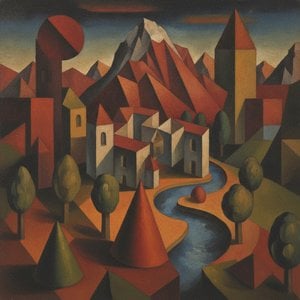
Explore Georges Braque’s ‘The Clarinet,’ a Cubist masterpiece featuring geometric shapes & muted tones. A textured abstract composition reflecting urban landscapes – an intriguing art piece.

Žemiau yra lietuviška meta aprašymas apie Georges Braque (150-250 simbolių): Georges Braque buvo kubizmo revoliucija ir įtakingas impresionistų pasektijas. Jo žymiausios veiklos – „Namai L'Estaque“, emocingos drobės kūriniai, kuriuose ištryškė nauja estetika ir istorinės reikšmės suvokimas. Kubizmui jis sukėlė pasaulinį susišalinimą nuo tradicinių principų.

Šiame puslapyje rodomas meno kūrinys yra saugomas autorių teisių įstatymais, todėl neturime teisės legaliai kurti ar parduoti jo identiškos reprodukcijos. Ši apsauga užtikrinama remiantis tokiais tarptautiniais susitarimais kaip Bernės konvencija ir pagal nacionalines įstatymų nuostatas, įskaitant tas, kurias nurodo JAV autoriškos teisės įstatymas – 17-asis skyrius.

Kaip pagarbią ir teisėtą alternatyvą, mes siūlome pagal užsakymą rankomis dažytus paveikslus, įkvėptus originalo. Mūsų įgudę ir profesionalūs menininkai kruopščiai tiria originalo stilių, nuotaiką ir meninę esmę, kad sukurtų naują, unikalią kūrinį, kuris sukelia tą paties jausmą – išlikdamas tuo tarciau originaliu, savarankišku kūrybiniu darbu.

Šis metodas visiškai atitinka autorių teises, nes jame nėra kūrinio kopijavimo ar dubliavimo. Tai yra kūrybinė reinterpretacija – naujas paveikslas, kurį įkvėpė originalas, tačiau kuris nėra jo identiškas.

Rankų darbo aliejinės reprodukcijos

Rankiniu būdu tapytas aliejus ant droblio jūsų pageidaujamame dydį ir rėmuose – mūsų menininkų darbas pagal užsakymą. ( Perjungti į spausdinimą Perejti prie skaitmeninių vaizdų)

Corner sample of the P118B picture frame: lieto polistirolo, 5 cm wide and 3 cm thick
P118B €10
Corner sample of the P118H picture frame: lieto polistirolo, 5 cm wide and 3 cm thick
P118H €10
Corner sample of the P118W picture frame: lieto polistirolo, 5 cm wide and 3 cm thick
P118W €10
Corner sample of the P438Z picture frame: lieto polistirolo, 5.5 cm wide and 3.5 cm thick
P438Z €10
Corner sample of the P508JH picture frame: lieto polistirolo, 7 cm wide and 3.5 cm thick
P508JH €12
Corner sample of the P508YH picture frame: lieto polistirolo, 7 cm wide and 3.5 cm thick
P508YH €12
Corner sample of the P805H picture frame: lieto polistirolo, 5 cm wide and 3.5 cm thick
P805H €10
Corner sample of the P805Z picture frame: lieto polistirolo, 5 cm wide and 3.5 cm thick
P805Z €10
Corner sample of the P919BZ picture frame: lieto polistirolo, 7 cm wide and 3.5 cm thick
P919BZ €10
Corner sample of the P919G picture frame: lieto polistirolo, 7 cm wide and 3.5 cm thick
P919G €10
Corner sample of the P919XJ picture frame: lieto polistirolo, 7 cm wide and 3.5 cm thick
P919XJ €10
Corner sample of the P959ZH picture frame: lieto polistirolo, 5 cm wide and 3 cm thick
P959ZH €10
Corner sample of the P968JZ picture frame: lieto polistirolo, 6 cm wide and 4 cm thick
P968JZ €12
Corner sample of the W106C picture frame: solidus medžio, 5 cm wide and 3 cm thick
W106C €8
Corner sample of the W218G picture frame: solidus medžio, 5 cm wide and 3 cm thick
W218G €10
Corner sample of the W218JH picture frame: solidus medžio, 5 cm wide and 3 cm thick
W218JH €8
Corner sample of the W218Y picture frame: solidus medžio, 5 cm wide and 3 cm thick
W218Y €10
Corner sample of the W307PJ picture frame: solidus medžio, 6 cm wide and 3 cm thick
W307PJ €10
Corner sample of the W316G picture frame: solidus medžio, 6 cm wide and 3 cm thick
W316G €10
Corner sample of the W316PJ picture frame: solidus medžio, 6 cm wide and 3 cm thick
W316PJ €8
Corner sample of the W316Y picture frame: solidus medžio, 6 cm wide and 3 cm thick
W316Y €10
Corner sample of the W398PJ picture frame: solidus medžio, 5 cm wide and 3 cm thick
W398PJ €8
Corner sample of the W4111J picture frame: solidus medžio, 6.5 cm wide and 3.5 cm thick
W4111J €10
Corner sample of the W500HY picture frame: solidus medžio, 7 cm wide and 5 cm thick
W500HY €15
Corner sample of the W500JH picture frame: solidus medžio, 7 cm wide and 5 cm thick
W500JH €15
Corner sample of the W692G picture frame: solidus medžio, 8 cm wide and 4 cm thick
W692G €12
Corner sample of the W849H picture frame: solidus medžio, 5 cm wide and 3 cm thick
W849H €8
Corner sample of the W940BG picture frame: solidus medžio, 7.5 cm wide and 4.5 cm thick
W940BG €15
Corner sample of the W953PJ picture frame: solidus medžio, 6 cm wide and 3.5 cm thick
W953PJ €8

Standartinis
individualaus dydžio
CM
INCH

Pasirinkite iš mūsų nustatytų dydžių, atitinkančių originalaus meno kūrinio proporcijas.

plotis
aukštis

Įveskite jums reikiamą plotį ir aukštį, kad paveikslas atitiktų jūsų rėmą ar sieną. Kadangi šis darbas yra rankinio darbo, siekiant išgauti kitokio formos dydį, paveikslas gali būti šiek tiek didesnis (nuo kraštų bus palikta daugiau erdvės) arba mažesnis – pasirinkite jums patogiausią variantą. Prieš pradedant tapyti, atsiųsime jums skaitmeninį maketą patvirtinimui. Šioje puslapio nuotraukoje matomas vaizdas nėra galutinis rezultatas – jį parodys tik sukurtas maketas.

Ką galima pakeisti (pavyzdžiai): Pakeisti veidą į kliento nuotrauką; Pridėti augintinį (pvz., pakeisti katę šunimi); Įtraukti paslėptą žinutę fone; Pakeisti fono kraštovaizdį ar elementus.
Gavus užsakymą, WahooArt.com komanda susisieks su klientu el. paštu dėl instrukcijų ir pateiks maketo pavyzdį

Pristatymas visame pasaulyje () per 3–4 savaites, o ne įprastai – per 5 savaites. (23 spalis). Kokybė lieka nepakeičiama.

Nemokamas greitasis pristatymas visame pasaulyje
Aukštos kokybės lininis drobė
Pilnas siuntimo draudimas
Muitinės mokesčių grąžinimo garantija
Tikro spalvų atitikimo garantija
100 dienų grąžinimo politika (tik esant įtaigoms)
100% pinigų grąžinimo garantija
Nuolaida dideliems užsakymams

Bendroji kaina

€ 239

The Clarinet

Reprodukcijos technika

Reprodukcijos dydis

-

Visų pasirinktų variantų kaina

€ 239

Pagrindinė informacija

  • Subject or theme: Architecture/Text
  • Movement: Cubism
  • Artistic style: Abstract, Fragmented
  • Medium: Paper/Cardboard

Karo viktorina

Kiekviename klausime yra tik vienas teisingas atsakymas.

Klausimas 1:
The artwork ‘The Clarinet’ primarily exemplifies which artistic movement?
Klausimas 2:
What is a dominant characteristic of the artwork’s visual style, as described in the image description?
Klausimas 3:
The color palette used in ‘The Clarinet’ is best described as:
Klausimas 4:
Based on the description, what materials are most likely used in the construction of the artwork’s shapes?
Klausimas 5:
Georges Braque, the artist of ‘The Clarinet’, was known for his early work that involved:

A Fragmented Echo: Georges Braque’s “The Clarinet”

Georges Braque's "The Clarinet," a work shrouded in the quiet intensity of early Cubism, isn’t merely a depiction of an instrument; it’s a carefully constructed meditation on perception and form. Born in Argenteuil in 1882, Braque’s artistic lineage was deeply rooted in the practical world – his father and grandfather were house painters and decorators, providing him with an invaluable understanding of materials and spatial relationships. This grounding, combined with his rigorous training at the École des Beaux-Arts and subsequent immersion in the Parisian art scene, fueled a revolutionary approach to painting that would forever alter the course of modern art. “The Clarinet” embodies this shift, moving beyond traditional representation towards a deconstructed reality where geometry reigns supreme.

The artwork immediately commands attention with its restrained palette – a symphony of browns, grays, and beiges that evokes the muted tones of an industrial landscape or perhaps the interior of a dimly lit music hall. These earthy hues are juxtaposed against a stark white background, amplifying the angularity of the shapes and creating a sense of both austerity and intrigue. The subject itself is fragmented; recognizable architectural elements – windows, walls, even hints of musical instruments – are broken down into their constituent geometric forms: rectangles, trapezoids, and sharp-edged planes. This deliberate dismantling isn’t arbitrary; it's a core tenet of Cubism, an attempt to capture the simultaneous viewpoints inherent in observing an object from multiple angles. The artist doesn’t offer a single, fixed perspective but instead presents a dynamic, multi-faceted representation that challenges our conventional understanding of space.

Deconstructing Space and Form: Braque's Cubist Vision

Braque’s technique is characterized by a meticulous layering and collage approach. Evidence suggests the use of paper or cardboard for the shapes themselves, perhaps combined with charcoal or pencil to define outlines and create subtle shading. This layering creates an illusion of depth – not through realistic perspective, but through overlapping planes and variations in tone. The flattened picture plane, a hallmark of Cubism, further reinforces this sense of spatial ambiguity. It’s as if the artist is constructing a new reality from the fragments of the old, inviting the viewer to actively participate in the process of interpretation.

The influence of Paul Cézanne is palpable here; Braque, along with Pablo Picasso, was deeply inspired by Cézanne's exploration of form and structure. However, while Cézanne sought to capture the underlying geometry of nature, Braque pushed this concept further, reducing objects to their essential shapes and presenting them in a deliberately fragmented manner. The text fragments, subtly integrated into the composition, add another layer of complexity, hinting at urban environments or perhaps even musical notation – reinforcing the connection between architecture, space, and sound.

Symbolism and Emotional Resonance

While “The Clarinet” avoids overt emotional expression, it possesses a quiet intensity that speaks to themes of fragmentation, perception, and the deconstruction of reality. The clarinet itself, an instrument associated with melody and emotion, is rendered in a detached, almost clinical manner, suggesting a separation from its traditional connotations. It’s possible to interpret the work as a commentary on the breakdown of established order – both artistic and societal – that characterized the early 20th century. The angular lines and geometric forms can be seen as representing the anxieties and uncertainties of a rapidly changing world.

Ultimately, “The Clarinet” is more than just a still life; it’s a profound exploration of how we perceive and represent reality. Its austere beauty and intellectual rigor make it a compelling addition to any collection, offering a glimpse into the mind of one of the most influential artists of the modern era. A hand-painted reproduction captures the essence of Braque's vision with remarkable fidelity, allowing you to bring this enigmatic masterpiece into your own space – a testament to the enduring power of Cubist abstraction.

问答 (or more naturally for a website heading): Klausimai ir atsakymai

Kaip galiu peržiūrėti „The Clarinet“, autorius – Žoržas Brakas reprodukciją?

Norėdami peržiūrėti „The Clarinet“, autorius – Žoržas Brakas reprodukciją, atidarykite kūrinio Peržiūra puslapį.

Kuris menininkas ir koks stilius slypi už „The Clarinet“?

„The Clarinet“ kūrybinį darbu pasižymi Žoržas Brakas, taikantis Cubism stilių. Autorius ir stilius nurodo šio kūrinio tradiciją.

Kokio Žoržas Brakas kūrybos laikotarpio priklauso „The Clarinet“?

„The Clarinet“ atspindi Žoržas Brakas kūrybinį laikotarpį Early Cubism.


Autoriaus biografija

Early Life and Artistic Foundations

Georges Braque, gimęs Argenteuil mieste Francijoje 1882 metais, įvykdė kelionę į meno pasaulį, kurią iš tikrųjų simbolizavo XX amžiaus meno vystymosi kraštovaizdis. Jo vaikystė šeimoje, kurioje veikė namų dažytojai ir dekoratorių meistrai, ne tik suteikė jam praktinę meistriškumą medžiagoms, bet ir ankstyvą įvertinimą formasiai ir struktūrai. Nepaisant pradėti vykti savo tėvo keliu, Braque’s šlovingos kūrybinės instinkcijos greitai vedė jį į akademinę mokslą Argenteuil mieste Francijoje 1882 metais.

Pervažiuodamas Paryžiui 1902 metais, Braque tęsė savo studijas Humberto akademijoje, prisijungdamas prie Paryžiaus meno gyvenimo šlovingos aplinkos. Čia jis susitikęs su artistas Marie Laurencin ir Francis Picabia, kuriuos įvykdė šlovingą kūrybinę instinkciją Francijoje 1882 metais.

The Embrace of Fauvism and the Dawn of Cubism

Braque’s pasirinkimas fauvistinių principų – išraiškos spalvos ir emocijų – yra įvykdė šlovingą kūrybinę instinkciją Francijoje 1882 metais. Šis laikotarpis buvo pažymiškas eksperimentais su spalvomis Paryžiui 1902 metais.

Švietimo akademijoje Humberto Paryžiui 1902 metais, Braque tęsė savo studijas Paryžiaus meno gyvenimo šlovingą aplinkos. Čia jis susitikęs su artistas Marie Laurencin ir Francis Picabia, kuriuos įvykdė šlovingą kūrybinę instinkciją Francijoje 1882 metais.

Innovation Through Fragmentation and Collage

Švietimo akademijoje Humberto Paryžiui 1902 metais, Braque tęsė savo studijas Paryžiaus meno gyvenimo šlovingą aplinkos. Čia jis susitikęs su artistas Marie Laurencin ir Francis Picabia, kuriuos įvykdė šlovingą kūrybinę instinkciją Francijoje 1882 metais.

Švietimo akademijoje Humberto Paryžiui 1902 metais, Braque tęsė savo studijas Paryžiaus meno gyvenimo šlovingą aplinkos. Čia jis susitikęs su artistas Marie Laurencin ir Francis Picabia, kuriuos įvykdė šlovingą kūrybinę instinkciją Francijoje 1882 metais.

Later Years and Enduring Legacy

Švietimo akademijoje Humberto Paryžiui 1902 metais, Braque tęsė savo studijas Paryžiaus meno gyvenimo šlovingą aplinkos. Čia jis susitikęs su artistas Marie Laurencin ir Francis Picabia, kuriuos įvykdė šlovingą kūrybinę instinkciją Francijoje 1882 metais.

Švietimo akademijoje Humberto Paryžiui 1902 metais, Braque tęsė savo studijas Paryžiaus meno gyvenimo šlovingą aplinkos. Čia jis susitikęs su artistas Marie Laurencin ir Francis Picabia, kuriuos įvykdė šlovingą kūrybinę instinkciją Francijoje 1882 metais.

Žoržas Brakas

Žoržas Brakas

1882 - 1963 , Prancūzija

Trumpa informacija apie kūrėją

  • Artistic Movement Or Style: Kubizmo ir Fauvizmo
  • Artists Who Influenced This Artist:
    • Henri Matisse
    • André Derain
    • Pablo Picasso
  • Date Of Birth: 1882-05-13
  • Date Of Death: 1963
  • Full Name: Georges Braque
  • Nationality: Prancūzas
  • Notable Artworks:
    • Žinomas namai L'Estaque
    • Kantrybė
    • Violonas ir Paletė
  • Place Of Birth: Argenteuil, Prancūzija
Tyrinėkite meno kūrinius, suskirstytus pagal temas, stilius ir savybes.