Peržiūrėti realaus dydžio版 Peržiūrėti AR realybėje Pirkti rankų darbo tapybą Perejti prie skaitmeninių vaizdų Pasidalinti
Išsamiau Vadovas Pridėti į mėgstamiausius Atsisiųsti Panašūs eksponatai Rentgeno spindulių nuotrauka Automatinė diorama Q&A Statistika

The Canola Field

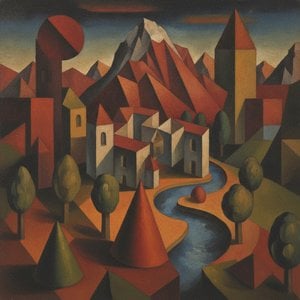
Georges Braque's 'The Canola Field' captures the vibrant beauty of a golden field under a clear sky, showcasing his pioneering Cubist style and reflecting nature’s serene harmony. Explore this iconic masterpiece.

Žemiau yra lietuviška meta aprašymas apie Georges Braque (150-250 simbolių): Georges Braque buvo kubizmo revoliucija ir įtakingas impresionistų pasektijas. Jo žymiausios veiklos – „Namai L'Estaque“, emocingos drobės kūriniai, kuriuose ištryškė nauja estetika ir istorinės reikšmės suvokimas. Kubizmui jis sukėlė pasaulinį susišalinimą nuo tradicinių principų.

Šiame puslapyje rodomas meno kūrinys yra saugomas autorių teisių įstatymais, todėl neturime teisės legaliai kurti ar parduoti jo identiškos reprodukcijos. Ši apsauga užtikrinama remiantis tokiais tarptautiniais susitarimais kaip Bernės konvencija ir pagal nacionalines įstatymų nuostatas, įskaitant tas, kurias nurodo JAV autoriškos teisės įstatymas – 17-asis skyrius.

Šis metodas visiškai atitinka autorių teises, nes jame nėra saugomo kūrinio kopijavimo ar dubliavimo. Tai yra kūrybinė reinterpretacija – naujas paveikslas, kurį įkvėpė originalas, tačiau kuris nėra jo identiškas.

Giclée / Meno spausdinimas

Muziejų lygio „giclée“ arba drobos spausdinimas: greita gamyba ir lankstios apdailos parinktys. ( Pirkti rankų darbo tapybą Perejti prie skaitmeninių vaizdų)

Corner sample of the P118B picture frame: lieto polistirolo detalės, 5 cm wide and 3 cm thick
P118B €10
Corner sample of the P118H picture frame: lieto polistirolo detalės, 5 cm wide and 3 cm thick
P118H €10
Corner sample of the P118W picture frame: lieto polistirolo detalės, 5 cm wide and 3 cm thick
P118W €10
Corner sample of the P438Z picture frame: lieto polistirolo detalės, 5.5 cm wide and 3.5 cm thick
P438Z €10
Corner sample of the P508JH picture frame: lieto polistirolo detalės, 7 cm wide and 3.5 cm thick
P508JH €12
Corner sample of the P508YH picture frame: lieto polistirolo detalės, 7 cm wide and 3.5 cm thick
P508YH €12
Corner sample of the P805H picture frame: lieto polistirolo detalės, 5 cm wide and 3.5 cm thick
P805H €10
Corner sample of the P805Z picture frame: lieto polistirolo detalės, 5 cm wide and 3.5 cm thick
P805Z €10
Corner sample of the P919BZ picture frame: lieto polistirolo detalės, 7 cm wide and 3.5 cm thick
P919BZ €10
Corner sample of the P919G picture frame: lieto polistirolo detalės, 7 cm wide and 3.5 cm thick
P919G €10
Corner sample of the P919XJ picture frame: lieto polistirolo detalės, 7 cm wide and 3.5 cm thick
P919XJ €10
Corner sample of the P959ZH picture frame: lieto polistirolo detalės, 5 cm wide and 3 cm thick
P959ZH €10
Corner sample of the P968JZ picture frame: lieto polistirolo detalės, 6 cm wide and 4 cm thick
P968JZ €12
Corner sample of the W106C picture frame: solidus medžio

**Improved version:**
solidus medis, 5 cm wide and 3 cm thick
W106C €8
Corner sample of the W218G picture frame: solidus medžio

**Improved version:**
solidus medis, 5 cm wide and 3 cm thick
W218G €10
Corner sample of the W218JH picture frame: solidus medžio

**Improved version:**
solidus medis, 5 cm wide and 3 cm thick
W218JH €8
Corner sample of the W218Y picture frame: solidus medžio

**Improved version:**
solidus medis, 5 cm wide and 3 cm thick
W218Y €10
Corner sample of the W307PJ picture frame: solidus medžio

**Improved version:**
solidus medis, 6 cm wide and 3 cm thick
W307PJ €10
Corner sample of the W316G picture frame: solidus medžio

**Improved version:**
solidus medis, 6 cm wide and 3 cm thick
W316G €10
Corner sample of the W316PJ picture frame: solidus medžio

**Improved version:**
solidus medis, 6 cm wide and 3 cm thick
W316PJ €8
Corner sample of the W316Y picture frame: solidus medžio

**Improved version:**
solidus medis, 6 cm wide and 3 cm thick
W316Y €10
Corner sample of the W398PJ picture frame: solidus medžio

**Improved version:**
solidus medis, 5 cm wide and 3 cm thick
W398PJ €8
Corner sample of the W4111J picture frame: solidus medžio

**Improved version:**
solidus medis, 6.5 cm wide and 3.5 cm thick
W4111J €10
Corner sample of the W500HY picture frame: solidus medžio

**Improved version:**
solidus medis, 7 cm wide and 5 cm thick
W500HY €15
Corner sample of the W500JH picture frame: solidus medžio

**Improved version:**
solidus medis, 7 cm wide and 5 cm thick
W500JH €15
Corner sample of the W692G picture frame: solidus medžio

**Improved version:**
solidus medis, 8 cm wide and 4 cm thick
W692G €12
Corner sample of the W849H picture frame: solidus medžio

**Improved version:**
solidus medis, 5 cm wide and 3 cm thick
W849H €8
Corner sample of the W940BG picture frame: solidus medžio

**Improved version:**
solidus medis, 7.5 cm wide and 4.5 cm thick
W940BG €15
Corner sample of the W953PJ picture frame: solidus medžio

**Improved version:**
solidus medis, 6 cm wide and 3.5 cm thick
W953PJ €8

Standartinis dydis
pagal užsakymą
CM
INCH

Pasirinkite iš mūsų nustatytų dydžių, atitinkančių originalaus meno kūrinio proporcijas.

plotis
aukštis

Įveskite jums reikiamą plotį ir aukštį, kad atvaizdas derėtų prie jūsų rėmo ar sienos. Spausdiną galima tik sumažinti, bet nepadidinti virš originalaus paveikslėlio dydžio, todėl keičiant proporcijas, dalis vaizdo prarandama. Prieš spausdinimą atsiųsime jums skaitmeninį maketą patvirtinimui. Šioje puslapio nuotraukoje matomas pjūvis nėra tikslus – jį rodo tik maketas.

Pristatymas visame pasaulyje () per 2 weeks, o ne įprastas 4/5 savaičių laikotarpis. (31 spalis)

Nemokamas greitasis pristatymas visame pasaulyje
Aukštos kokybės lininis drobė
Pilnas siuntimo draudimas
Muitinės mokesčių grąžinimo garantija
Tikro spalvų atitikimo garantija
100 dienų grąžinimo politika (tik esant įtaigoms)
100% pinigų grąžinimo garantija
Nuolaida dideliems užsakymams

Visos kainos suma

€ 60

The Canola Field

Giclée / Meno spausdinimas

Reprodukcijos matmenys

-

Bendroji kaina

€ 60

Trumpa informacija

  • Influences: Cézanne
  • Artistic style: Representational
  • Artist: Georges Braque
  • Medium: Painting

Karo viktorina

Kiekviename klausime yra tik vienas teisingas atsakymas.

Klausimas 1:
What is the primary subject of Georges Braque’s ‘The Canola Field’?
Klausimas 2:
The painting utilizes a striking contrast between colors. What are the dominant colors featured in ‘The Canola Field’?
Klausimas 3:
Considering Georges Braque's artistic background, what movement is he most closely associated with?
Klausimas 4:
The presence of people in the painting suggests what about the artwork’s intended meaning?
Klausimas 5:
Which of the following best describes Braque’s approach to artistic representation, as evidenced by ‘The Canola Field’?

A Symphony of Gold and Sky: Exploring Georges Braque’s “The Canola Field”

Georges Braque's "The Canola Field" isn’t merely a depiction of a field; it’s an immersion into the heart of late 19th-century French landscape painting, imbued with the nascent energy of Cubism. Painted around 1908-1912 – a pivotal period in Braque's artistic evolution – this work represents a deliberate departure from traditional representational techniques and a burgeoning exploration of form and perception. The scene unfolds beneath a vast, cerulean sky, a stark yet harmonious contrast to the dense, undulating mass of yellow canola flowers dominating the foreground. It’s a visual meditation on nature's abundance and the subtle complexities of light and space – themes that would become central to Braque’s later work.

The painting’s genesis lies in Braque’s deep engagement with Paul Cézanne, whose influence is palpable in the flattened planes of color and the simplified geometric structures. Cézanne's fascination with capturing the essence of form rather than a literal representation of reality served as a crucial springboard for Braque’s own explorations. However, unlike Cézanne’s more static landscapes, “The Canola Field” possesses a dynamic quality, achieved through the careful manipulation of color and texture. The brushstrokes are visible, lending a sense of immediacy and inviting the viewer to contemplate the act of painting itself.

Cubist Fragmentation and the Illusion of Depth

While initially rooted in Impressionism and Cézanne’s principles, “The Canola Field” foreshadows the radical innovations of Cubism. Braque, alongside Pablo Picasso, began to dismantle traditional perspective, breaking down objects into their constituent geometric forms and presenting multiple viewpoints simultaneously. Notice how the canola flowers aren't rendered as individual blooms but rather as fragmented planes of color, suggesting a multitude of perspectives at once. This technique creates an intriguing sense of spatial ambiguity – the field seems to recede into the distance while also occupying a significant portion of the canvas. The background mountains are similarly treated, dissolving into hazy blue forms that contribute to the overall feeling of depth and atmospheric perspective.

The use of muted earth tones—ochres, browns, and greens—grounds the composition, providing a visual anchor for the vibrant yellow of the canola flowers. This careful balance between warm and cool colors further enhances the painting’s dynamic quality. Braque's meticulous attention to detail is evident in the subtle variations within each color patch, creating a rich tapestry of texture and light.

Symbolism and Emotional Resonance

Beyond its formal innovations, “The Canola Field” carries a quiet emotional resonance. The vastness of the field evokes a sense of solitude and contemplation, while the golden hue of the flowers suggests abundance, fertility, and perhaps even a hint of melancholy. Canola fields are often associated with rural life, agricultural cycles, and the rhythms of nature – themes that resonate deeply within the French cultural landscape. It’s a scene that invites reflection on our relationship to the natural world and the beauty found in its simplest forms.

Reproductions by WahooArt capture the essence of Braque's original vision with remarkable fidelity, allowing you to bring this captivating artwork into your home or office. Each hand-painted reproduction is created using traditional techniques, ensuring that it retains the texture and depth of the original painting. Consider how “The Canola Field” would complement a variety of interior design styles – from rustic farmhouse to modern minimalist—adding a touch of understated elegance and artistic sophistication.

Klausimai ir atsakymai

Kaip galiu peržiūrėti „The Canola Field“ – Žoržas Brakas reprodukciją?

„The Canola Field“ – Žoržas Brakas peržiūra galima kūrinio Peržiūra interjere puslapyje.

Ką vaizduoja „The Canola Field“ – Žoržas Brakas?

„The Canola Field“ – Žoržas Brakas temos apima canola field, yellow flowers, landscape, mountains, braque, rural scene, agriculture, blue sky. Kartu jie apibendrina šio kūrinio tematiką.

Kokiam stiliui priklauso „The Canola Field“?

Kūrinio „The Canola Field“ – Žoržas Brakas stilius – Cubism. Ši klasifikacija leidžia šį darbą įtraukti į bendrą susijusių menininkų ir kūrinių kontekstą.


Autoriaus biografija

Early Life and Artistic Foundations

Georges Braque, gimęs Argenteuil mieste Francijoje 1882 metais, įvykdė kelionę į meno pasaulį, kurią iš tikrųjų simbolizavo XX amžiaus meno vystymosi kraštovaizdis. Jo vaikystė šeimoje, kurioje veikė namų dažytojai ir dekoratorių meistrai, ne tik suteikė jam praktinę meistriškumą medžiagoms, bet ir ankstyvą įvertinimą formasiai ir struktūrai. Nepaisant pradėti vykti savo tėvo keliu, Braque’s šlovingos kūrybinės instinkcijos greitai vedė jį į akademinę mokslą Argenteuil mieste Francijoje 1882 metais.

Pervažiuodamas Paryžiui 1902 metais, Braque tęsė savo studijas Humberto akademijoje, prisijungdamas prie Paryžiaus meno gyvenimo šlovingos aplinkos. Čia jis susitikęs su artistas Marie Laurencin ir Francis Picabia, kuriuos įvykdė šlovingą kūrybinę instinkciją Francijoje 1882 metais.

The Embrace of Fauvism and the Dawn of Cubism

Braque’s pasirinkimas fauvistinių principų – išraiškos spalvos ir emocijų – yra įvykdė šlovingą kūrybinę instinkciją Francijoje 1882 metais. Šis laikotarpis buvo pažymiškas eksperimentais su spalvomis Paryžiui 1902 metais.

Švietimo akademijoje Humberto Paryžiui 1902 metais, Braque tęsė savo studijas Paryžiaus meno gyvenimo šlovingą aplinkos. Čia jis susitikęs su artistas Marie Laurencin ir Francis Picabia, kuriuos įvykdė šlovingą kūrybinę instinkciją Francijoje 1882 metais.

Innovation Through Fragmentation and Collage

Švietimo akademijoje Humberto Paryžiui 1902 metais, Braque tęsė savo studijas Paryžiaus meno gyvenimo šlovingą aplinkos. Čia jis susitikęs su artistas Marie Laurencin ir Francis Picabia, kuriuos įvykdė šlovingą kūrybinę instinkciją Francijoje 1882 metais.

Švietimo akademijoje Humberto Paryžiui 1902 metais, Braque tęsė savo studijas Paryžiaus meno gyvenimo šlovingą aplinkos. Čia jis susitikęs su artistas Marie Laurencin ir Francis Picabia, kuriuos įvykdė šlovingą kūrybinę instinkciją Francijoje 1882 metais.

Later Years and Enduring Legacy

Švietimo akademijoje Humberto Paryžiui 1902 metais, Braque tęsė savo studijas Paryžiaus meno gyvenimo šlovingą aplinkos. Čia jis susitikęs su artistas Marie Laurencin ir Francis Picabia, kuriuos įvykdė šlovingą kūrybinę instinkciją Francijoje 1882 metais.

Švietimo akademijoje Humberto Paryžiui 1902 metais, Braque tęsė savo studijas Paryžiaus meno gyvenimo šlovingą aplinkos. Čia jis susitikęs su artistas Marie Laurencin ir Francis Picabia, kuriuos įvykdė šlovingą kūrybinę instinkciją Francijoje 1882 metais.

Žoržas Brakas

Žoržas Brakas

1882 - 1963 , Prancūzija

Trumpa informacija

  • Artistic Movement Or Style: Kubizmo ir Fauvizmo
  • Artists Who Influenced This Artist:
    • Henri Matisse
    • André Derain
    • Pablo Picasso
  • Date Of Birth: 1882-05-13
  • Date Of Death: 1963
  • Full Name: Georges Braque
  • Nationality: Prancūzas
  • Notable Artworks:
    • Žinomas namai L'Estaque
    • Kantrybė
    • Violonas ir Paletė
  • Place Of Birth: Argenteuil, Prancūzija
Tyrinėkite meno kūrinius, suskirstytus pagal temas, stilius ir savybes.