Gaukite spausdinimui paruoštą failą, kurio kokybė gerokai viršija internetinę peržiūrą. Kiekvienas mūsų parduodamas skaitmeninis vaizdas yra ištrauktas iš aukštos raiškos pagrindinio failo mūsų duomenų bazėje — paprastai jis siekia nuo 5 000 iki 15 000 pikselių plotio — todėl galite drąsiai spausdinti didelius formatus, apkirpti vaizdą ar reprodukcija užtikrins visas smulkias detales.
Mūsų studijoje nė viena kopija nelieka neapdorota. Skaitmeninio vaizdo ekspertas, lygiu su originaliu paveikslu, patikrina spalvas ir, jei reikia, jas koreguoja, o tada profesionaliais retušavimo įrankiais padidina aiškumą bei detales — visada išlaikydamas ištikimybę autoriaus teptuko traukoms ir stiliui. Rezultatas – vaizdas, kuris atrodo kaip tikras paveikslas, o ne kaip su filtrais apdorotas skenavimas.
Patvirtinate prieš užsakymo pabaigą: mūsų ekspertas per 72 valandas el. laišku atsiųsta vaizdą jūsų peržiūrai. Nepasitenkinate rezultatu? Paprašykite patobulinimų ar pataisymų arba prašykite pinigų grąžinimo, jei kokybė neatitinka jūsų lūkesčių.
Ši kokybė yra patikima leidybos įstaigoms, dizaino studijoms, galerijoms ir spaudos įmonėms.
Atsisiųskite didelės raiškos failą asmeniniam naudojimui, spausdinimui ir kūrybiniams projektams. ( Perjungti į spausdinamus版作品 Pirkti rankų darbo tapybą)
Pasirinkę WahooArt.com, jūs ne tik gaunate paveikslėlį – jūs gaunate profesionaliai patobudintą skaitmeninį kūrinį, sukurtą itin tikniai ir užtikrinantį pasitenkinimą. Štai viską, kas automatiškai pritékia jūsų užsakymui:
Jūsų aukštos raiškos skaitmeninis vaizdo failas bus išsiųstas el. paštu per 72 valandas nuo užsakymo – jis bus paruoštas naudoti be jokių papildomų veiksmų.
Jūsų meno kūrinys profesionaliai optimizuojamas naudojant pažangius dirbtinio intelekto įrankius ir rankinį redagavimą, užtikrinant maksimalią detalę, aiškumą ir spalvų tikslumą.
Atsitiktinai ištrytikote ar praradote savo failą? Nebijokite – bet kuriuo metu atsiųsime jį jums vėl nemokamai.
Mėgaukitės savo meno kūrynu be jokių muitinės mokesčių, įkainų ar pristatymo išlaidų – skaitiniai failai visada yra neapmokestinami.
Naudodami profesionalią įrangą ir spalvų valdymo sistemas, užtikriname, kad jūsų skaitmeninis vaizdas kuo tiksliau atspindėtų originalias spalvas.
Jei nebuvosite patenkinti įsigyto skaitmeninio vaizdo, mes jį tališkai koreguosime arba grąžinsime 100% sumą per 100 dienų – be jokių klausimų.
Nesitenkinate? Gaukite visą sumokėtą sumą per 100 dienų nuo skaitmeninio failo gavimo – be jokių papildomų klausimų.
Pirkti 3 nuotraukas – 10% nuolaida – Pirkti 5 – 15% nuolaida – Pirkti 10 ir daugiau – 20% nuolaida. Puikiai tinka kūrybiniams projektams, galerijoms bei agentūroms.
Frederic Remington’s “The Stampede” isn't merely a depiction of cowboys and cattle; it’s a visceral embodiment of the American frontier, a moment frozen in time that captures both the raw power of nature and the indomitable spirit of those who wrestled with it. Completed in 1910, this bronze sculpture stands as a testament to Remington’s profound understanding of his subject – not just cowboys and horses, but the very essence of the vanishing West he so passionately chronicled. The piece resonates deeply, evoking feelings of exhilaration, danger, and an undeniable connection to a bygone era.
Remington, born in Canton, New York, wasn’t destined for the dusty trails he immortalized. His lineage was rooted in Eastern industry – his father a Civil War colonel and newspaper editor, connected through distant cousins to the Remington Arms dynasty. Yet, an early fascination with military themes, coupled with a restless spirit and a keen eye for storytelling, propelled him westward. “The Stampede” exemplifies this journey; it’s a deliberate departure from the idealized romanticism of earlier Western art, presenting instead a brutally honest portrayal of the chaos and energy inherent in cattle drives. The sculpture's creation coincided with a period of rapid change in the West – the decline of open range ranching, the rise of railroads, and the encroachment of civilization – making it a poignant reflection on a way of life rapidly disappearing.
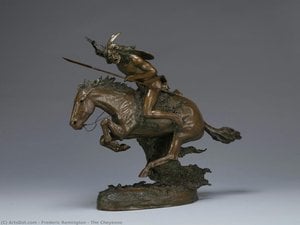
Remington’s masterful use of bronze is central to the sculpture's impact. The material itself—dark, earthy, and subtly textured—provides an ideal foundation for capturing movement and conveying weight. He skillfully employed *lost-wax casting*, a technique that allowed him to achieve incredible detail in the musculature of both animals and men. Notice the tautness of the horses’ muscles as they surge forward, the powerful stance of the bull dominating the center, and the determined expressions on the cowboys' faces. The subtle variations in shading – from deep shadows highlighting the contours of the bodies to brighter areas catching the light – create a remarkable sense of depth and volume, drawing the viewer into the heart of the action.
The composition is deliberately dynamic, utilizing a strong diagonal flow that leads the eye through the scene. The overlapping figures, the intertwined limbs, and the sheer number of animals contribute to a feeling of overwhelming movement. Remington’s attention to anatomical accuracy is remarkable; he wasn't simply depicting cowboys riding horses; he was rendering the complex mechanics of animal locomotion with astonishing precision. Even the base of the sculpture—a simple geometric form—provides a grounding element, anchoring the frenetic energy above.
“The Stampede” is rich in symbolic meaning. The stampede itself represents not just a literal event but also the relentless drive of progress – the westward expansion that fundamentally reshaped America. The cowboys, though undeniably skilled and courageous, are presented as participants in a process larger than themselves, caught within the currents of history. The bull, a symbol of both power and danger, embodies the untamed wilderness that defined the West. The sculpture subtly acknowledges the precariousness of this existence – the potential for chaos and destruction lurking beneath the surface of apparent control.
Furthermore, the piece speaks to the romantic ideal of the cowboy—a figure often idealized in popular culture. Remington’s depiction is far more complex, portraying a life of hardship, danger, and constant struggle. The sculpture isn't celebrating heroism; it’s documenting a reality, capturing the grit and determination required to survive on the frontier. The weathered faces of the cowboys, their clothing worn and dusty, hint at years spent battling the elements and confronting the unknown.
“The Stampede” remains one of Frederic Remington’s most iconic works, a powerful testament to his artistic vision and his profound understanding of the American West. Its enduring appeal lies not only in its technical brilliance but also in its ability to evoke a strong emotional response – a sense of awe, excitement, and perhaps even a touch of melancholy for a way of life that is now largely lost. Reproductions capture much of this power, offering a tangible connection to this pivotal moment in American history and a lasting tribute to the artist who so brilliantly documented it.
Kūrinys „„The Stampede“ – Frederikas Remingtonas“ rekomenduojamas Living Room. Šis pasiūlymas pagrįstas darbo tema, spalvomis ir nuotaika.
„The Stampede“ – Frederikas Remingtonas užfiksuotas kaip brilliant, pasižymintis Luminous šviesos intensyvumu.
Savo Landscape forma „The Stampede“ reprodukcija siūloma Living Room kambariui.


1861 - 1909 , Jungtinės Amerikos Valstijos
 Pasidalinti
 Dalintis
 Išsamiau
 Vadovas

 Atsisiųsti
 Panašūs eksponatai
 Automatinė diorama
 问答
问答 Statistika


 Skaityti daugiau