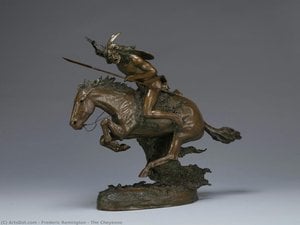
Kronikininkas Nykstančių Vakarų: Frederic Remington Gyvenimas ir Kūryba
Frederic Sackrider Remington, gimęs Kantone, Niujorko valstijoje spalio 4 dieną, 1861 metais, nebuvo Vakarų gyvenimo vaizduotojas, kuriame jis taip ryškiai atsispindi; greičiau tai buvo rytietis, kuris sukūrė savo artistinę tapatybę per aistrą ir dedikuotus mokymus. Jo kilmė rodė gyvenimą, toli nuo dulkėtų kelių ir kavalerijos atakų – prancūzų baskų protėviai maišėsi su tvirtais respublikoniškais Naujosios Anglijos šaknimis, tėvas buvo pilietinio karo pulkininkas ir laikraščio redaktorius bei ryšiai su garsiąja Remington Arms dinastija per tolimus pusbrolius. Tačiau ankstyva karinių temų ekspozicija, kartu su neramiais dvasia ir aštriu akis pasakojimui, nustatė jo kelią tapti galbūt labiausiai atpažįstamu Amerikos Vakarų menininku. Jo vaikystė persikėlė į Bloomingtoną, Ilinojus, tada atgal į Kantoną ir galiausiai Ogdensburgą, Niujorko valstijoje, tačiau jo vaizduotė liko užfiksuota pasienio gyvenimo pasakojimais. Nors iš pradžių buvo nukreiptas į karinį išsilavinimą Vermonto episkopinėje institute, Remington’s tikrasis pašaukimas nebuvo vykdyti įsakymus, o stebėti ir interpretuoti aplinkinį pasaulį per meną. Trumpa viešnagė Jeilio universitete tai patvirtino; futbolas ir eskizai buvo daug patrauklesni nei formalūs akademiniai siekiai.
Iliustratoriaus į Tapybą Kelias: Kuriant Artistinę Viziją
Remington’s artistinė kelionė prasidėjo ne nuo didelių drobės, o nuo rašalo ir popieriaus. Jo pirmasis paskelbtas darbas – karikatūra *Yale Courant* – signalizavo ankstyvą gebėjimą užfiksuoti veiksmą ir naratyvą. Lemtinga kelionė į Montaną 1881 metais sukėlė jo visam gyvenimui trunkantį pomėgį Vakarams. Tai nebuvo tik turistinis žvilgsnis; Remington’as siekė pasinerti į kultūrą, stebėdamas kaubojus, indėnus ir patį kraštovaizdį. Pradžioje jis bandė rančos ir kasybos verslus, tačiau jie buvo nesėkmingi, leidžiant jam visiškai skirtis menui. Grįžęs į Rytus, jis greitai įsitvirtino kaip iliustratorius tokiuose žurnaluose kaip *Harper's Weekly* ir *Collier’s*, jo dinamiški Vakarų scenų vaizdai sužavėjo nacionalinę auditoriją, troškusią pasienio istorijų. Šios iliustracijos nebuvo tik reportažas; jos buvo kupinos dramos, energijos ir romantiško Vakarų vizijos, kuri giliai rezonavo su visuomenės vaizduote. Per šį darbą Remington’s tobulino savo įgūdžius kompozicijoje, užfiksuodamas judesį ir perteikdamas emocijas – savybes, kurios vėliau apibrėš jo paveikslus. Jis gavo minimalų formalų mokymąsi be kai kurių piešimo pamokų Jeilyje ir trumpo laikotarpio meno studentų lygoje, vietoj to sukūrė savitą stilių, pasižymintį energingais potepiais, ryškiomis spalvomis ir realizmo akcentu, sumaišytu su dramatišku įspūdžiu.
Užfiksuodamas Nykstantį Pasaulį: Temos ir Stilius
Remington’s menas neatsiejamai susijęs su konkrečiu Amerikos istorijos momentu – Senojo Vakarų sutemomis. Jo drobėse apgyvendintos ikoniškos figūros: kieti kaubojai, vairuojantys galvijus, stoiški indėnai, susiduriantys su perkraustymu ir JAV kavalerijos kareiviai, dalyvaujantys tiek herojiškuose mūšiuose, tiek tragiškuose konfliktuose. Jis neslėpė pasienio gyvenimo kietos realybės, tačiau jo darbai dažnai linksta į romantišką vaizdavimą, pabrėžiant drąsą, nuotykius ir kultūrų susidūrimą.
Jo paveikslai nėra tik istoriniai dokumentai; tai įtaiki naratyvai, kuriuose nagrinėjamos herojumo, praradimo ir neišvengiamos progreso temos. Remington’s stilius kito bėgant laikui, pereinant nuo griežtesnio, akademiškesnio vaizdavimo prie laisvesnių, ekspresyvesnių potepių. Jis buvo meistras užfiksuodamas judesį – arkliai galopuoja per lygumas, kaubojai kovoja su galvijais, kareiviai įsiveržia į mūšį.
Jis dažnai naudojo greitus eskizus ir nuotraukas kaip informacinę medžiagą, tačiau jo menas visada viršijo gryną imitaciją, kupinas jo unikalios vizijos ir emocinio intensyvumo. Žymūs darbai, tokie kaip *My Ranch*, *Waiting in the Moonlight*, *Ridden Down* (1905) ir *The Long-Horn Cattle Sign* (1908), pavyzdžiuoja jo gebėjimą užfiksuoti tiek Amerikos Vakarų didybę, tiek pažeidžiamumą.
Palikimas ir Nuolatinis Poveikis
Frederic Remington netikėtai mirė 1909 metais būdamas 48 metų amžiaus, palikęs didžiulį darbų rinkinį, kuris ir šiandien žavi publiką. Jo įtaka Vakarų menui yra neabejotina; jis ne tik atvaizdavo Vakarus, bet ir padėjo *apibrėžti* juos ištisoms Amerikos kartoms. Jis sukūrė vizualinę pasienio kalbą – kaubojų, indėnų ir kavalerijos ikonografiją, kuri įsitvirtino populiariojoje kultūroje.
- Jo darbai įkvėpė daugybę kitų menininkų, įskaitant N.C. Wyeth ir Zane Grey.
- Frederic Remington meno muziejus Ogdensburge, Niujorko valstijoje, yra nesibaigiančio jo palikimo liudijimas, saugantis didžiulę jo paveikslų, skulptūrų ir archyvinių medžiagų kolekciją.
- Jo menas ir toliau eksponuojamas pagrindiniuose muziejuose visoje šalyje, įskaitant Metropoliteno meno muziejų ir Amon Carter Amerikos meno muziejų.
Remington’s vaizdai, nors kartais kritikuojami už romantišką Vakarų atvaizdavimą, siūlo vertingą žvilgsnį į svarbų Amerikos istorijos laikotarpį. Jis užfiksavo ne tik tai, *kas buvo*, bet ir tai, ką žmonės *tikėjo* apie Vakarus – jo mitus, legendas ir nesibaigiantį patrauklumą. Jis išlieka galinga Amerikos dvasios simbolis – nykstančio pasaulio kronikininkas, kuris pavertė jį į ilgam atsimintiną artistinį palikimą.



 Perjungti į spausdinamus版作品
 Pasidalinti
 Dalintis
 Išsamiau
 Vadovas

 Atsisiųsti
 Panašūs eksponatai
 Automatinė diorama
 Q&A
Q&A Statistika


 Skaityti daugiau






































 Stiklo variantas prieinamas tik pasirinkus dydį iki 110 cm