


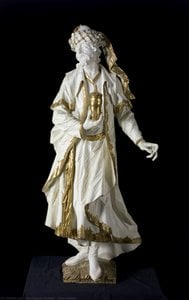
 1765
1765 173.0 x 86.0 cm
Įsigykite aukštos skiriamosios raiškos, patobulintą skaitmeninį vaizdą, gerokai pranašesnį už internetinę peržiūrą.
Kiekvieną failą mūsų specialistai kruopščiai paruošia naudojant pažangias technologijas ir profesionalų rankinį retušavimą. Užtikriname, kad kiekvienas vaizdas pasižymėtų išskirtiniu aiškumu, tikslia spalvų atspalviu ir smulkiomis detalėmis.
Baigiamas failas el. paštu pristatomas per 72 valandas; jis optimizuotas nedelsiant naudojimui profesionalioje, redakcinėje ir spausdinimo aplinkoje. Tai ta pati kokybė, kuria pasitiki aukščiausios klasės dizaino studijos, leidyklos ir galerijos.
Atsisiųskite didelės raiškos failą asmeniniam naudojimui, spausdinimui ir kūrybiniams projektams. ( Pirkti spaudinį Pirkti rankomis tapytą paveikslą)
Pasirinkę WahooArt.com, jūs ne tik gaunate paveikslėlį – jūs gaunate profesionaliai patobudintą skaitmeninį kūrinį, sukurtą itin tikniai ir užtikrinantį pasitenkinimą. Štai viską, kas automatiškai pritékia jūsų užsakymui:

Jūsų aukštos raiškos skaitmeninis vaizdo failas bus išsiųstas jums el. paštu per 72 valaudas nuo užsakymo – paruoštas naudojimui be jokių papildomų veiksmų.

Jūsų meno kūrinys profesionaliai optimizuojamas naudojant pažangius dirbtinio intelekto įrankius ir rankinį redagavimą, užtikrinant maksimalią detalę, aiškumą ir spalvų tikslumą.

Atsitiktinai ištrytikote ar praradote savo failą? Nebijokite – bet kuriuo metu atsiųsime jį jums vėl nemokamai.

Mėgaukitės savo meno kūriniu akimirka – skaitiniai failai visada yra neapmokestinami, todėl nereikės mokėti muitinės, mokesčių ar pristatymo mokesčių.

Naudodami profesionalią įrangą ir spalvų valdymo sistemas, užtikriname, kad jūsų skaitmeninis vaizdas kuo tiksliau atspindėtų originalias spalvas.

Jei nebuvate patenkinti savo skaitinio vaizdo, per 100 dienų jį pertaisysime arba grąkinsime 100% sumą – be jokių klausimų.

Nepat 만족inti? Gaukite visą sumokėtą sumą per 100 dienų nuo skaitmeninio failo gavimo – be jokių papildomų klausimų.

Pirkti 3 nuotraukas – pasiūla 10% - Pirkti 5 – pasiūla 15% - Pirkti 10 ir daugiau – pasiūla 20%. Puikiai tinka kūrybiniams projektams, galerijoms bei agentūroms.

In the heart of eighteenth-century Bavaria, a period defined by the exuberant grace of the Rococo, the name Franz Ignaz Günther emerged as a beacon of sculptural brilliance. Born in 1725 in Altmannstein, Germany, Günther’s journey into the world of fine art began not in an academy, but within the humble, aromatic confines of his father's carpenter and cabinetmaker workshop. This early immersion in the tactile reality of wood and grain provided him with a foundational mastery over his medium that would later allow him to breathe life into seemingly static timber. His formative years were shaped by the rhythmic precision of craftsmanship, a skill set that would eventually evolve into a profound artistic language capable of expressing the most delicate spiritual ecstasies.
The trajectory of his talent led him from the local workshops of Altmannstein to the prestigious studios of Munich, where between 1743 and 1750, he studied under the renowned court sculptor Johann Baptist Straub. This mentorship was pivotal, connecting Günther to the lineage of great German sculptors and refining his ability to manipulate form and light. His Wanderjahre—the essential period of wandering and learning—further expanded his artistic horizons as he traveled through Salzburg, Olmütz, Vienna, and Mannheim. In each city, he absorbed the nuances of the European Rococo style, studying under masters like Paul Egell. By the time he reached the Vienna Academy of Fine Arts in 1753, Günther was no longer merely a skilled carver but a rising virtuoso, a fact cemented when he won the academy's annual students' competition.
Returning to Munich in 1754, Günther established his own workshop, which became a crucible for some of the most breathtaking religious sculptures of the era. His work is characterized by an unparalleled ability to capture movement and emotion through elongated proportions and the intricate, angular arrangement of drapery. To gaze upon a Günther sculpture is to witness a dance of light and shadow; his figures often possess an ecstatic quality, where the heavy folds of carved wood seem to flutter with a life of their and divine inspiration. While much of his work was carved from wood and subsequently polychromed by skilled artisans, the structural soul of each piece remained his singular achievement.
His contributions to sacred spaces are perhaps his most enduring legacy. Throughout Bavaria, his altars and statues transformed churches into celestial theaters. Notable works include:
Beyond the church walls, Günther’s influence reached even the highest echelons of society and art production. His large porcelain crucifix, commissioned for the Munich Residenz, remains a marvel of technical complexity, with its pattern still honored by the Nymphenburg Porcelain Manufactory today. This ability to translate his sculptural vision into different media underscores his versatility and the lasting impact of his aesthetic. Even centuries later, the reverence for his skill is reflected in the profound respect shown to his legacy, such as when a wooden crucifix in his style was presented as a gift to Pope Benedict XVI. Franz Ignaz Günther remains not just a sculptor of wood, but a sculptor of the Bavarian soul, leaving behind a trail of grace that continues to captivate the modern eye.
1725 - 1775 , Germany

 Peržiūrėti realybėje
 Pasidalinti
 Dalintis
 Išsamiau

 Atsisiųsti
 Panašūs eksponatai
 Rentgeno nuotrauka
 Automatinė diorama
 Skaityti daugiau


