


 Oil On CanvasWallArtDutch Golden Age
 1623Early Modern
 70.0 x 62.0 cm
 Liuvro muziejus
Rankiniu būdu tapytas aliejus ant droblio jūsų pageidaujamame dydį ir rėmuose – mūsų menininkų darbas pagal užsakymą. ( Pirkti spaudinį Pirkti vaizdą)





























Pasirinkite iš mūsų nustatytų dydžių, atitinkančių originalaus meno kūrinio proporcijas.

Galite įvesti savo matmenis, kad jie atitiktų konkretų rėmą ar erdvę. Jei pasirinktas dydis neatitinka originalaus paveikslėlio proporcijų, mes arba apkropsime meno kūrinį, arba papildysime tapybą rankomis dažytい elementais. Prieš pradėdami gamybą, jūsų patvirtinimui atsiųsime skaitmeninį maketą.
Atkreipkite dėmesį, kad ekrane rodomas vaizdas neatspindi tikrojo apkarpymo ar papildymo. Tik maketas tiksliai parodys galutinę kompoziciją.
Nors galima rinktis ir individualius dydžius, rekomenduojame pasirinkti matmenis iš nustatytos sąrašo, kad būtų išlaikytos originalios proporcijos.
Pristatymas visame pasaulyje () per 3–4 savaites, o ne įprastai – per 5 savaites. (6 rugsėjis). Kokybė lieka nepakeičiama.


Buffoon Playing a Lute
Reprodukcijos matmenys
In the heart of the seventeenth century, amidst the bustling prosperity of the Dutch Republic, there emerged a style of painting that breathed life into the mundane. Frans Hals I, a master of movement and emotion, achieved this feat most vibrantly in his 1623 masterpiece, Buffoon Playing a Lute. This work is far more than a mere portrait; it is a window into a fleeting moment of musical ecstasy. As you gaze upon the central figure, draped in a striking red and blue striped outfit, you are immediately drawn into his infectious smile. The musician is not simply performing; he is lost in the rhythm, his long hair cascading over his shoulders as he cradles his lute. This sense of spontaneous joy is mirrored by the subtle presence of onlookers in the background, whose attentive gazes complete a scene of shared human connection and communal delight.
For the discerning collector or interior designer, this painting offers a profound emotional resonance that transcends time. It captures the very essence of joie de vivre, making it an ideal centerpiece for spaces designed to inspire warmth, conversation, and vitality. Whether placed in a grand salon or a curated study, the piece serves as a reminder of the beauty found in life's unscripted, joyful interludes.
What sets this work apart from the more rigid, meticulous portraiture of its era is Hals’s revolutionary approach to technique. Moving away from the polished, almost porcelain-like finishes favored by many contemporaries, Hals embraced a loose, expressive brushstroke that would later influence the Impressionist movement. Upon closer inspection of a high-quality reproduction, one can truly appreciate the thick impasto and the energetic application of paint. This tactile quality allows light to dance across the canvas, creating a sense of atmospheric depth and shimmering realism.
Hals’s genius lies in his ability to use visible, bravura strokes to suggest texture and motion rather than defining every single thread of fabric or string of the lute. He skillfully blends colors to create soft shadows that recede into the background, ensuring that the luminous face of the buffoon remains the undisputed protagonist. This technique creates an incredible sense of immediacy; it feels as though the music is still vibrating through the air and the performer might break into song at any second. For those seeking art that possesses a "living" quality, Hals’s mastery of light and motion provides an unparalleled sensory experience.
To understand the Buffoon Playing a Lute is to understand the flourishing cultural landscape of Haarlem during the Dutch Golden Age. During this period, the Netherlands was experiencing unprecedented economic growth driven by maritime trade, which in turn fueled a massive demand for art that celebrated everyday life and middle-class values. Hals emerged from this environment as a pioneer of genre painting, elevating scenes of common folk to the level of high art through his psychological depth and technical innovation.
The painting serves as a testament to the era's shift toward realism and the celebration of the human condition. There is no heavy-handed symbolism here; instead, the symbolism lies in the music itself—a metaphor for harmony, vitality, and the fleeting nature of pleasure. Owning or displaying a reproduction of this work allows one to bring a piece of this historical brilliance into a modern setting, bridging the gap between the seventeenth-century Dutch Republic and the contemporary aesthetic. It is an investment in a legacy of creativity, capturing a timeless fragment of human happiness that continues to captivate audiences at the Musée du Louvre and beyond.

Fransas Halsas I, gimęs apie 1580 metus Antverpyje, Belgijoje, buvo olandų dailininkas, kuris netrukus iškilo kaip vienas svarbiausių Nyderlandų Aukso amžiaus atstovų. Nors ankstyvieji jo gyvenimo metai apgaubti tam tikra paslaptimi, jis įgijo didelį pripažinimą dėl savo novatoriškos portretinės tapybos ir buitinės scenų kūrinių. Halsas nebuvo tiesiog dailininkas – jis buvo stebėtojas, psichologas, gebantis užfiksuoti žmogaus esmę drobėje.
Išsami informacija apie Halso jaunystę yra skurdi. Manoma, kad jis gavo pirmuosius meno pamokų Antverpyje, kuris tuo metu buvo žinomas kaip svarbus tapybos centras. Tačiau dėl religinių ir politinių neramumų jo šeima persikėlė į Harlemą Nyderlanduose. 1610 metais jis įstojo į Harlemo Šv. Liudviko gildiją, oficialiai pradėdamas savo profesinę karjerą. Būtent Harleme Halsas suformavo savo unikalų stilių ir tapo žymiu portretistu.
Halsas išsiskyrė nepaprastai šviežiu ir spontanišku stiliumi. Skirtingai nuo daugelio jo bendraamžių, kurie teikė pirmenybę kruopščiai detalėms, Halsas naudojo laisvą ir ekspresyvią potepų techniką. Ši technika suteikdavo jo paveikslams didelį gyvybingumą, užfiksuodavo subjekto asmenybę ir charakterį taip, kaip tai buvo revoliuciškai nauja tuo metu. Jo portretai nebuvo tik fizinis panašumas – jie atspindėjo žmogaus vidinį pasaulį, emocijas ir mintis.
Nors Halsas sukūrė daugybę darbų, jis labiausiai žinomas dėl savo portretų. Kai kurie garsiausi jo paveikslai apima:
Jis taip pat sukūrė įtraukių buitinių scenų – kasdienio gyvenimo vaizdus – kurios atskleidė Nyderlandų visuomenę.
Nustatyti Halso tiesiogines įtakas yra sudėtinga, nes jis sukūrė labai individualų stilių. Tačiau greičiausiai jis žinojo ankstesnių flamandų tapytojų, tokių kaip Piteris Bruegelis Vyresnysis, darbus. Jo novatoriškas portretinės tapybos požiūris turėjo didelį poveikį vėlesnės kartos menininkams.
Fransas Halsas I suvaidino lemiamą vaidmenį formuojant olandų tapybą Aukso amžiuje. Jo darbai atspindi klestėjantį Nyderlandų turtą ir individualizmą tuo metu. Jis nuėjo nuo griežto formalumo link natūralesnio ir ekspresyvesnio stiliaus, palikęs nesunaikinamą pėdsaką meno pasaulyje.
Šiandien jo paveikslai labai paklausūs ir juos galima rasti pagrindiniuose muziejuose visame pasaulyje, įskaitant Franso Halso muziejų Harleme, kuriame saugoma didžiausia jo darbų kolekcija. Jo indėlis tebeįkvepia menininkus ir žavi publiką jau šimtmečius.

1580 - 1585 , Belgija

Embark on a sophisticated journey through the Dutch Golden Age. Unveil the dramatic brilliance of Rembrandt’s chiaroscuro and the expressive landscapes of 17th-century masters in this authoritative exploration of light, shadow, and enduring artistic legacy.

Explore the breathtaking mastery of Dutch Golden Age landscapes. From Italianate light to atmospheric realism, discover the techniques of 17th-century masters and learn how to bring these timeless, museum-quality masterpieces into your home through expert oil reproductions.
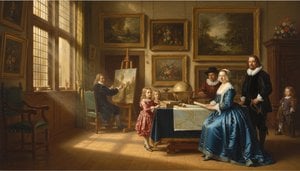
Embark on a journey through the Dutch Golden Age. Discover how masters like Rembrandt and Vermeer used chiaroscuro to manipulate light and shadow, creating timeless depth and spiritual resonance in art history's most captivating masterpieces.

 Peržiūrėti realybėje
 Pasidalinti
 Dalintis
 Išsamiau

 Atsisiųsti
 Panašūs eksponatai
 Rentgeno nuotrauka
 Automatinė diorama
 Skaityti daugiau







 Stiklo variantas prieinamas tik pasirinkus dydį iki 110 cm


