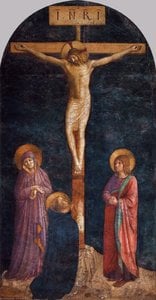
A Moment of Sacred Grief: Fra Angelico’s *The Deposition*
Fra Angelico's *The Deposition*, created between 1432 and 1434, is a profoundly moving depiction of one of the most poignant moments in Christian iconography – the taking down of Christ’s body from the cross. Now residing within the esteemed National Museum of San Marco in Florence, this painting isn't merely an artistic achievement; it’s a testament to faith, sorrow, and the burgeoning artistry of the Early Renaissance. It stands as a cornerstone of Florentine art history, embodying the humanist ideals that began to reshape European thought during this transformative period.
Visual Narrative & Composition
The scene unfolds with a carefully constructed sense of depth and emotional weight. Christ’s body, pale and limp, is gently lowered by a group of mourners – primarily Mary Magdalene and Saint Nicodemus – an act of profound compassion and reverence. Mary Magdalene tenderly kisses his feet, an emblem of repentance and humility, while the Virgin Mary, draped in sumptuous deep blue—a color imbued with divine symbolism—supports her son with heartbreaking resignation. Surrounding them are other figures: John the Evangelist, Saint Veronica, and Saint Mary of Cleopas – each conveying expressions of grief and sorrow that amplify the scene’s emotional impact. The architectural backdrop—a stylized town square reminiscent of Siena—grounds the sacred event within a relatable human setting, subtly reminding viewers of earthly existence alongside spiritual contemplation. This isn't an isolated spectacle; it’s a collective lament for the fallen Christ, resonating with universal themes of loss and compassion.
Artistic Style & Technique
*The Deposition* exemplifies Fra Angelico’s signature style – a harmonious blend of religious devotion and innovative artistic technique. He masterfully employs tempera on wood panel, achieving luminous colors and delicate details that capture the ethereal beauty characteristic of Early Renaissance painting. Influenced by Sienese predecessors like Lorenzo Monaco, Angelico nevertheless introduces a uniquely serene quality to his work, prioritizing spiritual contemplation over mere visual realism. Linear perspective—still in its nascent stages during this era—is skillfully utilized to create an illusion of space, drawing the viewer into the heart of the sorrowful tableau. The artist’s meticulous attention to detail extends beyond anatomical accuracy; he imbues every figure with a palpable sense of vulnerability and emotion. Furthermore, Angelico employs gold leaf judiciously—primarily highlighting architectural elements—adding an aura of sanctity and grandeur to the composition.
Historical Context & Religious Significance
Painted during the Early Renaissance, *The Deposition* reflects the period’s burgeoning interest in humanism alongside unwavering religious fervor. The depiction of Christ's descent from the cross is central to Christian theology, representing sacrifice, redemption, and divine love—concepts that were gaining prominence amidst a renewed focus on classical ideals. Fra Angelico, himself a Dominican friar devoted to prayer and contemplation, approached this scene not merely as an artistic commission but as an act of profound spiritual expression. The painting’s original placement within the Santa Trinita church served as a powerful reminder of faith and sorrow—a focal point for liturgical devotion aimed at eliciting empathy and fostering spiritual reflection. It stands alongside other panels from the larger San Marco altarpiece cycle, demonstrating Angelico's commitment to conveying complex theological ideas through visual artistry.
Symbolism & Emotional Resonance
Every element within *The Deposition* is laden with symbolic significance. The crimson robes worn by Christ—a deliberate reference to sacrificial blood—underscore his atonement for humanity’s sins. Mary Magdalene’s kiss of Christ's feet symbolizes repentance and humility, while the Virgin Mary’s sorrowful gaze embodies maternal compassion and unwavering faith. Beyond its explicit religious iconography, *The Deposition* evokes a universal sense of grief, empathy, and the poignant awareness of mortality—themes that continue to captivate audiences centuries later. It is an image designed to inspire contemplation and deepen understanding of Christian beliefs, reminding viewers of the profound beauty inherent in sorrowful devotion.
- Explore more works by Fra Angelico and his biography.
- Discover the treasures of the Museo di San Marco, Florence.
- Consider a museum-quality reproduction to bring this masterpiece into your home—capturing its luminous colors and exquisite detail.



 Peržiūrėti realybėje
 Pirkti rankomis tapytą paveikslą
 Pasidalinti
 Dalintis
 Išsamiau

 Atsisiųsti
 Panašūs eksponatai
 Rentgeno nuotrauka
 Automatinė diorama
 Statistika

 Skaityti daugiau






































 Stiklo variantas prieinamas tik pasirinkus dydį iki 110 cm