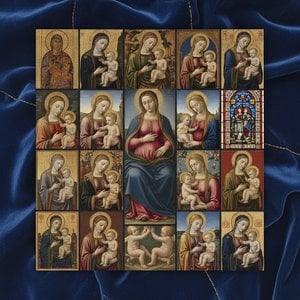
A Vision in Tempera: Exploring Fra Filippo Lippi's Triptych
To stand before a work like this Triptych by Fra Filippo Lippi is to step directly into the luminous heart of the Early Renaissance. Dating from 1437, this piece transcends mere decoration; it is a profound meditation on faith, humanity, and divine mystery, rendered with an exquisite delicacy that speaks volumes of its creator's genius. The very structure—the three distinct yet harmoniously connected panels—invites the viewer into a narrative journey, guiding the eye from one sacred moment to the next.
Lippi, a master whose life was as complex as his art, captured the burgeoning spirit of humanism within deeply religious iconography. His ability to imbue monumental subjects with such palpable tenderness is what makes this triptych so enduringly captivating. The meticulous application of tempera paint allows for a jewel-like vibrancy in the colors, while the underlying structure speaks to an emerging mastery of perspective, giving weight and believable depth to every figure.
Composition and Sacred Narrative
The genius of the composition lies in its tripartite division, each panel serving as a self-contained yet related devotional scene. In the central focus, we encounter the Madonna and Child, a timeless tableau where Mary’s serene blue cloak speaks of purity, cradling the vibrant life symbolized by the infant Jesus robed in red. Flanking this core mystery are supporting figures—on the left, perhaps a bishop or cardinal holding scripture, grounding the scene in scholarly tradition; and on the right, another saintly figure contemplating sacred texts.
The architectural elements visible in the background, reminiscent of grand Gothic cathedrals, serve not only as setting but as symbolic anchors to the enduring Church. These scenes are richly framed by elaborate gold borders, which do more than simply adorn; they elevate the depicted moments to an almost ethereal plane of opulence and sanctity.
Technique and Material Brilliance
The choice of tempera medium is crucial to appreciating this artwork's technical brilliance. This egg-based paint allowed Lippi unparalleled control, enabling him to achieve those breathtakingly fine details—the folds in the drapery, the delicate rendering of halos, the subtle expressions on the faces.
When considering a reproduction of such a piece for your home or collection, understanding this technique is key. The luminosity achieved by tempera is unlike oil paint; it possesses a matte, jewel-toned richness that speaks to centuries of careful craftsmanship. It is a testament to the artist's hand, where every brushstroke feels deliberate and imbued with purpose.
Symbolism and Emotional Resonance
Beyond the narrative, the triptych pulses with deep symbolism. The interplay between the rich blues, the passionate reds, and the solemn greens creates a visual vocabulary of divinity, humanity, and sacrifice. It is an artwork that does not merely depict holiness; it evokes the *feeling* of reverence. For the modern collector or designer, this piece offers more than just aesthetic beauty; it offers a focal point for contemplation—a quiet corner imbued with historical weight and spiritual depth.
To bring such a masterpiece into your space is to invite a dialogue between Renaissance artistry and contemporary life. It suggests an appreciation for enduring narratives, meticulous skill, and the profound beauty found at the intersection of art and faith.



 Peržiūrėti realybėje
 Pirkti spaudinį
 Pasidalinti
 Dalintis
 Išsamiau

 Atsisiųsti
 Panašūs eksponatai
 Rentgeno nuotrauka
 Automatinė diorama


 Skaityti daugiau






































 Stiklo variantas prieinamas tik pasirinkus dydį iki 110 cm