Gaukite spausdinimui paruoštą failą, kurio kokybė gerokai viršija internetinę peržiūrą. Kiekvienas mūsų parduodamas skaitmeninis vaizdas yra ištrauktas iš aukštos raiškos pagrindinio failo mūsų duomenų bazėje — paprastai jis siekia nuo 5 000 iki 15 000 pikselių plotio — todėl galite drąsiai spausdinti didelius formatus, apkirpti vaizdą ar reprodukcija užtikrins visas smulkias detales.
Mūsų studijoje nė viena kopija nelieka neapdorota. Skaitmeninio vaizdo ekspertas, lygiu su originaliu paveikslu, patikrina spalvas ir, jei reikia, jas koreguoja, o tada profesionaliais retušavimo įrankiais padidina aiškumą bei detales — visada išlaikydamas ištikimybę autoriaus teptuko traukoms ir stiliui. Rezultatas – vaizdas, kuris atrodo kaip tikras paveikslas, o ne kaip su filtrais apdorotas skenavimas.
Patvirtinate prieš užsakymo pabaigą: mūsų ekspertas per 72 valandas el. laišku atsiųsta vaizdą jūsų peržiūrai. Nepasitenkinate rezultatu? Paprašykite patobulinimų ar pataisymų arba prašykite pinigų grąžinimo, jei kokybė neatitinka jūsų lūkesčių.
Ši kokybė yra patikima leidybos įstaigoms, dizaino studijoms, galerijoms ir spaudos įmonėms.
Atsisiųskite didelės raiškos failą asmeniniam naudojimui, spausdinimui ir kūrybiniams projektams. ( Perjungti į spausdinamus版作品 Pirkti rankų darbo tapybą)
Pasirinkę WahooArt.com, jūs ne tik gaunate paveikslėlį – jūs gaunate profesionaliai patobudintą skaitmeninį kūrinį, sukurtą itin tikniai ir užtikrinantį pasitenkinimą. Štai viską, kas automatiškai pritékia jūsų užsakymui:
Jūsų aukštos raiškos skaitmeninis vaizdo failas bus išsiųstas el. paštu per 72 valandas nuo užsakymo – jis bus paruoštas naudoti be jokių papildomų veiksmų.
Jūsų meno kūrinys profesionaliai optimizuojamas naudojant pažangius dirbtinio intelekto įrankius ir rankinį redagavimą, užtikrinant maksimalią detalę, aiškumą ir spalvų tikslumą.
Atsitiktinai ištrytikote ar praradote savo failą? Nebijokite – bet kuriuo metu atsiųsime jį jums vėl nemokamai.
Mėgaukitės savo meno kūrynu be jokių muitinės mokesčių, įkainų ar pristatymo išlaidų – skaitiniai failai visada yra neapmokestinami.
Naudodami profesionalią įrangą ir spalvų valdymo sistemas, užtikriname, kad jūsų skaitmeninis vaizdas kuo tiksliau atspindėtų originalias spalvas.
Jei nebuvosite patenkinti įsigyto skaitmeninio vaizdo, mes jį tališkai koreguosime arba grąžinsime 100% sumą per 100 dienų – be jokių klausimų.
Nesitenkinate? Gaukite visą sumokėtą sumą per 100 dienų nuo skaitmeninio failo gavimo – be jokių papildomų klausimų.
Pirkti 3 nuotraukas – 10% nuolaida – Pirkti 5 – 15% nuolaida – Pirkti 10 ir daugiau – 20% nuolaida. Puikiai tinka kūrybiniams projektams, galerijoms bei agentūroms.
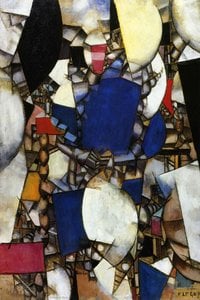
Fernand Léger’s “Self,” painted in 1930, isn't merely a portrait; it’s a distilled essence of the early 20th century – a visual embodiment of the machine age grappling with human identity. This striking pencil drawing, now housed within the Fernand Léger National Museum in Biot, France, offers a profound glimpse into the artist’s evolving style and his fascination with the intersection of form, technology, and the individual. Léger, born Joseph Fernand Henri Léger in 1881 in Argentan, Normandy, began his artistic journey as an architect before embracing painting, profoundly influenced by the radical innovations of Cézanne and the burgeoning currents of Cubism.
The composition immediately commands attention. The subject, a self-portrait, is rendered with a deliberate austerity – a simplification of features that borders on abstraction. Léger strips away extraneous detail, reducing the face to its fundamental geometric components: sharp triangles for the nose and eyes, rectangular planes for the mouth and chin, and a simplified outline of the head itself. This fragmentation isn’t chaotic; rather, it creates a sense of dynamic energy, as if the subject is simultaneously present and dissolving into pure form. The cropped composition, focusing tightly on the upper torso, intensifies this effect, drawing the viewer directly into the artist's gaze – an intense, direct stare that speaks to both confidence and introspection.
“Self” is a quintessential example of Léger’s “Tubism,” a style he developed in the early 1910s. Inspired by the cylindrical forms of industrial machinery, Tubism sought to represent objects – and indeed, human figures – as composed of interlocking cylinders, cones, and cubes. This approach wasn't simply an aesthetic choice; Léger saw it as a way to capture the essence of modern life, dominated by factories, trains, and the relentless march of technology. The angular lines and stark contrasts in tone reflect this mechanical sensibility, creating a visual rhythm that echoes the precision and efficiency of machines.
The use of pencil is crucial here. Léger’s meticulous application of line – often with varying pressure and thickness – imbues the drawing with a remarkable sense of texture and depth. The grainy quality of the graphite suggests a hand-drawn immediacy, contrasting sharply with the stylized forms. This combination of raw material and deliberate construction speaks to Léger's desire to bridge the gap between traditional artistic techniques and the new visual language of modernity.
Beyond its formal qualities, “Self” carries a potent symbolic weight. The direct gaze of the subject is particularly arresting – it’s not a passive portrait but an active engagement with the viewer. This confrontational quality suggests a questioning of identity in a rapidly changing world. Léger himself described his work as reflecting "the crude beauty" of everyday life, and “Self” embodies this sentiment perfectly. The simplification of features can be interpreted as a rejection of idealized representations, suggesting instead a focus on the essential, stripped-down reality of human existence.
Furthermore, the drawing’s monochromatic palette – primarily shades of gray – reinforces its sense of austerity and detachment. It evokes the starkness of industrial landscapes and the impersonal nature of modern life. The lack of color directs attention to the formal elements of the composition, highlighting Léger's mastery of line and form.
Fernand Léger’s “Self” stands as a pivotal work in his oeuvre and a significant contribution to the development of modern art. His exploration of Cubism, combined with his fascination with technology and his unique approach to portraiture, paved the way for subsequent generations of artists – including Pop Art pioneers like Andy Warhol – who sought to integrate the visual language of mass culture into their work. “Self” remains a powerful testament to Léger’s artistic vision and his enduring legacy as one of the most influential figures of the 20th century.
Fernand Léger kūryboje „Self“ atlieka Cubism stilių, susijęs su cézanne influence, modernity, industrial forms, war experience, mechanical themes, critique, early cubism, geometric abstraction temomis.
„Self“ siūloma naudoti Statement, o rekomenduojama erdvė – Living Room.
„Self“ – Fernand Léger vaizdelioje atspindžiami portrait, self-portrait, cubism, geometric, modernity, figure, charcoal, léger, sukurti Bold nuotaika. Tematika ir atmosfera kartu apibūdina šį kūrinį.


1881 - 1955 , Prancūzija
 Peržiūrėti realaus dydžio版

 Pasidalinti
 Dalintis
 Išsamiau
 Vadovas


 Atsisiųsti
 Panašūs eksponatai
 Rentgeno spindulių nuotrauka
 Automatinė diorama
 问答

 Statistika


 Skaityti daugiau